
















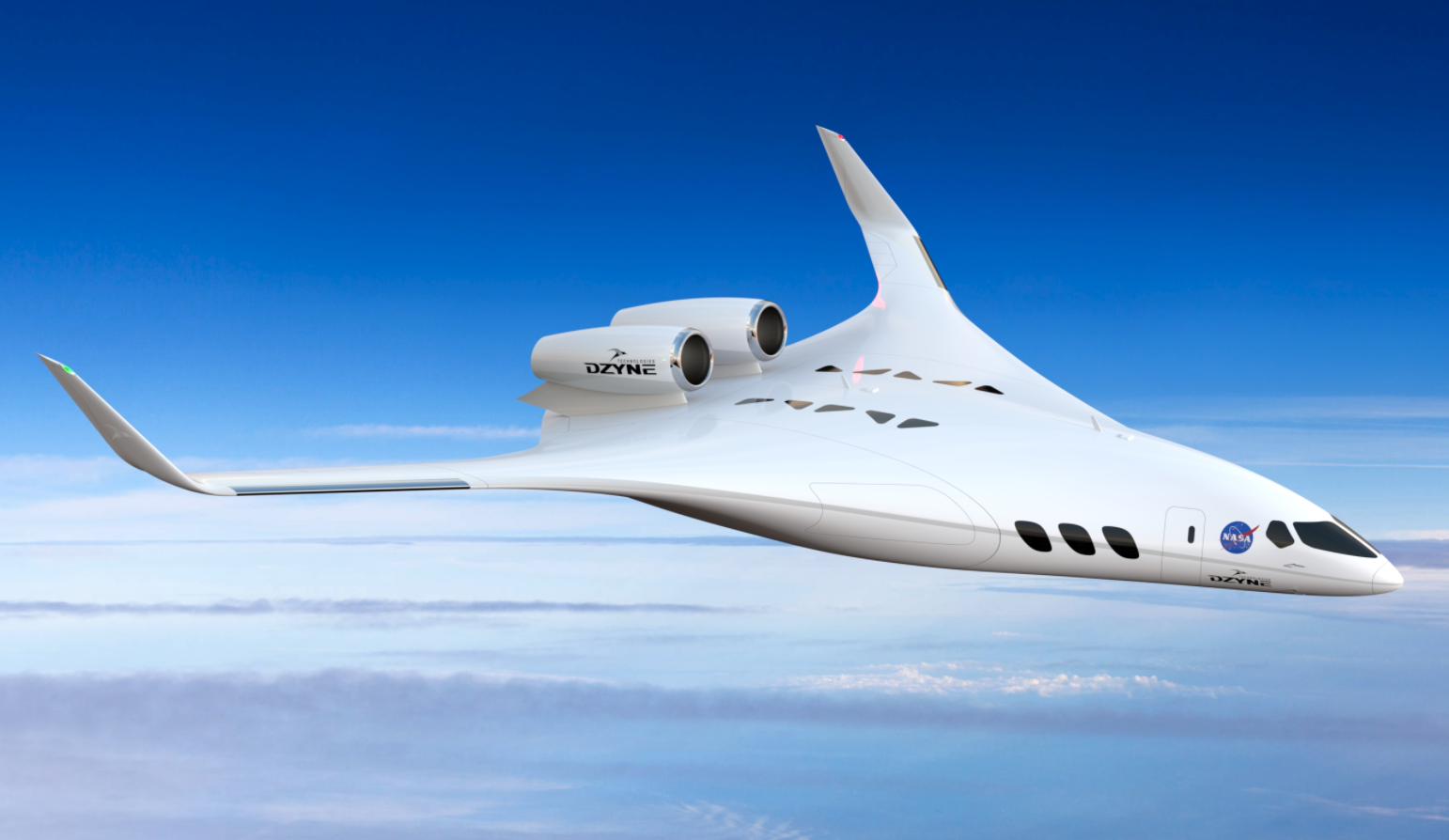
Dzyne Technologies
NASA is now evaluating five proposed designs for an X-plane that will test new technologies that could help airliners to fly more quietly, burn less fuel and release fewer emissions than aircraft flying today. The concepts aim to address NASA’s goals for 2035, such as a 60 to 80 percent reduction in fuel consumption, greater than 80 percent reduction in emissions and reducing noise by more than 50 percent. “As of now, the plan is to begin implementation of the first subsonic X-Plane project around 2020, leading to a first flight in 2026,” said Fay Collier, NASA’s associate director for flight strategy. The five designs that will move forward were proposed by Boeing, Lockheed Martin, Aurora Flight Sciences and Dzyne Technologies.
Boeing proposed two designs, a blended-wing-body aircraft with the jet engines placed on top of the fuselage to shield the noise, and an airplane with a truss-brace that could support a long, narrow wing. Aurora’s Double Bubble D8 features two hull sections fused together, and a vertical stabilizer with a two-fin T-tail. Dzyne proposed a blended-wing-body design similar to Boeing’s but for a regional-airliner size aircraft. Lockheed Martin’s design features a hybrid wing body with twin engines mounted on pylons attached to and trailing the wing.
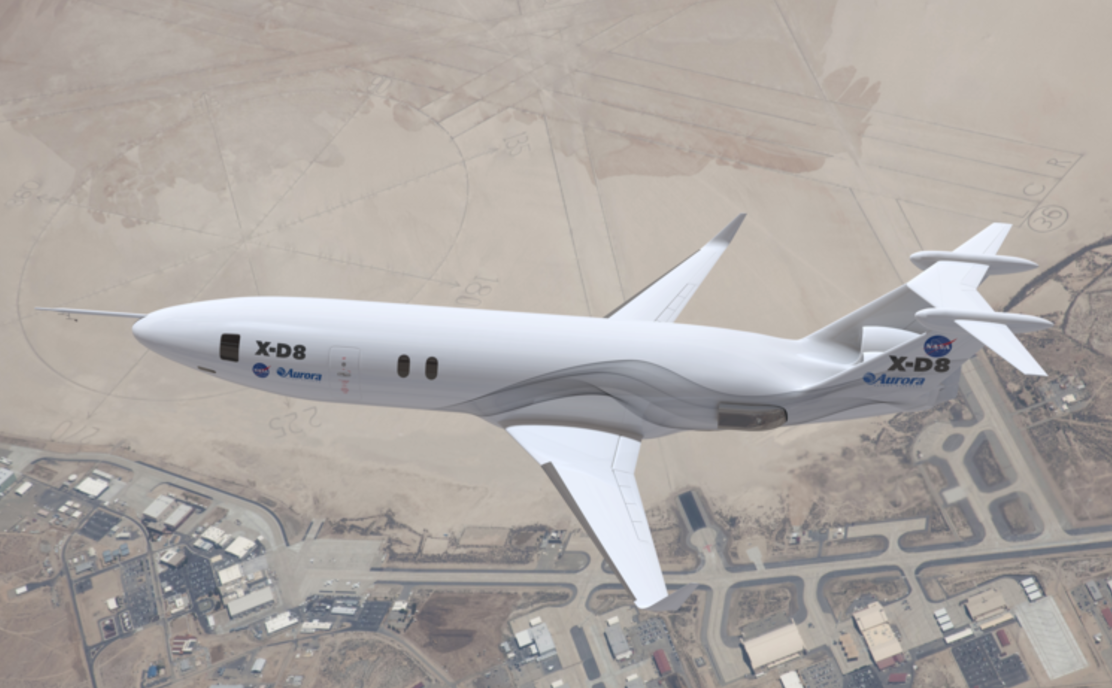
Aurora Flight Sciences
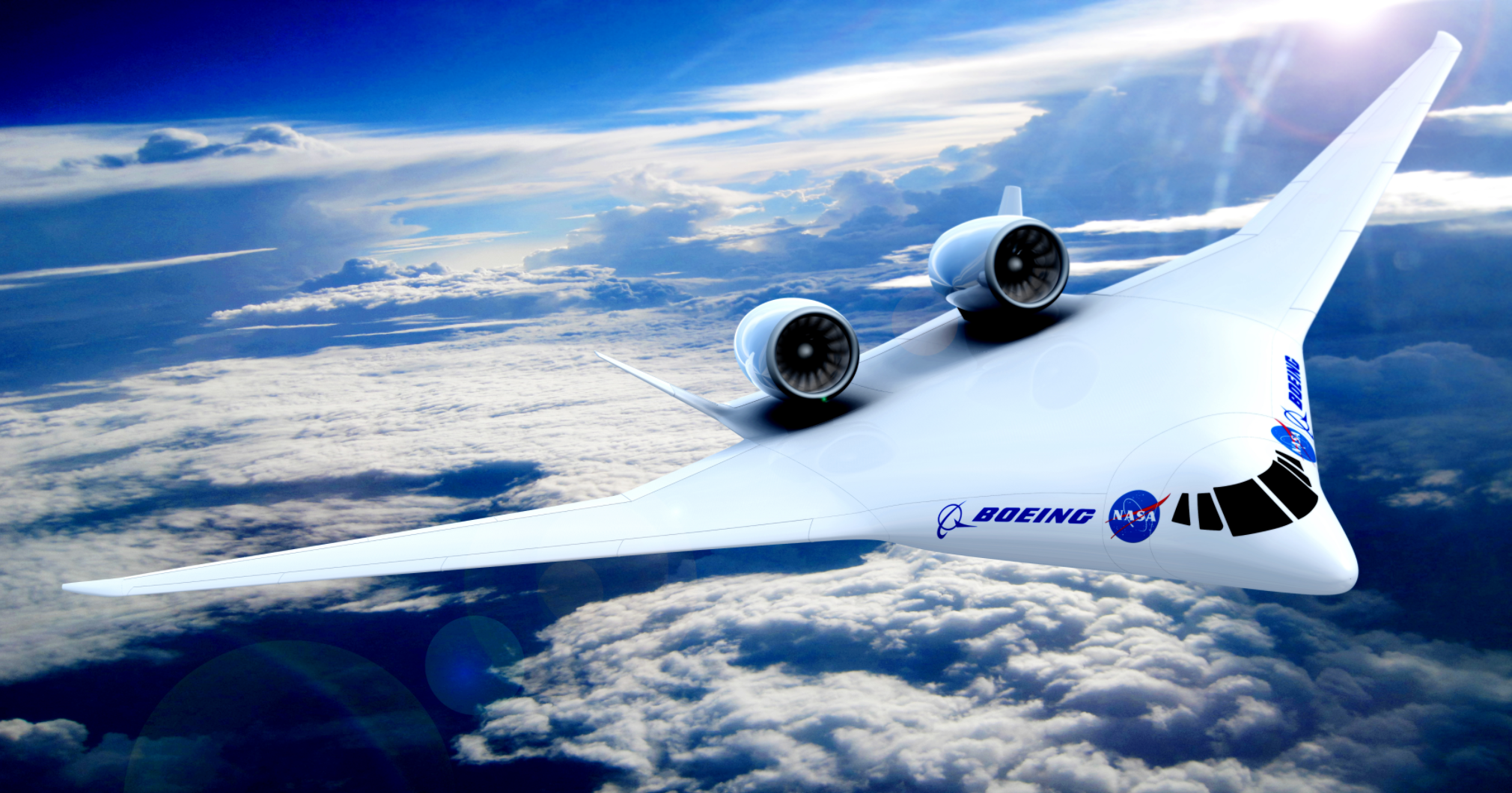
Boeing BWB
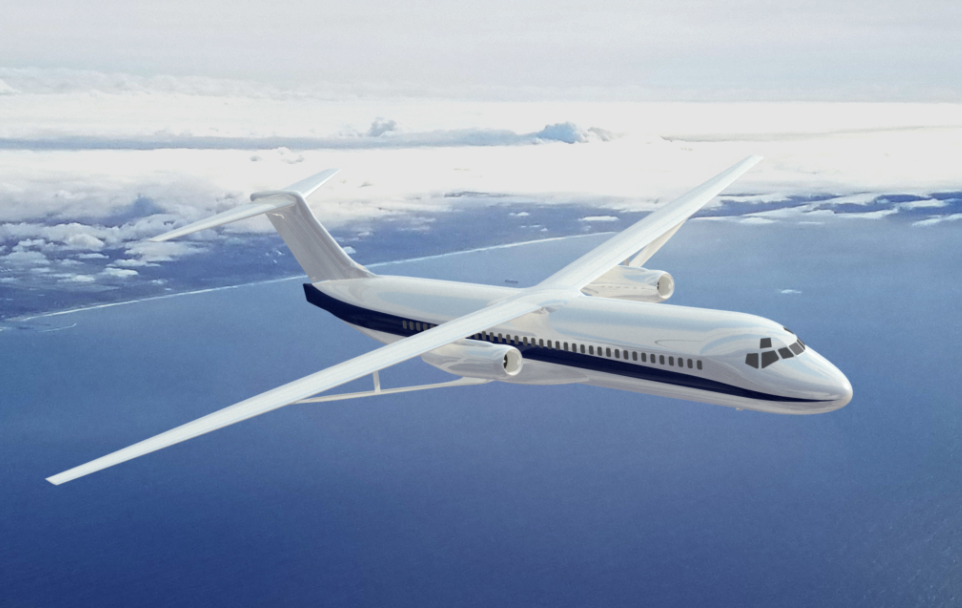
Boeing truss-braced wing
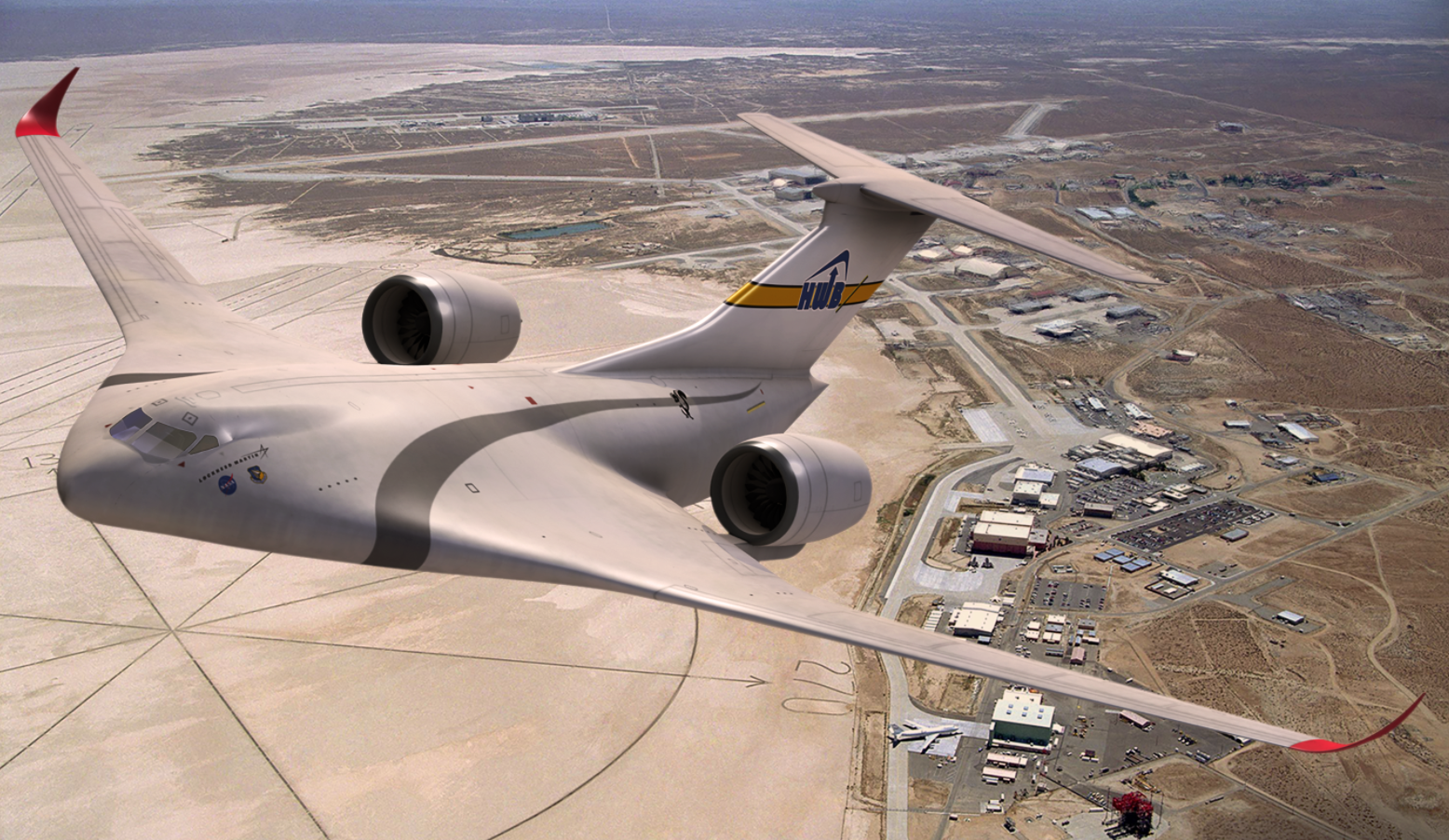
Lockheed Martin

