











image: NASA
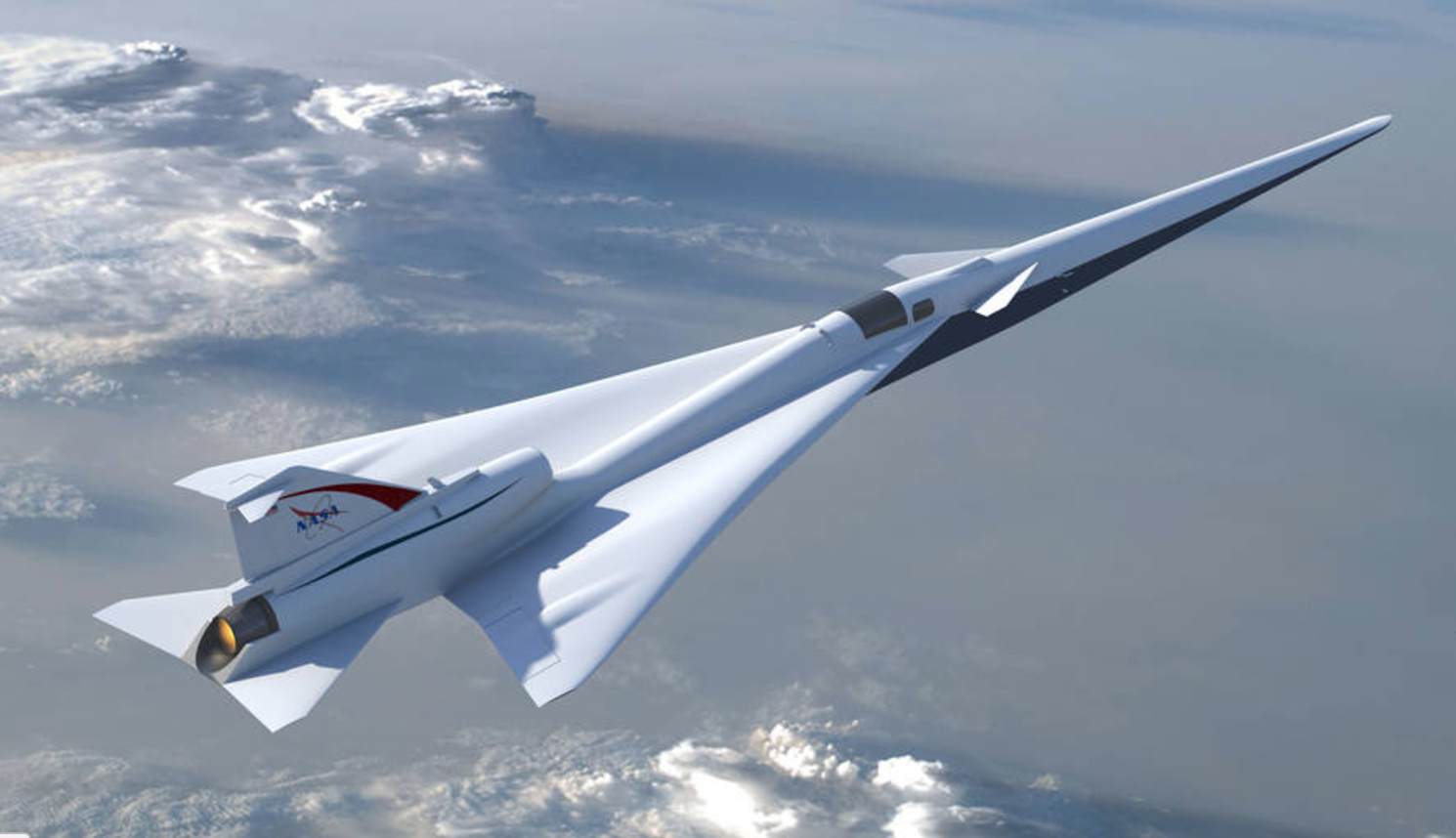
NASA said on Monday it has achieved “a significant milestone” in its effort to make supersonic passenger jet travel over land a real possibility by completing the preliminary design review of its Quiet Supersonic Transport, or QueSST, aircraft design. QueSST is the initial design stage of NASA’s planned Low-Boom Flight Demonstration experimental X-plane. Senior experts and engineers from across the agency and lead contractor Lockheed Martin concluded Friday that the QueSST design is capable of fulfilling the low-boom aircraft’s mission objectives, which are to fly at supersonic speeds, but create a soft “thump” instead of the disruptive sonic boom associated with supersonic flight today. The low-boom X-plane will be flown over communities to collect data necessary for regulators to enable supersonic flight over land in the U.S. and elsewhere in the world.
NASA partnered with Lockheed Martin last year for the QueSST preliminary design. Last month, a scale model of the QueSST design completed testing in the 8-by-6-foot supersonic wind tunnel at NASA’s Glenn Research Center in Cleveland. “Managing a project like this is all about moving from one milestone to the next,” said David Richwine, a manager in NASA’s Commercial Supersonic Technology Project. “Our strong partnership with Lockheed Martin helped get us to this point. We’re now one step closer to building an actual X-plane.” NASA’s team will start soliciting proposals later this year and will award a contract early next year to build the piloted, single-engine X-plane. The acquisition for the X-plane contract will be fully open and competitive, NASA said, and the QueSST preliminary design data will be made available to qualified bidders. Flight testing of the X-plane could begin as early as 2021.
Meanwhile, the private sector continues to move forward with plans for supersonic airliners. Boom’s design got a lot of attention last week at Paris. The company said they have orders in hand from five airlines, including Virgin, and will fly a demonstrator next year. Aerion also is continuing to work toward first flight of a full-size aircraft in 2021. “We need some new markets and new vehicles to maintain our leadership in commercial aviation,” says NASA project manager Peter Coen. AVweb‘s editorial director Paul Bertorelli takes a look at the past and future of supersonic airline travel in this week’s Insider blog.