
















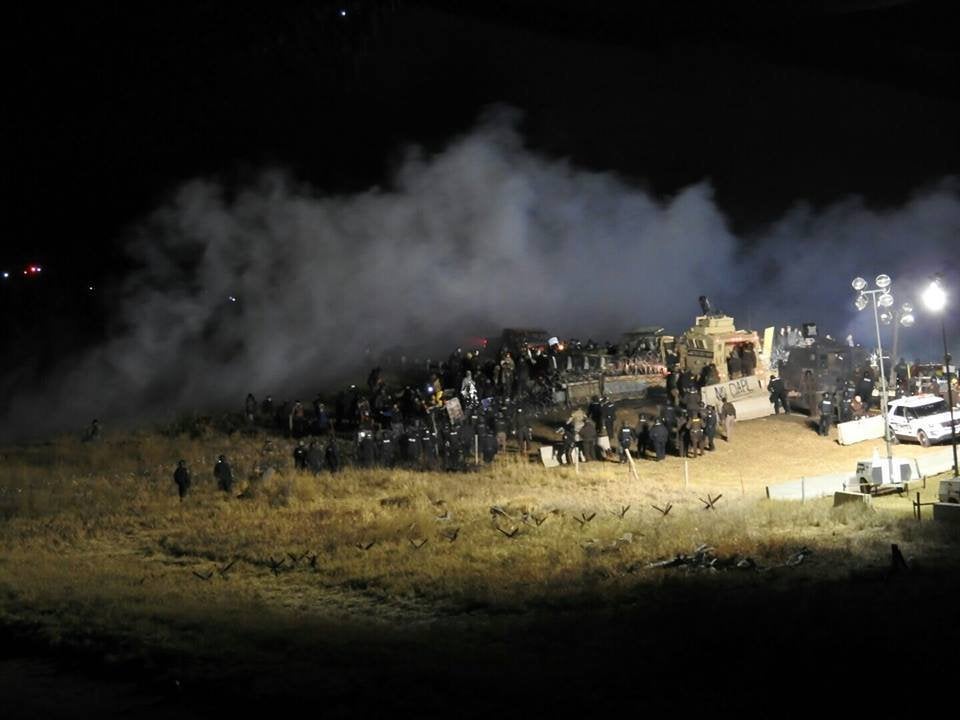
A former NTSB member who is now Adjunct Professor at Vaughn College of Aeronautics and Technology says the FAA is overstepping its authority in banning news drone flights at the increasingly contentious Standing Rock oil pipeline protest in North Dakota. The FAA has imposed temporary flight restrictions on drone flights over the protest, which it says were put in place for safety reasons. In his regular column in Forbes, John Goglia says limiting media use of drones is not the mandate of the FAA and blocking media coverage is not a legal basis for issuing flight restrictions. Goglia extensively quotes two experts in drone law and operations who suggest other motives for the TFR in his column in Forbes.
Goglia notes that drones have been a favorite of First Nations journalists documenting what they allege to be violations of various laws by the companies installing the pipe. There are allegations that law enforcement personnel have shot down drones, which would appear to violate at least the spirit of the alleged safety basis for the TFR. The video below is typical of the videos being generated by drones at the site and was shot last week.

