
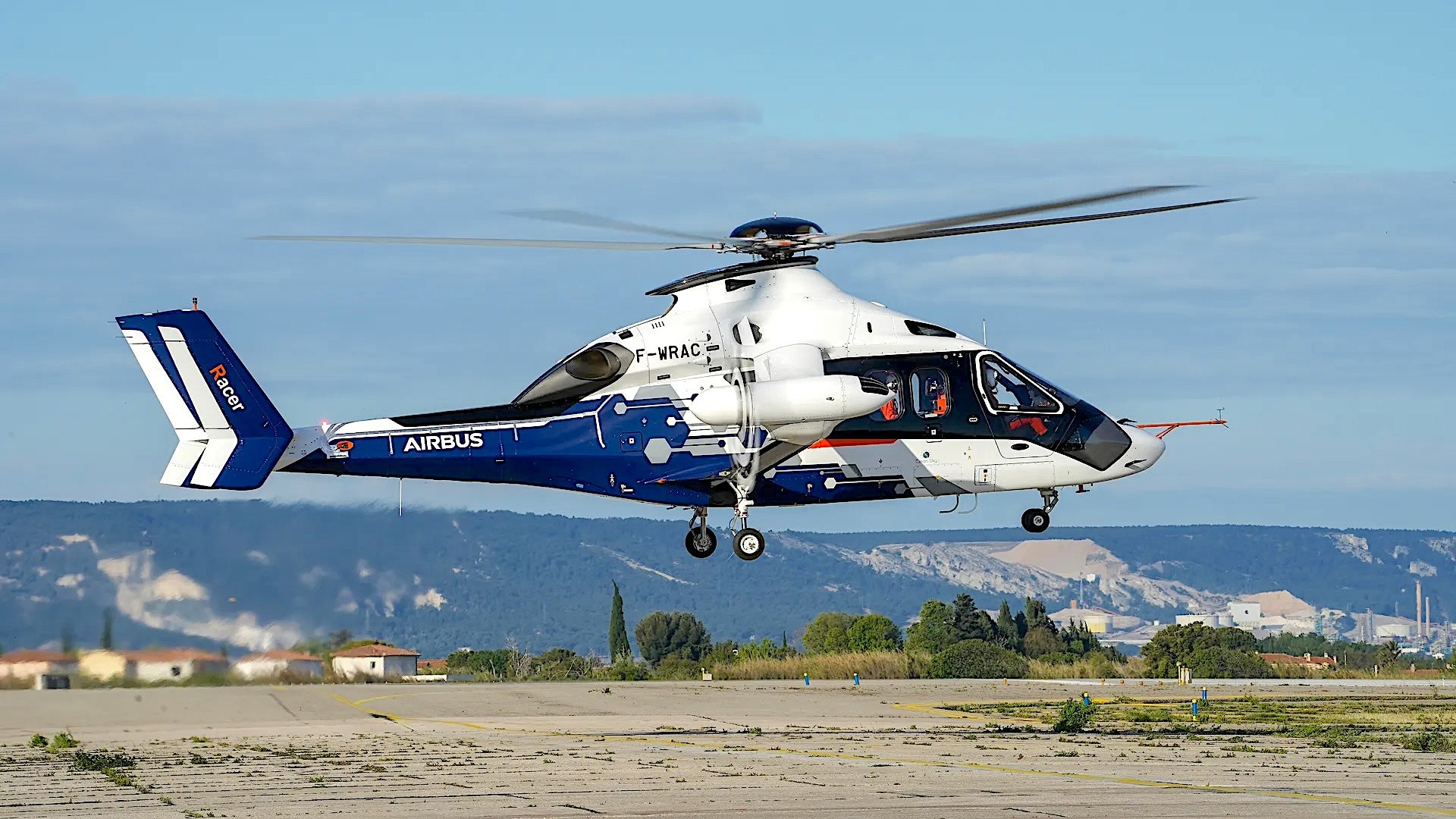

Airbus Helicopters has introduced a high-speed demonstrator rotorcraft named the Racer. Designed with what is described as a “simple, safe, and proven aerodynamic formula,” the Racer is meant to find the best compromise between high-speed cruise (216 knots), cost-effectiveness and optimum mission performance.
The Racer builds on the Airbus X3 demonstrator, which the company says validated the configuration of a traditional main rotor supplemented by lateral pusher propellers mounted on box-wings. Other innovative technological elements include a hybrid metal-composite airframe; a new-design high-voltage, direct current generator; and an asymmetric rear fuselage cross-section to optimize hover performance without sacrificing forward and cruise-flight capability.
Among the top priorities in designing the Racer are minimizing carbon footprint and noise. The aerodynamic configuration is said to bring about 15% improvement in fuel burn per hour at 180 knots, even compared to a conventional helicopter’s 130-knot maximum cruise speed. Safran’s hybrid-electric Eco-Mode power system enables one of the Racer’s two Aneto-1X engines to go to standby mode while in cruise flight, which Airbus says adds another 30% to its improved fuel burn. On the acoustic side, the “distinct architecture” of the airframe contributes to lowering its noise footprint.