















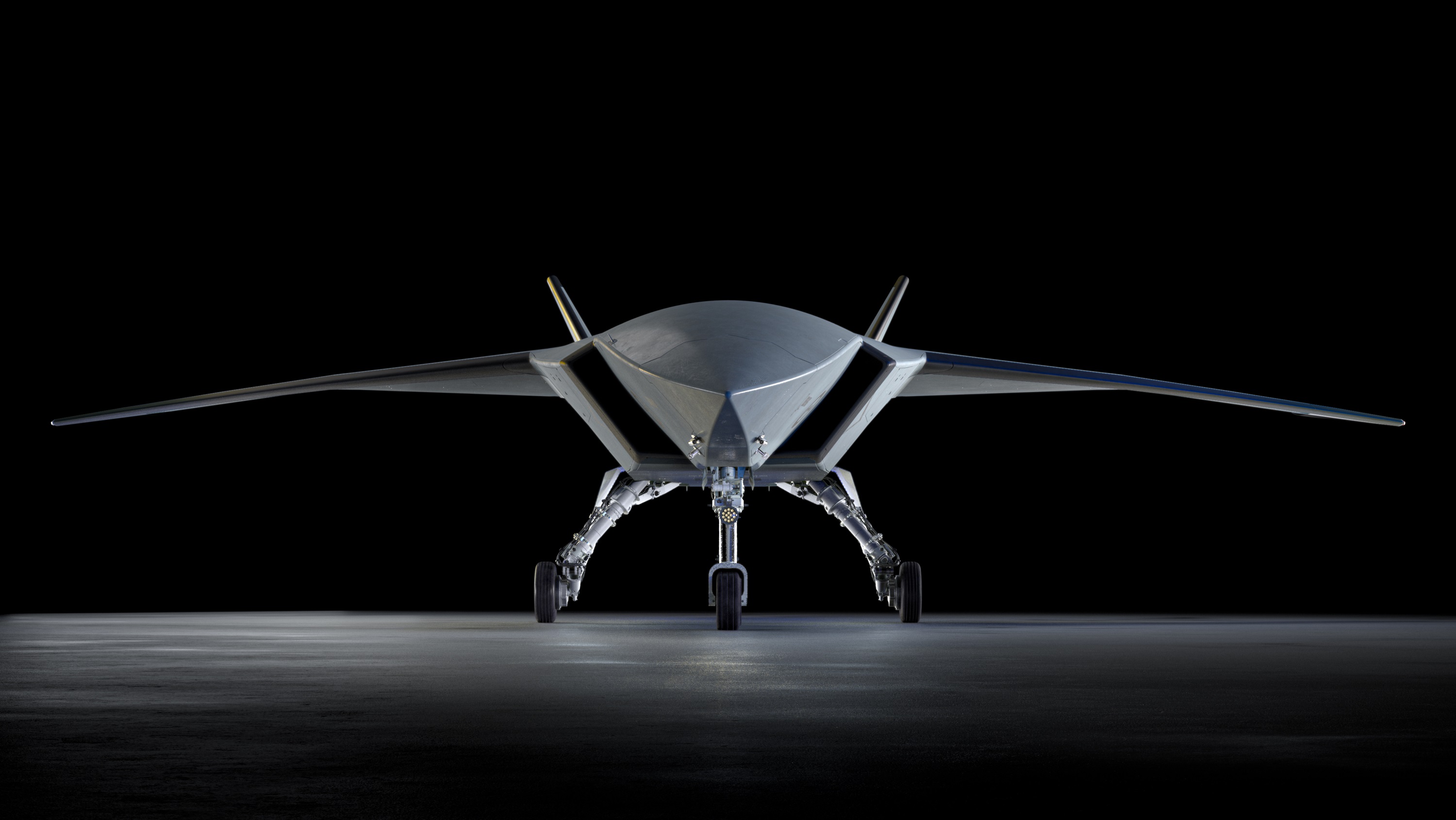

Boeing announced a series of planned upgrades for its MQ-28 Ghost Bat Wednesday, including a larger wing, additional weapons capacity and beyond-line-of-sight communications. The company unveiled the updated configuration Wednesday at the ILA Berlin Air Show in Germany. According to Boeing, the revised aircraft has a wingspan more than 25% larger than the current version and increases maximum takeoff weight from 10,000 pounds to 12,000 pounds.
“That additional capacity gives operators freedom to balance payload and endurance to configure for the mission at hand, whether that means carrying extra fuel for longer-range operations, increasing weapons carriage, or any combination of both,” Glen Ferguson, MQ-28 global program director, said. “These features, developed in partnership with the Royal Australian Air Force, will be progressively released to the fleet through a spiral upgrade program, and are available to interested allied countries.”
Boeing said the changes allow for more than 4,500 pounds of useful load and the ability to carry two AMRAAM missiles or four small diameter bombs internally. The aircraft can also be fitted for three external weapons stations. Other updates include a modular nose section, software changes designed to support open architecture requirements and beyond-line-of-sight links intended to allow control from a crewed aircraft, ground station or naval vessel.
The company said last week that it had completed radar cross-section testing on the Australian-developed unmanned collaborative combat aircraft.


0 replies