















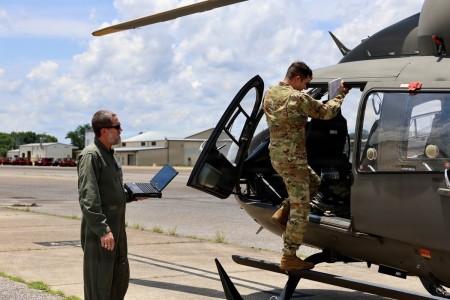

Army flight students at Fort Rucker, Alabama, have resumed instructor-free cross-country helicopter missions under a revised curriculum designed to build independent flight-management experience. The change restores student-led flights through the national airspace system after roughly 25 years, although shorter local solo exercises continued during portions of that period.
The updated curriculum, introduced by the 1st Battalion, 223rd Aviation Regiment, adds a two-week cross-country training period during the Basic Warfighting Skills phase. Students must complete a check ride before departing on flights extending 50 to 100 nautical miles from Shell Army Heliport.
Unlike the shorter local solo exercises previously included in flight training, the restored cross-country missions require students to independently plan and manage longer flights through civilian-controlled airspace without an instructor aboard.
The change shifts some of the training focus beyond cockpit procedures and tactical flying to the broader skills required to operate an aircraft in the national airspace system. Students must manage navigation, radio communications and interactions with air traffic control.
Radio communications have been among the more challenging aspects for students transitioning between military and civilian aviation environments, according to the Army.
The program is designed to strengthen students’ confidence and decision-making skills before they advance to more complex tactical training.

The Army really dropped the ball when they actually stopped actual “soloing” everybody.