















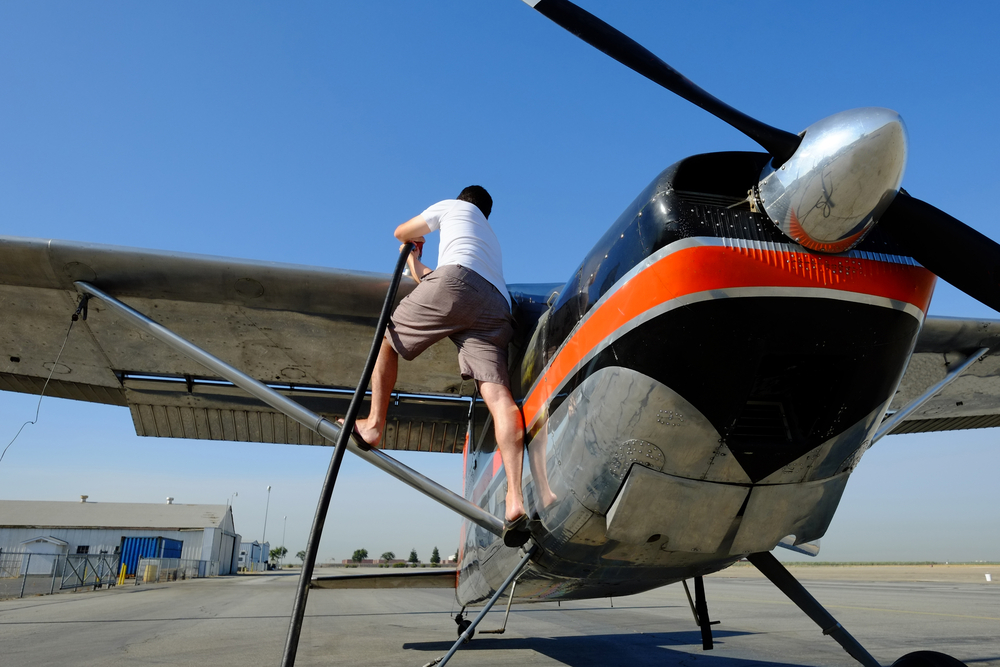

The City of Pitt Meadows, British Columbia, is asking the Canadian government to clarify when the country could move away from leaded aviation gasoline and whether Ottawa intends to establish a national target similar to the one adopted in the U.S.
According to a local report, Mayor Nicole MacDonald sent an Aug. 5 letter to Canada’s environment and transport ministers after residents raised concerns about lead emissions from piston aircraft operating at Pitt Meadows Regional Airport.
Canada Has No Formal Deadline
The city is asking whether Canada has established, or is considering, a target date or phased approach for reducing or eliminating lead from aviation gasoline. Pitt Meadows Regional Airport has said Transport Canada is working alongside other Canadian agencies and the FAA on commercially developed unleaded fuels, although Canada has not established a formal deadline. Council is also seeking information on aircraft and engine approvals, fuel availability, airport infrastructure and other issues that could affect a transition.
“The city is not seeking to assign responsibility or pre-empt the technical work required to ensure a safe transition,” the letter said, according to The Ridge. “Rather, council is seeking clear, current and publicly shareable information from the appropriate federal authorities.”
U.S. Targets 2030
South of the border, the FAA released its updated transition plan in July for moving the U.S. piston fleet to unleaded aviation gasoline. The agency and aviation industry’s EAGLE initiative are working toward eliminating lead emissions from piston aircraft by the end of 2030. The FAA is currently evaluating multiple high-octane unleaded fuels and plans additional updates as testing and deployment progress.
Pitt Meadows is now asking Ottawa whether Canada will establish a comparable timetable and what steps Canadian airports and aircraft owners should expect in the meantime.


Since Canada is not the United States, luckily them, it does not have a 100 LL mandate, which requires the use of this Fuel until essentially a drop in replacement is available, which of course will never happen. Because they are free of this restriction they could replace their 100LL with one of the 3 replacements if they so desired.
I would however suggest for Canada to look at the European replacement model, which has actually made some progress in the reduction of lead in the environment by promoting fuels such as ASTM approved UL 91 in a second tank offering. This would give them more flexibility and time in their pursuit to remove the dangerous lead fuel product in a way that can actually start a process that will reduce lead pollution immediately.
Herein lies the complexity. If a Canadian plane flies over, do they have to have the STC to fuel up with UL91? Can a foreign registered aircraft not subject to our forced mandates be accommodated? Will they be stuck in a country with incompatible fuel without an STC? Without the modifications for UL91, will foreign aircraft be a liability in US airspace?
All good questions.
If Canada makes a quick transition to unleaded fuels for Aircraft, could they ban all aircraft from the United States that try to come in with leaded fuel in their tanks.
At this point in time, why would Canada follow the US lead in anything?
That was not my question. I’m questioning the complexity of certified planes without an STC having only UL91 available. I’m not getting political.
The same issue could apply to Canada. I’m not familiar with the Canadian rules on modifying certified aircraft to legally operate with other fuels.
Dave to heip you get up to date I will start at a point to help you understand the situation with UL91.
Since most naturally aspirated Lycoming and Continental engines were certified long ago to use an ASTM certified 91/96 avgas available at that time. And the ASTM certification did not include the requirement for lead to be added, it appears that UL 91 is already approved for use in most normal aspirated 8.5 to 1 compression ratio Lycoming or Continental engines which had already been approved to use ASTM certified 91/96 octane fuel.
The FAA equivalent agency in Europe, recognize this situation and they gave in writing a fleet authorization for Aircraft certified to use ASTM certified 91/96 avgas the approval to use ASTM certified UL91 without the requirement of an STC. What that means is no STC type certification is required to use UL 91 avgas in those Aircraft already approved to use the 91/96 avgas.
The FAA actually recognize this situation and also promised that they would do a fleet authorization in the same way for UL91 for the USA. So far more than two years has passed without them acting on this issue.
I conflated the UL91 with Mogas. Knowing the use of Mogas needs an STC for certified planes and some modifications to the fuel system to accommodate the alcohol component, I failed to see the difference and assumed. Also, can we safely mix Mogas with UL91?
The other question not addressed, is the Experimental fleet in GA. Blanket approvals for Certified airframes/engines leave questions for home builders that have pieced together their fuel systems from parts mart finds, as well as auto engine conversions. The FAA has been mute on how they intend to address this segment of GA.
As for the FAA approval of UL91… I am aware that your engine manufacturer may not warranty your engine. That was last year, not sure if that issue still exists.
In Europe, Lycoming has signed off completely with the ASTM UL91 that is currently in use there, so there is no conflict with warranties with Lycoming in Europe.
Alcohol in aviation fuel tanks is not allowed. By any STC that I know of. I had a mechanic tell a pilot E10 was ok. I had the pilot soak a gas cap o-ring in E10 mogas for an hour and show it to his mechanic. the tune changed quickly. I use mogas nearly exclusively. Each load is tested for ETOH. Continental warrantied my engine in 1993. Fuel was never brought up, and it was their idea to cover a worn valve guide.
The Peterson autogas STC I have for my C172 with a O300 engine also covers 91UL and 94UL avgas. Also able to mix the avgas with auto fuel. There are several gas stations near me that sell ethanol free auto fuel at 90 octane. Runs great in my plane. I test every container I buy to make sure of no ethanol. No ethanol allowed in any airplane that I know of. My home airport does carry 100LL, so I do mix in a little occasionally per the STC.