















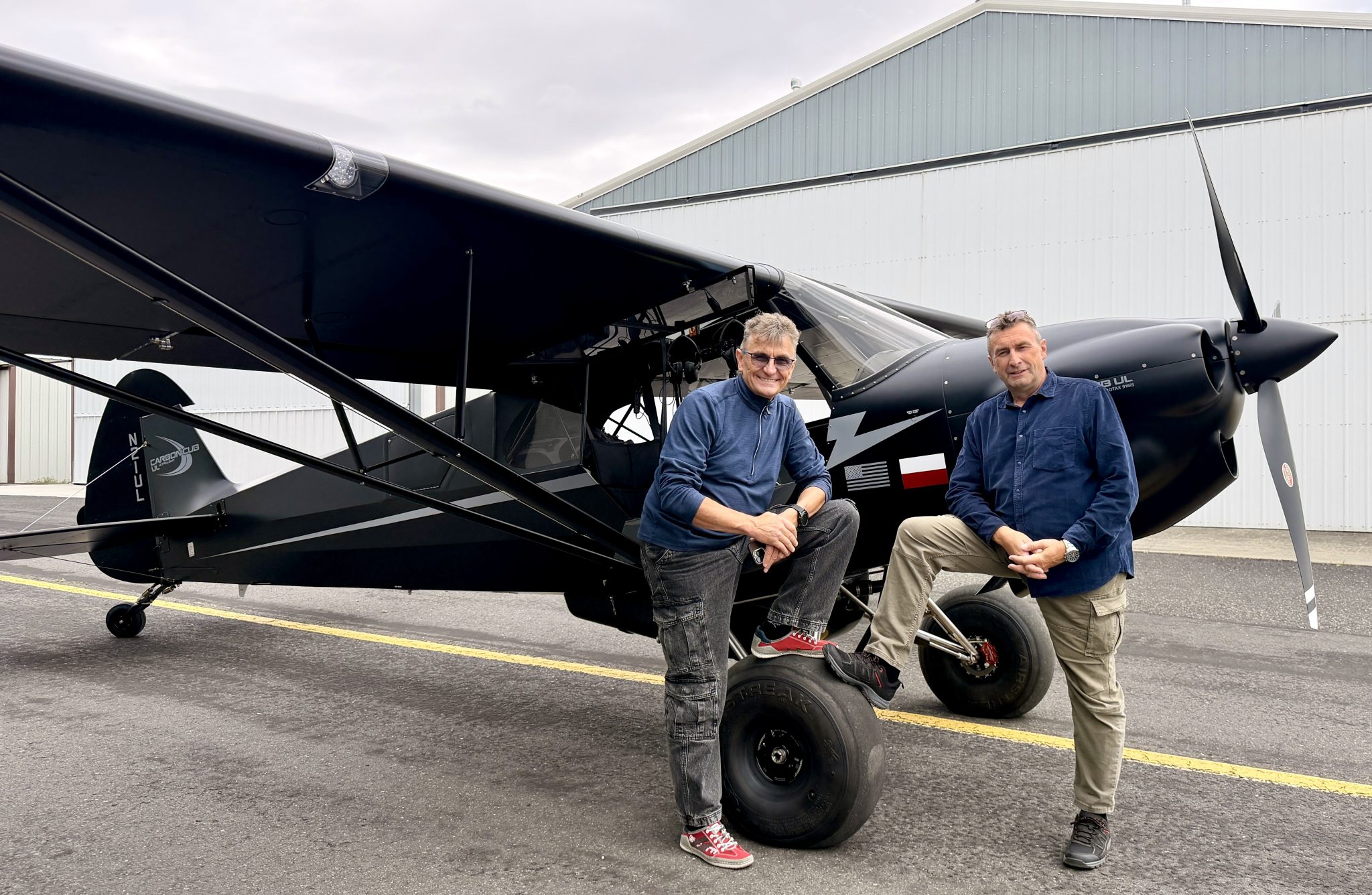

A new Carbon Cub UL completed a 94.5-hour delivery flight from Lewiston, Idaho, to Poland, CubCrafters said last month. Owner Zbigniew Dziubas accepted the aircraft in Idaho and selected Gabriel Batkiewicz to fly it to Europe rather than ship it overseas.
Weather Shapes the Route
The approximately 6,900-nautical-mile trip crossed the U.S., Canada, Greenland, Iceland, the United Kingdom and several countries in continental Europe. Due to deteriorating weather conditions, the flight included a diversion in Canada. High winds also delayed the flight’s departure from Greenland. Conditions later permitted the aircraft to cross the Greenland ice cap at Flight Level 120.
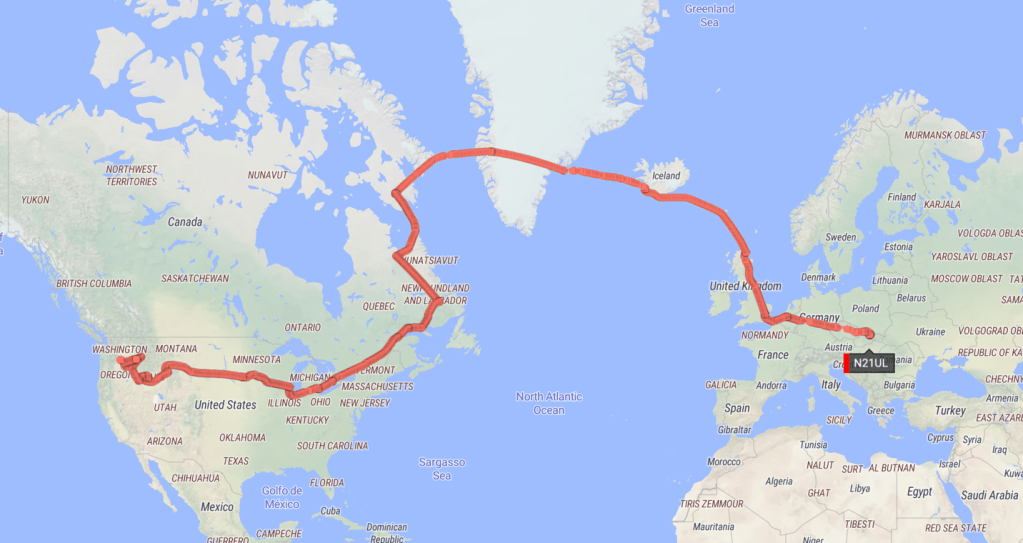
An auxiliary belly pod added 25 gallons to the aircraft’s standard 44-gallon fuel capacity. The additional fuel allowed Batkiewicz to fly directly from Reykjavík, Iceland, to Wick, Scotland, rather than stop in the Faroe Islands. The 695-nautical-mile leg lasted 6 hours and 58 minutes and consumed 41.7 gallons.
Rotax Powers the Crossing
“The airplane pleasantly surprised me,” Batkiewicz said. “The engine ran beautifully and the aircraft was stable throughout the journey. I was skeptical of the Rotax engine before this trip, but after flying it across the Atlantic, I’ve completely changed my opinion.”
The Carbon Cub UL was powered by a turbocharged Rotax 916 iS engine. CubCrafters reported an average fuel burn of 5.7 to 5.8 gallons per hour and true airspeeds between 97 and 100 mph during much of the trip. Equipment carried for the overwater portions included immersion suits, life jackets, a life raft, satellite tracking and emergency communications gear.


Reminds me of stories of ferrying aircraft to England during WWII.
A key route had Iceland to the Faroe Islands as the longest leg, Greenland>Iceland was not a great deal shorter.
IIRC that was the Bluie West One route, a code name for security.
A popular rumour in Canada was that an Avro Arrow had escaped to England.
Not so, all scrapped except for a cockpit in a museum in Canada.
(A ferry tank for the weapons bay had been made.)
But at least one Orenda Iroquois engine was sent to England for evaluation. One is now in the hands of S and S Turbines in Fort St. John BC, which is slowly restoring it to running condition. (The company overhauls gas turbines used for compressor stations on natural gas pipelines. Most are aviation engines, some are a much earlier Orenda jet engine.)
Took a while to find it, then make a deal which involved sending an antigue airplane to England, I recall.
The Arrow was an advanced interceptor, potentially capable of Mach 3 flight.
Government of the day stopped the program late in development and testing because missiles were the new way of defending the north against the UUSR. But over half a century later fighters are still a defence, the F-22, CF-18, and now F-35.
Many engineers from the Arrow and Iroquois went south into the US’ space program.