












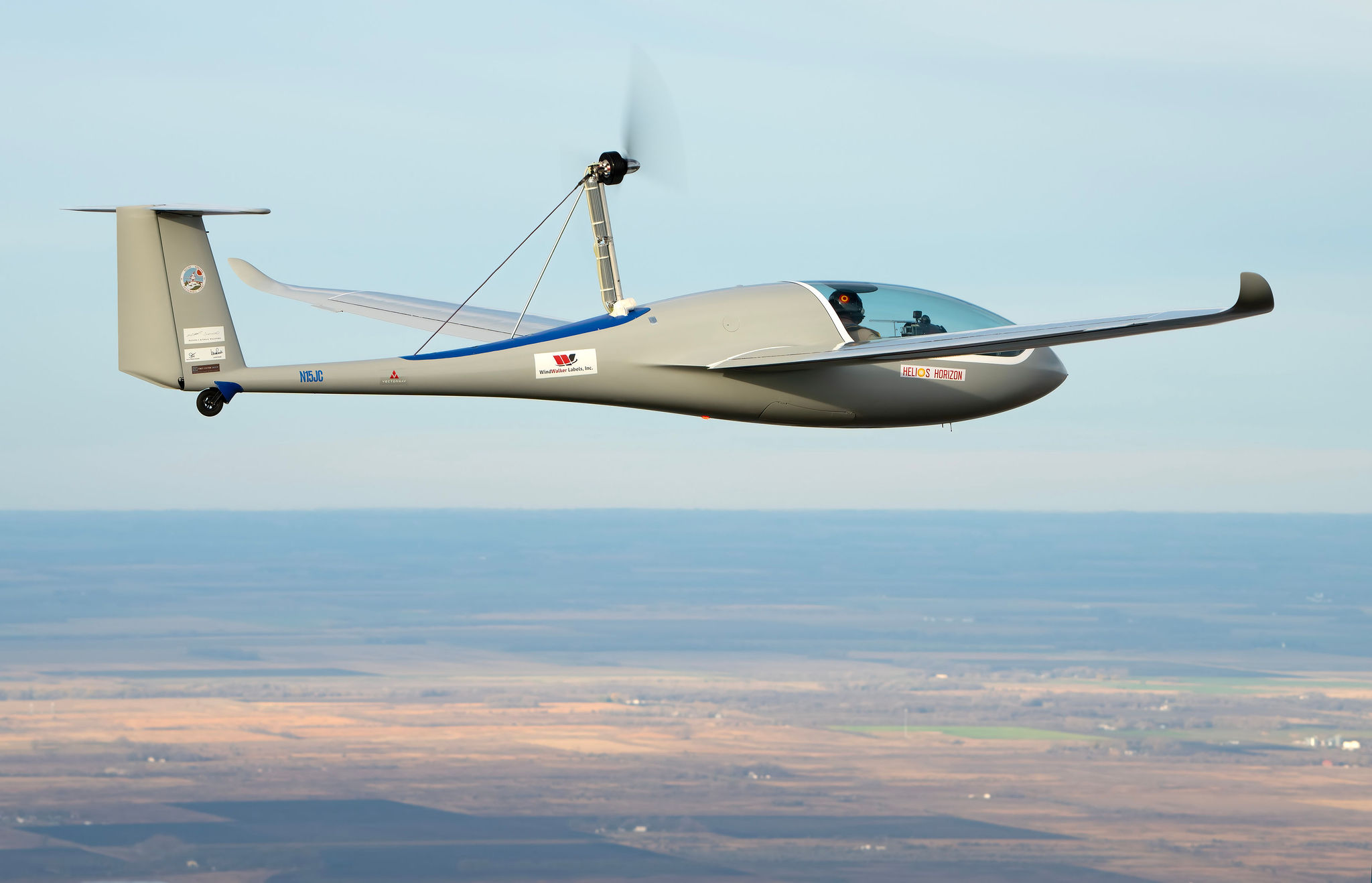

Helios Horizon has completed a series of flight tests using solid-state batteries in its modified Pipistrel Taurus aircraft. According to a Nov. 18 announcement, founder and test pilot Miguel Iturmendi reached 17,200 feet during one flight and used approximately 36% of the aircraft’s battery capacity. The tests were conducted in partnership with the University of North Dakota’s John D. Odegard School of Aerospace Sciences.
Three Record Claims
The nonprofit organization said the flight exceeded three existing world records for electric aircraft weighing less than 500 kilograms (1,102 pounds). The categories include maximum altitude, altitude in horizontal flight and time to climb above 3,000 meters, which Iturmendi reportedly accomplished in 27 minutes. An observer from the National Aeronautic Association witnessed the flights, and the results have been submitted to the World Air Sports Federation (FAI) for ratification. Iturmendi previously established two FAI records in the same weight category in 2023.
“I can fly much higher, much longer and at a much lower cost using electrification than I could with an internal-combustion engine on the same airframe,” Iturmendi said in the announcement.
Future High-Altitude Flights
The aircraft is based on a Pipistrel Taurus airframe that has undergone modifications to its wings, propulsion system and electrical components. Helios Horizon conducted its first piloted flights using solid-state batteries earlier this year. In an earlier interview with CleanTechnica, the organization said its battery cells offered an energy density of 410 watt-hours per kilogram, compared to 260 Wh/kg for its previous batteries. Higher energy density has also been a focus of development for electric trainers. During the latest campaign, the aircraft also carried an experimental atmospheric gas analyzer supplied by UND researcher Shawn Wagner.
Helios Horizon said it now plans to install another set of solid-state batteries that it says will offer 25% greater energy density. The organization is targeting flights to 40,000 feet in early 2027.
Iturmendi has also outlined plans for a second aircraft, Helios Horizon 2, which would incorporate a pressurized cabin and accommodate a pilot and two passengers. The proposed aircraft would be designed to operate at altitudes reaching 80,000 feet.

0 replies