















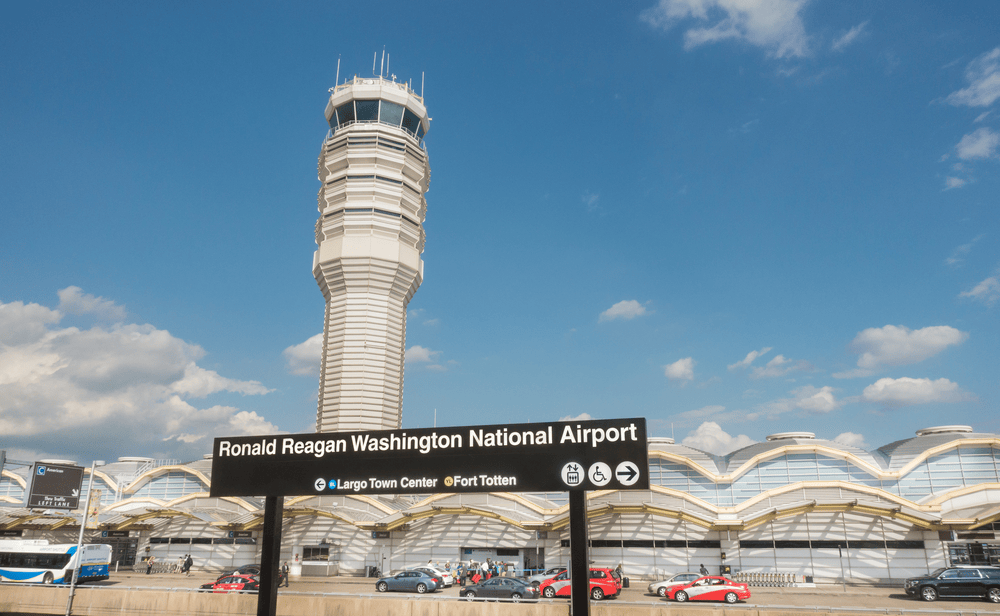

A new National Academies report has identified continuing safety concerns in the airspace surrounding Ronald Reagan Washington National Airport (DCA), nearly two years after a midair collision killed 67 people. Released Wednesday, the congressionally requested study calls for stronger FAA and U.S. Army safety oversight, improvements to collision-avoidance technology and additional scrutiny of the airport’s operating capacity.
Airport Capacity Concerns
The committee recommended that Congress direct the FAA to conduct and publicly release a comprehensive safety and capacity assessment before authorizing additional flights at DCA. According to the report, changes in airline schedules, aircraft types and traffic patterns have increased the complexity of operations at the airport. Researchers said future evaluations should account for flight concentrations, interactions between helicopters and fixed-wing aircraft, and the resulting workload for pilots and controllers.
Safety Oversight and Collision Prevention
The study also examined safety management failures identified following the January 2025 collision near DCA between American Airlines Flight 5342 and a U.S. Army Black Hawk helicopter.
Researchers found that the FAA had not consistently used available safety information to identify emerging hazards or evaluate whether corrective actions were effective. The Army’s preflight risk assessment for the helicopter involved in the accident did not explicitly identify a potential midair collision with civilian aircraft as a hazard. The findings build on the NTSB investigation, which identified systemic failures involving both agencies.
“The collision revealed weaknesses in how aviation safety risks were identified, assessed, and managed both prior to and since the accident,” said James P. Bagian, chairman of the National Academies committee responsible for the study, in a news release.
The report recommends prioritizing existing traffic-awareness and alerting technologies for general aviation aircraft while developing more capable collision-avoidance systems for helicopters and larger fixed-wing aircraft. It also calls for improved coordination between the FAA and Army, clearer helicopter-route guidance and standardized training requirements for military helicopter pilots operating in the region.
The recommendations come as lawmakers continue negotiating aviation safety legislation that includes a proposed ADS-B In mandate. A second National Academies report will examine additional safety concerns, including previous close calls involving military aircraft and broader civil-military coordination.


0 replies