















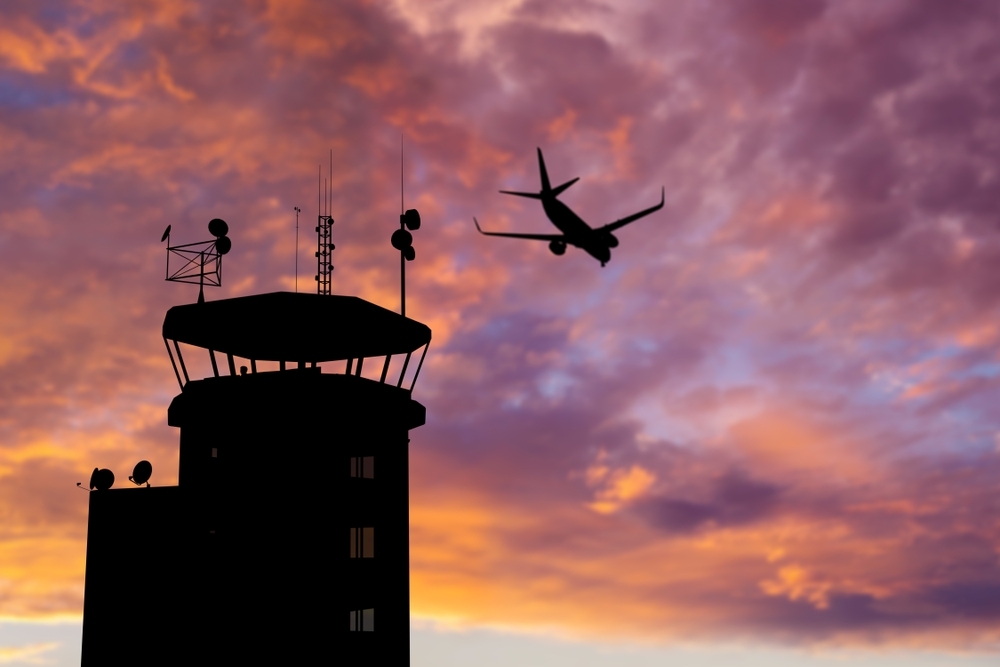

The FAA is evaluating proposals for a new artificial intelligence-based air traffic management tool designed to help controllers identify potential conflicts and congestion earlier than current systems allow.
Transportation Secretary Sean Duffy said during an interview Friday at a Semafor event in Washington that three companies are working with the agency on software intended to improve how flights are managed across the National Airspace System.
“We have three companies that are working right now with us on developing software to look at even how flights are managed,” Duffy said during the Semafor event.
According to Duffy, the tool would use AI to examine upcoming and ongoing flights and identify periods when arrivals and departures are concentrated too tightly, creating avoidable delays. Bloomberg reported that Palantir Technologies, Thales and Air Space Intelligence were selected to compete on the project.
Predictive Planning
The system is being developed to provide earlier awareness of potential traffic conflicts and to allow for adjustments earlier than currently possible. Tools available at the moment typically focus on near-term separation, while the proposed system is intended to help controllers extend that planning window.
“A controller will get a notice that they could change one of the airplanes’ flight path slightly, and they can deconflict it an hour and a half, two hours before the conflict even happens,” Duffy said.
The FAA has indicated the technology could also be used to identify scheduling bottlenecks by enabling adjustments to departure or arrival times in smaller increments to better distribute traffic demand. Duffy said this approach could help reduce delays at busy airports without requiring major changes to airline schedules.
Broader Modernization Push
The new AI initiative is part of a broader ongoing ATC modernization program at the FAA that aims to update infrastructure and improve overall system reliability. The agency has received $12.5 billion from Congress for this modernization work, though more funding is still needed.
The modernization program includes replacing legacy systems, updating controller equipment and addressing workforce shortages. Changes to traffic management tools and procedures could affect how flights are sequenced and managed in increasingly congested airspace as the FAA continues to integrate new technology into daily operations.


“A controller will get a notice that they could change one of the airplanes’ flight path slightly, and they can deconflict it an hour and a half, two hours before the conflict even happens,” Duffy said.
fail at DCA, fail at LGA,
AI doing active listening on all frequencies at a given airport along with ADS-B data would work. But ADS-B data transmission would be required. In both of these accidents the vehicles were on different frequencies, and therefore the operators were out of the loop. This is STUPID, but if something was listening in real-time to the chatter on all of the channels, a conflict could be identified. Especially if the system could tell ground and helicopter traffic to halt/hover!
Vehicles are not part of the deconfliction picture; too last minute/last second timeline to be that predictable. The AI solution is based on far-future timeline predictions; human intervention can work based on long-term human experience.