
















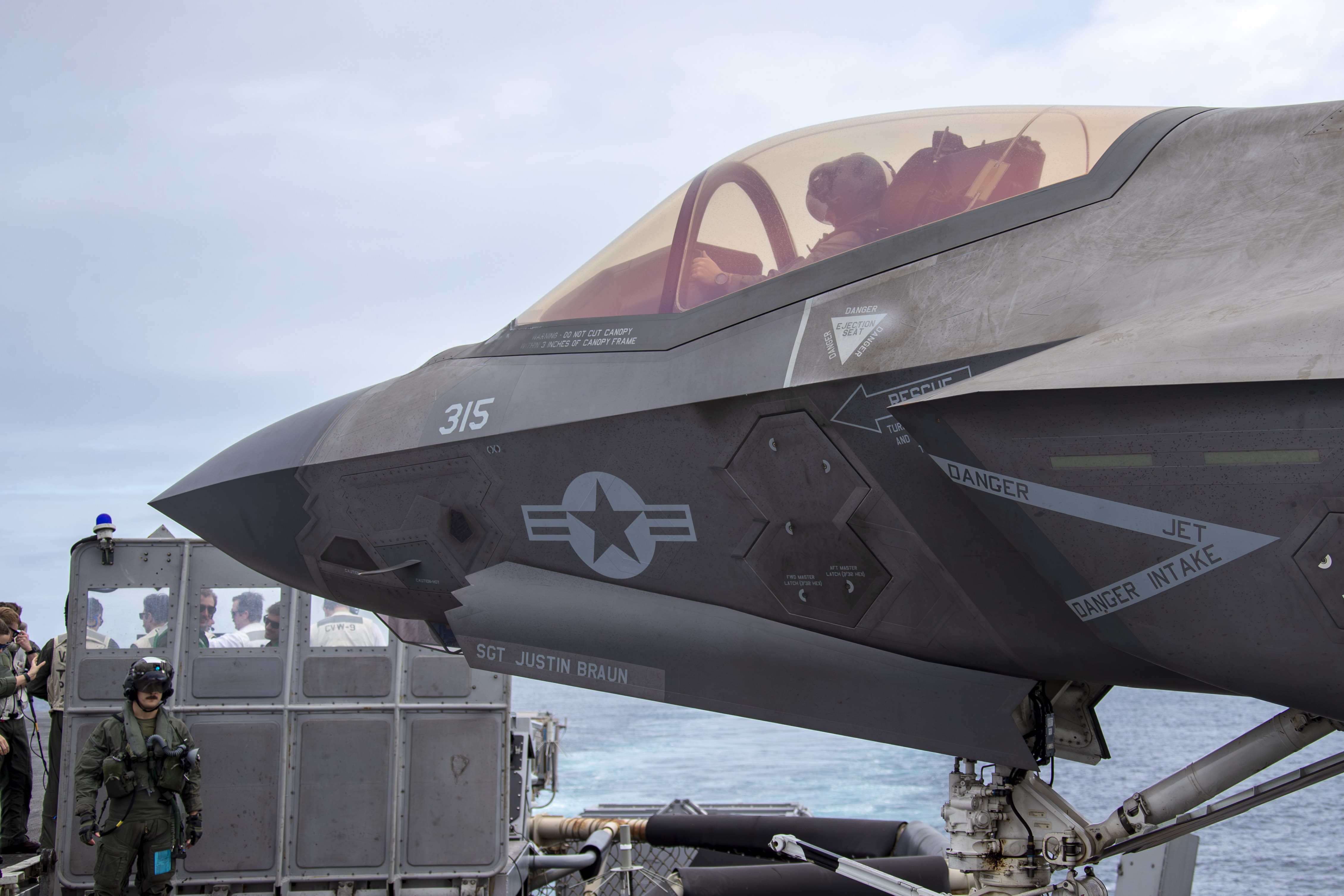

The U.S. Government Accountability Office (GAO) is warning that the F-35’s combat readiness is falling even as the Pentagon ramps up a $13.7 billion effort to fix long-running sustainment problems, according to a newly released report.
According to the watchdog, the mission capable rate—the percentage of time an aircraft can perform at least one assigned mission—declined from 67 percent in fiscal year 2021 to 44 percent in fiscal year 2025. The full mission capable rate, which measures the ability to perform all assigned missions, fell even further, dropping from 38 percent to 25 percent over the same period—meaning only about one in four F-35s is fully ready for all tasked roles at any given time.
GAO points to a mix of familiar problems driving the decline. The biggest issues include shortages of spare parts, maintenance backlogs at depots, and delays in software and support systems. The report also highlights continued heavy reliance on contractor logistics support, which can limit flexibility when supply chains tighten or workloads spike.
The F-35 program office is now working on a major sustainment overhaul called the Global Support Solution (GSS) Reset, a plan that could cost about $13.7 billion through 2031. The goal is to improve parts availability, reduce maintenance delays, and boost overall fleet readiness.
But GAO says the plan comes with risk. It warns that the industrial base may not be able to produce enough spare parts fast enough, and that long-standing maintenance bottlenecks could take years to fix. The agency also notes that past contractor incentive structures didn’t always align well with actual readiness outcomes.
The F-35 remains the Defense Department’s largest fighter program, with more than 800 aircraft delivered to the Air Force, Navy, Marine Corps, and international partners. GAO says improving readiness at scale will be critical as the fleet continues to grow.


A golden airplane takes a lot of gold to keep it running.
So, 800 delivered, and only 200 mission ready? Perhaps we need to look carefully at these numbers. If the readiness was 80% plus, would we need so many aircraft? Would this lead to more availability of spares and repair parts as they would not be being used for new aircraft.
Who is responsible for reading and approving these contract? Joe about we stop any and all new production, until we get the roughly 600 planes back up and running?