














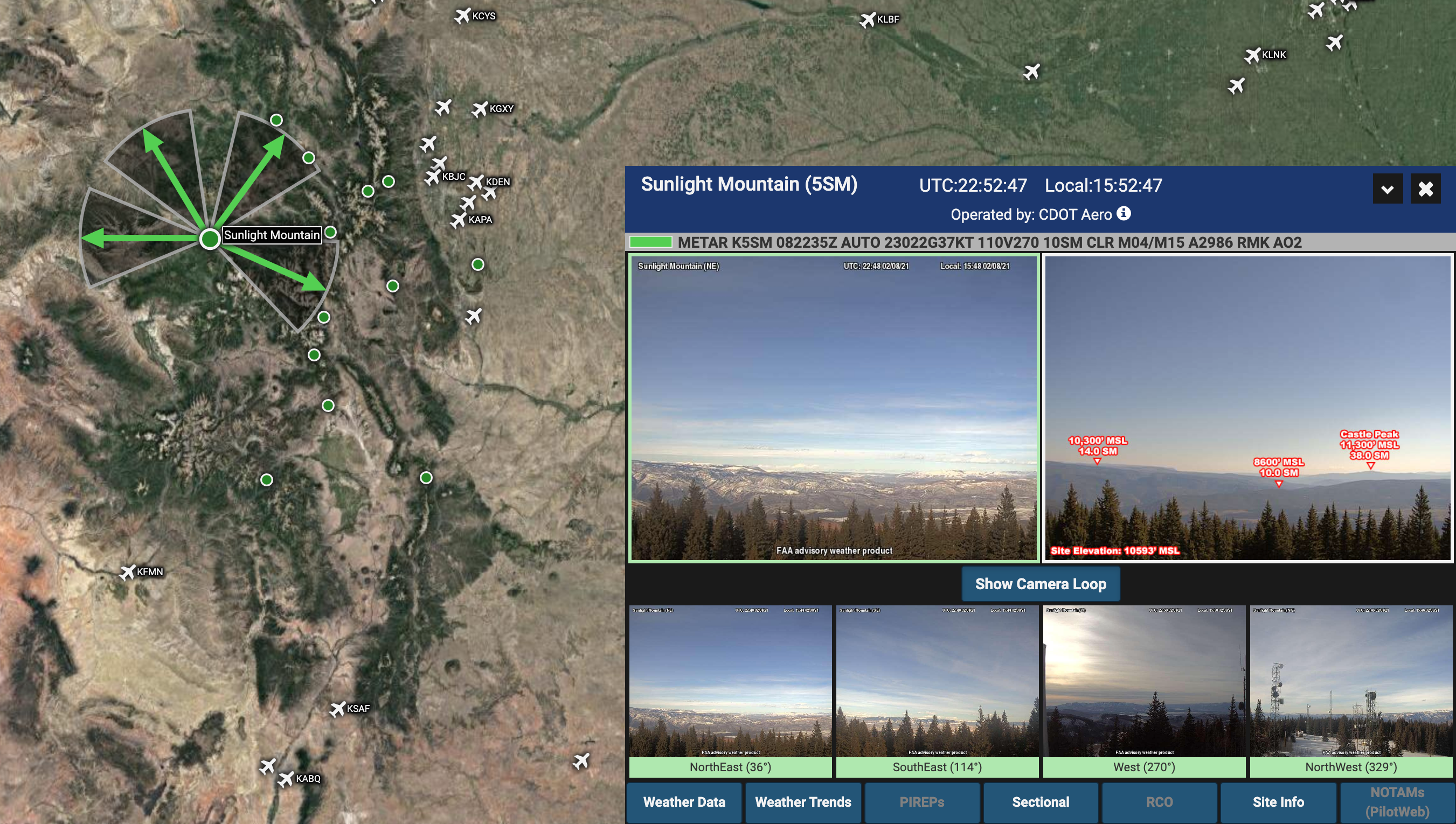

The FAA is installing 23 weather-camera sites in Hawaii in an extension of a program started in Alaska and expanded to Colorado last year. Each site can carry four cameras and will provide “near-real-time” weather imagery to go with automated weather reports. The cameras will be on the FAA’s weather cam site by June of 2021.
The FAA says the “Hawaii project will install 23 camera facilities throughout the islands. The FAA has completed engineering surveys and site selections on Kauai, Lanai, Maui and Molokai, and will begin surveys on Oahu and the Big Island in March 2021.” The first installations will be on Kauai in March and “will move to the other islands as the agency develops engineering plans, obtains leases and permits, and procures the equipment. The agency expects images from the Kauai cameras will be on its weather-camera website in mid-2021. The FAA is basing site locations on flight routes and areas where weather conditions commonly affect and interrupt flight operations.”

According to Walter Combs, manager of the FAA Weather Camera Program, “The cameras themselves are small, lightweight and portable. They take around two days to install, and after that, control systems tell us if there is an outage. The flexibility, affordability and reliability of these camera facilities save precious time and resources. This team—consisting of fewer than 20 people—is responsible for nurturing an idea into a robust, low-cost and highly available service.”
