
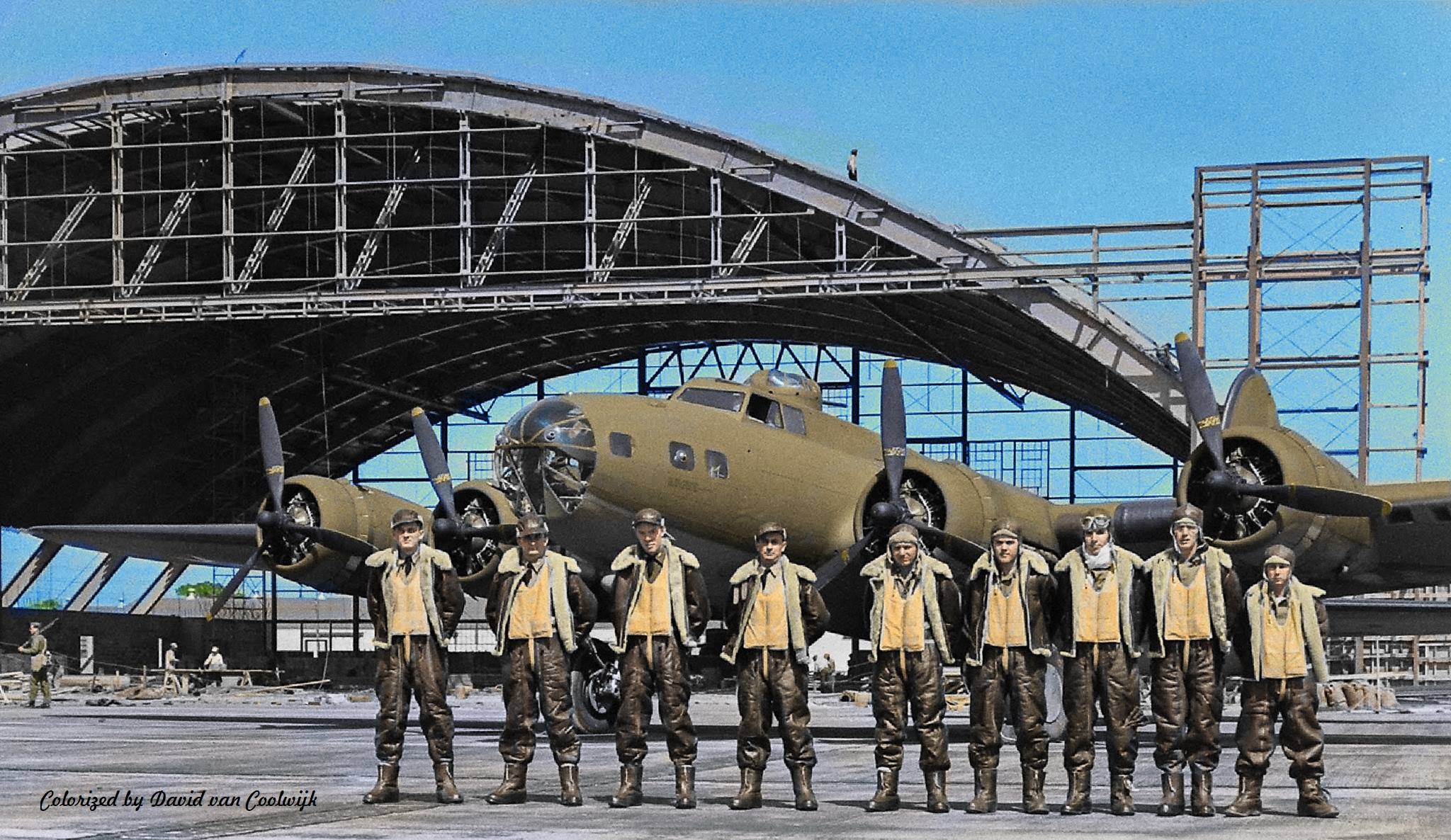

Nearly four decades ago, a young Mike Kellner, inspired by the television series 12 O’clock High, ponied up a bit more than seven grand to a Maine junkyard for a B-17E. Or, more accurately, the sawed-off pieces of one. “It was a scrapped airplane,” he told the local Chicago suburban Daily Herald newspaper. “So, it was all chopped into eight-foot pieces. At the time, they thought we were nuts.” It took Kellner the better part of six years to truck the bits and pieces home to Illinois, and in the almost 40 years since, he’s been putting those puzzle pieces back together—a little at a time.
B-17E Serial Number 41-2595 was built by Boeing in Seattle in 1941, likely before the Japanese attack on Pearl Harbor. The early variant of the famous “Flying Fortress” was delivered to the U.S. Army Air Corps in 1942. Ultimately nicknamed the “Desert Rat,” it was assigned for training with the 97th Bomb Group at MacDill Field near Tampa, Florida, and never flew a combat mission. The last operational flight of the Desert Rat (also known as “Tangerine”) was in December 1945. It was then authorized for salvage, ultimately ending up in pieces at the Maine auto salvage yard.
A private pilot and former construction worker, Kellner has been working on the B-17 eight hours a day, six days a week for the past several years. He told the Daily Herald he has been saving up money and horse-trading parts and expects the four-engine bomber to be airworthy in about five years—though he admits he’s been using the same five-year estimate for the past two decades. “We’re still looking for some things,” Kellner told the newspaper. “We’re still missing a couple of seats and a few turret parts.” He explained that most of the internal structure of the four-engine Flying Fortress is original, “though some big, load-bearing pieces are new.” He has accumulated ten of the 1,200-horsepower Wright R-1820-97 radial engines used on the B-17. No word yet on whether or not the current Airworthiness Directive on B-17 wing-spar assemblies will affect the Desert Rat’s restoration timeline.
Asked how much he’s spent on the project to date, Kellner told the newspaper, “Too much paperwork, and I’m not sure I want to know.” Though he plans to handle the bulk of financing the project on his own, he is willing to work with sponsors and does accept donations—either financial or in volunteer help, through his Facebook page.