















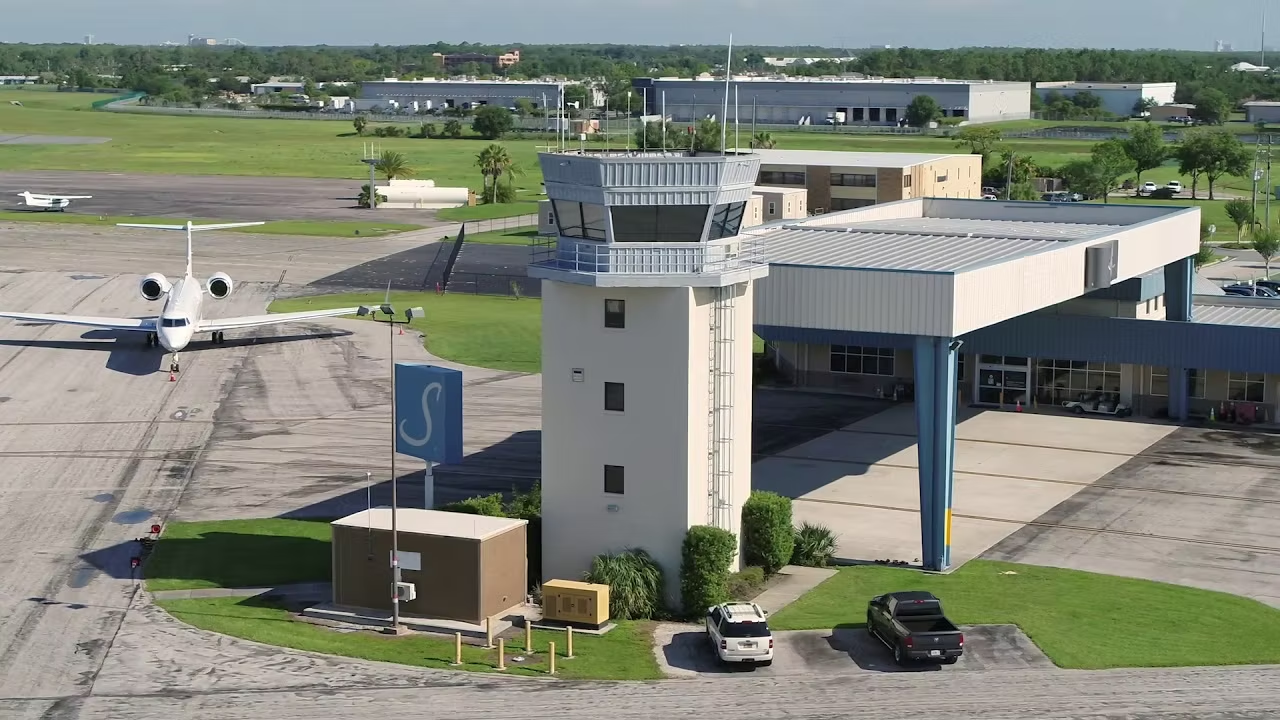

Kissimmee Gateway Airport is proposing a camera-based aircraft identification system for collecting landing fees after a new Florida law restricted airports from using ADS-B data for that purpose. The Kissimmee City Commission is scheduled to consider the proposed changes at its Sept. 22 meeting.
Florida’s new ADS-B law took effect July 1 and applies to Part 91 aircraft weighing 12,499 pounds or less. It prohibits airports from using ADS-B information to calculate, generate or collect fees for landings, departures or operations based on entering a specified area of airport airspace.
Camera System Proposed
Under the proposal, Kissimmee would expand its agreement with Vector Airport Systems to add four aircraft-identification camera pods. The equipment would be used to identify aircraft registrations for the airport’s landing-fee program. Kissimmee began collecting landing fees in February 2025 through Vector’s PlanePass system, according to the airport’s current fee schedule.
The city is also considering raising its fixed-wing landing fee from $3 to $3.75 per 1,000 pounds of maximum landing weight. The existing $20 charge for helicopters would remain, as would the exemption for based aircraft and the first daily landing by aircraft weighing less than 5,000 pounds.
Airport Defended Technology Use
“Restricting technology forces airports to adopt labor-intensive methods, increasing costs and ultimately user fees,” the airport said in a March statement.
The airport said its landing-fee program generated $442,238 during its first year and is intended in part to provide local matching funds for federal and state infrastructure grants.

I used to keep my aircraft at Kissimmee airport. I won’t even fly in there anymore due to the fees. I own a Cessna Citation 550. This is a federally funded airport and this is just another way they want to charge fees to make money off of aircraft owners. It’s another intrusion into the lives of people by government who want to make life unaffordable. I’ve already ignored the fees for landing at 2 other airports. I refuse to pay them.