














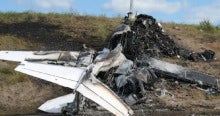

Because of the COVID-19 pandemic, the NTSB continues to curtail travel for its investigators and many accidents are being handled by remote control. About a third of the 1200 to 1300 annual aircraft accidents require on-site NTSB staff, but investigators haven’t traveled in about six months with no clear end in sight. In some cases, local law enforcement is providing information and photographs of crashes, according to NTSB Chairman Robert Sumwalt.
“The hard reality is that some ongoing NTSB investigations will likely be impacted by pandemic measures. Work requiring travel of NTSB staff is curtailed or canceled unless, or until, it can be completed safely, or, conducted by another means,” NTSB Vice-Chairman Bruce Landsberg recently told AVweb. “The safety of NTSB staff is the Chairman’s and agency leadership’s first concern. We have to consider not only the investigator(s) themselves but all with whom they come in contact. That could include other agency staff, as well as their families, and their communities,” he added.
The agency doesn’t routinely send investigators to all accidents, but relies on local FAA staff for some accident work. Accidents involving fatalities usually do merit NTSB staff participation. Serious accidents require investigator involvement to examine wreckage to a level of detail FAA personnel are not necessarily trained to do. The agency says since implementing distancing and nonessential travel measures, trips to accident scenes are being considered on a case-by-case basis.
“We all want to get back to a full travel schedule but will do it when it’s safe to do so. In these days, risk assessment applies to as much to after-crash investigations as it does to all pilots planning flights before a crash we hope never happens,” Landsberg added.
