














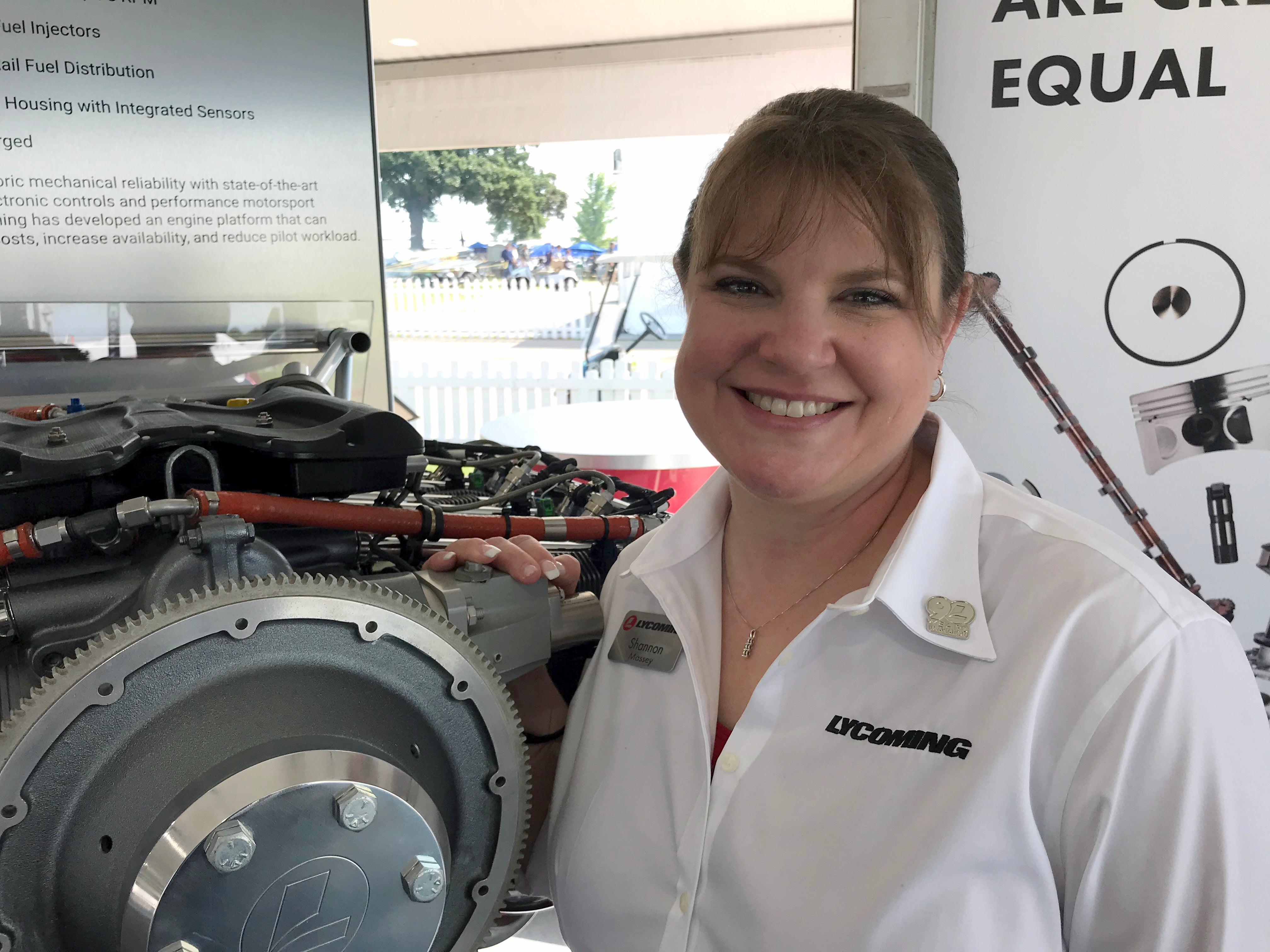

Just in time for its 90th anniversary, Lycoming has a new general manager in Shannon Massey, an inside-the-house elevation from Bell, a sister unit under the Textron umbrella. Massey, a chemical engineer, has been with Textron for more than 20 years during which she worked in materials science and operational manufacturing.
AVweb met with Massey this week at AirVenture and recorded this podcast for a glimpse of where Lycoming might be headed. Like most small aerospace companies, Lycoming faces the challenge of remaining competitive in a relatively flat market in which major players aren’t making as much new business so much as they are grabbing it from competitors.
As a result, Lycoming has become more vertically integrated, taking back manufacturing that was farmed out to vendors 20 years ago. Massey says this trend will likely continue.
“I think they’ve made some very wise decisions over the years and where they’ve made investments. One of the most recent investments was vertically integrating our cylinder operations. That was a good amount of capital investment on machinery.” Massey said. “Where you can control your supply chain, the better opportunity you have to reduce your lead times and improve your quality as well as your yield,” she added.
Although Bell’s core business is airframes, Massey says from her perspective, Bell is more like Lycoming than not. Both are low-volume, high-mix manufacturing, an environment that creates difficult economics and quality control issues because every change in part manufacture requires a setup change introducing the potential for error.
