
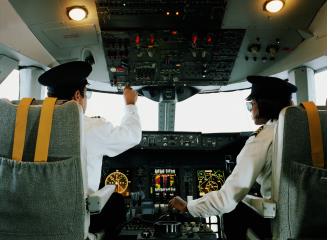

Flights involving large jets launching with just one pilot in the pointy end are not in the foreseeable future, but there may be some room for compromise. As reported today (Feb. 7) by Reuters, the European Union Aviation Safety Agency (EASA) will not accede to some industry pressure for launching an effort to reduce two-pilot crews to single-pilot operations by 2030 but is considering limited single-pilot operations as early as 2027.
According to the news agency, Airbus and Dassault Aviation, makers of the Falcon line of business jets, are advocating for single-pilot operations, but only during the cruise phase—and that the solo pilots would have to meet higher experience and health standards. The effort is said to address the growing pilot shortage and would enable a second pilot to snooze more comfortably in a rest area rather than catnapping in the cockpit.
Such a rule change would enable operators to dispatch some longer missions with two pilots rather than requiring three or four. Reuters reports the proposal is sparking some “backlash” among pilot groups.
EASA manager Andrea Boiardi told Reuters an earlier proposal from the industry to allow totally single-pilot flying by 2030 was “absolutely not realistic.”
Any change in crewing requirements would first have to be approved by individual airlines, their pilot unions and the United Nations’ International Civil Aviation Organization (ICAO), which is said to be preparing to study the topic early this year. Reuters reports that Boiardi said EASA would consider such operations only on more modern aircraft such as the Airbus A350 and Boeing’s 787s and 777Xs.