














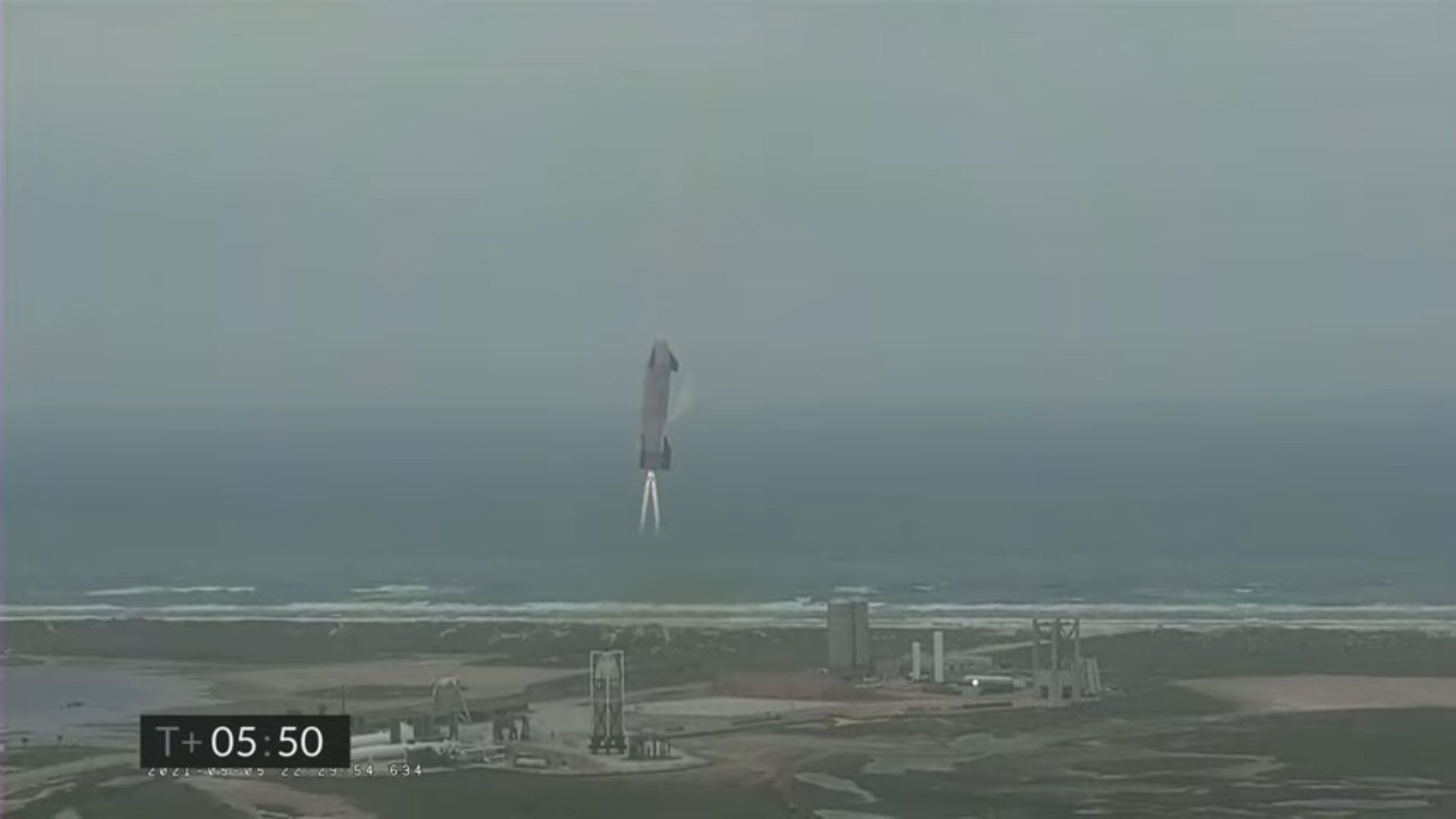

SpaceX wrapped up the fifth high-altitude flight test of its Starship prototype with a successful landing on Wednesday evening. The prototype used for Wednesday’s flight, SN15, is the first to avoid what SpaceX CEO Elon Musk has termed “rapid unscheduled disassembly” during testing. While the testing procedure was similar to that of the four previous high-altitude test flights, the SN15 prototype included some design changes.
“SN15 has vehicle improvements across structures, avionics and software, and the engines that will allow more speed and efficiency throughout production and flight: specifically, a new enhanced avionics suite, updated propellant architecture in the aft skirt, and a new Raptor engine design and configuration,” SpaceX said.
The flight lasted 6 minutes 8 seconds, launching from SpaceX’s facility in Boca Chica, Texas, at 6:24 p.m. eastern time. As planned, SN15 reached an altitude of approximately 10 kilometers before performing a flip maneuver to reorient itself for reentry. SpaceX is designing the Starship to carry crew and cargo to Earth’s orbit, the Moon and Mars.
