
















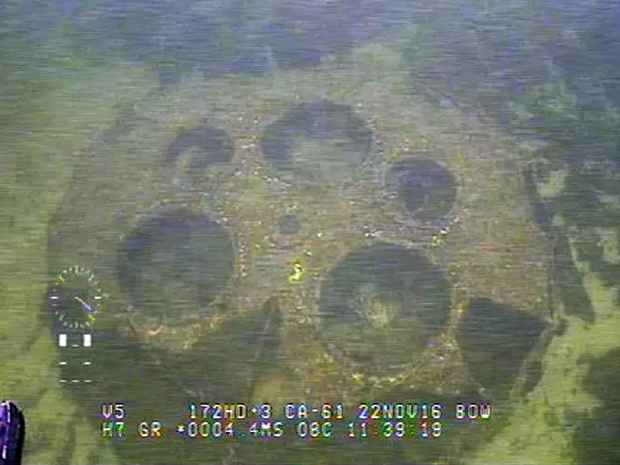
A big hunk of metal that a sea cucumber diver thought might be a Cold War atomic bomb turned out to be a piece of industrial junk. The Royal Canadian Navy sent a ship to a remote area off the northern Pacific coast of British Columbia late last month after the diver, Sean Smyrichinski, reported finding the object in early November. The location roughly matched up with the flight path of a U.S. Air Force B-36 bomber that crashed on a remote B.C. mountain in 1950 and had jettisoned an unarmed version of a Mark IV atomic bomb. The Navy quickly determined the object wasn’t related to the B-36 incident after sending a camera-equipped robot to take a look. “It was determined to be a metal part of a larger machine assembly and appears to be a piece of industrial equipment,” the Canadian Forces said in a news release.
Smyrichinski found the object in about 25 feet of water and described the discovery to local residents. One man suggested it might be the bomb and the diver went online to check it out. He later told the Vancouver Sun the images he found online of early nuclear weapons looked something like the rough sketches he made (he didn’t have a camera on the dive) and the Sun story sparked the military response. The dummy bomb, which had a lead core instead of plutonium, is likely still on the bottom of the ocean somewhere in the same area. The aircraft was on a mock raid simulating a nuclear strike on San Francisco from its base in Alaska when three of its big pusher radial engines caught fire. All 17 crew bailed out but only 12 survived. The plane flew another 200 miles before crashing on Mt. Kologet, southeast of Prince Rupert. The Air Force recovered sensitive equipment from the crash site but there are still remnants of the aircraft on the mountain.

