
















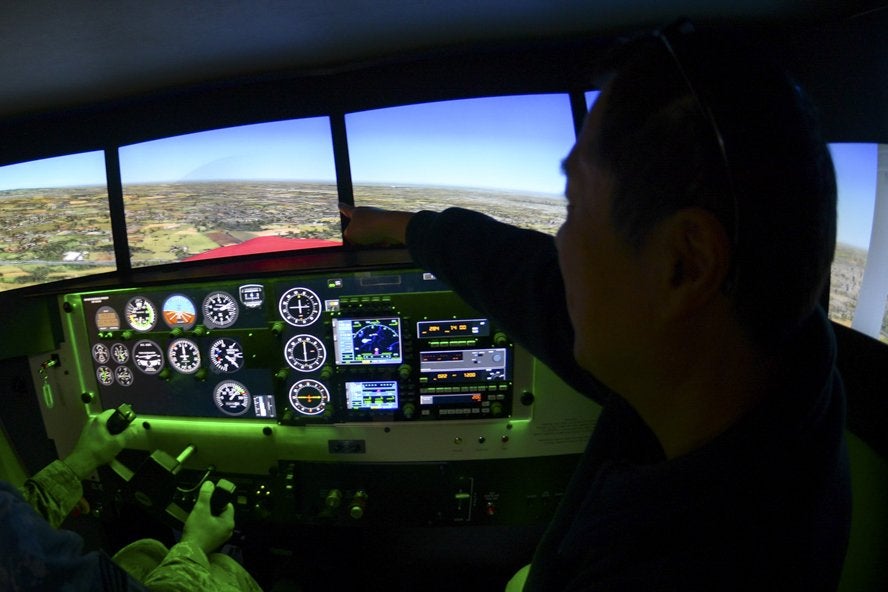
The FAA published a rule that it says “relieves burdens on pilots seeking to obtain aeronautical experience, training, and certification by increasing the allowed use of aviation training devices” on Wednesday. The rule makes changes to a number of other areas as well, including further modifications to complex aircraft requirements for commercial applicants and credit for sport pilot training.
Under the new rule, pilots will no longer need to have an instructor present to meet flight experience requirements for instrument currency in an aviation training device (ATD), flight training device (FTD) or full flight simulator (FFS). It also reduces the frequency of flight experience needed for instrument currency from every two months—as previously required if the experience was gained in an ATD—to every six months and removes the three-hour flight time requirement for ATDs. According to the FAA, “Use of these training devices has proven to be an effective, safe, and affordable means of obtaining pilot experience.”
Building on the FAA’s April noticethat it was no longer requiring commercial and CFI applicants to provide complex airplanes for practical tests, the new rule will allow technically advanced airplanes (TAA) to be used to complete the commercial practical test. TAAs can also to be used to meet training and experience requirements that must be completed in a complex or turbine-powered airplane for a commercial pilot certificate. The FAA defines a TAA as an aircraft with an “electronically advanced avionics system.”
Another big change is that training received from a sport pilot instructor can be credited toward a higher certificate or rating. The FAA says the new rule (PDF) will save the pilot community an estimated $113.5 million over the next five years. Most of the changes are to Part 61, although some affect Parts 91, 135 and 141 as well. The rule will not be implemented all at once. Parts will begin going into effect on July 27 with the entire rule active by Dec. 24, 2018.

