















The NTSB says it will have to build a timeline for the data obtained from the flight data recorder on the Blackhawk helicopter involved in last week’s collision in Washington because the data wasn’t time stamped. The Board had hoped to get definitive answers on the discrepancy between the radar data and the FDR and ADS-B gear on the CRJ700 that was also involved.
The radar scope in front of the controller working both aircraft showed the helicopter at 200 feet and that figure was transmitted directly from the Black Hawk’s Mode S transponder. The FDR and ADS-B on the plane put its altitude at 325 feet plus or minus 25 feet. The discrepancy and its source are fundamental to the investigation as the on-site work continues.
“NTSB investigators are working to synchronize flight data recorder and cockpit voice recorder data from both aircraft, ATC communications and radar scope data to obtain a detailed timeline,” the NTSB said in an update published Monday. “The flight data recorder for the Black Hawk did not have timestamps. Investigators will have to manually create timestamps, which requires additional time to validate.”
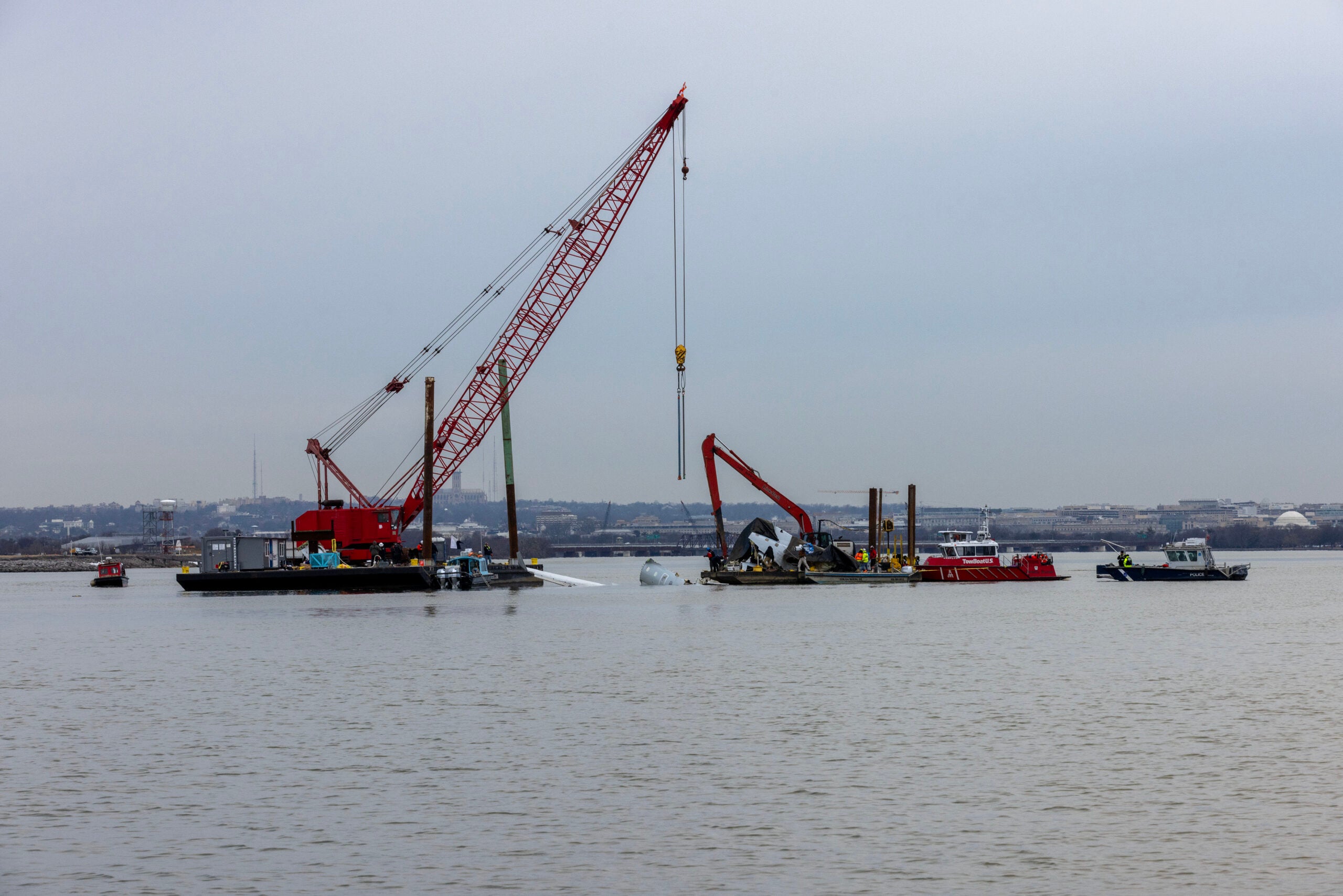
The NTSB and Navy Supervisor of Salvage moved a barge-mounted crane to the Potomac to recover the largest hunks of the shattered remains of the RJ. As the big pieces get pulled, FBI divers are scouring the bottom of the river for smaller debris and it’s all going to a hangar at Reagan National to be reassembled as close as possible to what Bombardier intended. After all the airliner bits are recovered, the team will move to the helicopter.
