
















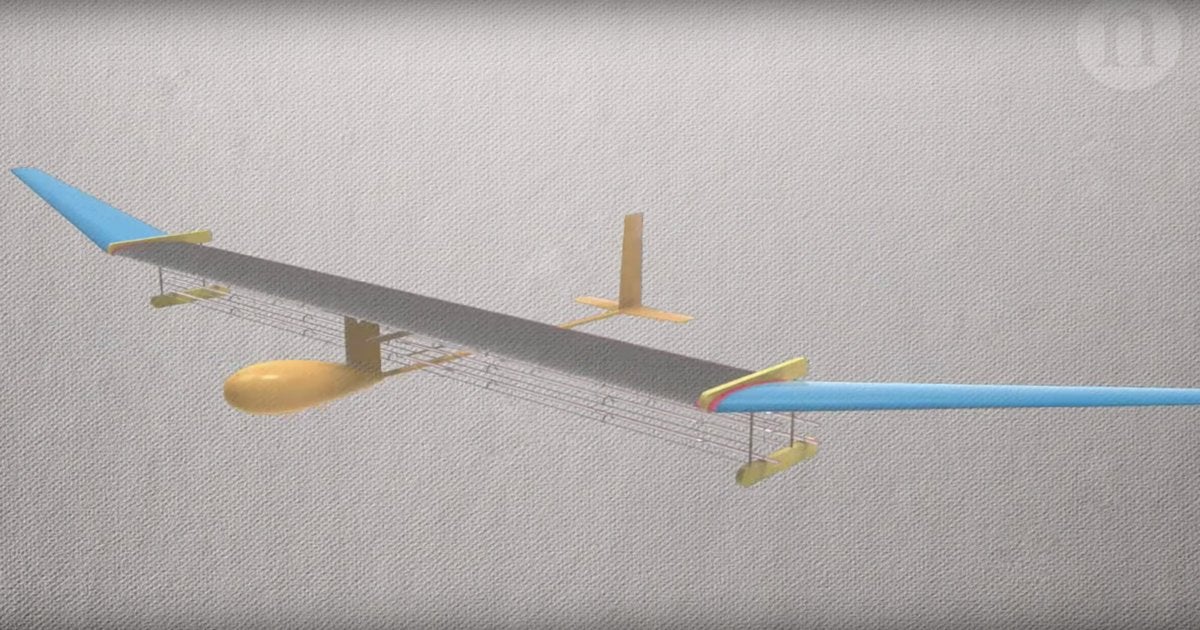
MIT engineers have developed an aircraft propulsion system with no moving parts. A team led by Steven Barrett, an MIT professor of aerospace engineering, flew a five-pound model the width of a gymnasium using “ionic wind” to maintain flight after an initial push using bungee cords. The first flight occurred almost a year ago. After crashing the aircraft, which has a 15-foot wingspan, into the gym wall, the team rebuilt it and flew nine more times before publishing a paper in the journal Nature. The electrically powered system is silent and emission-free.
The ionic wind is created by an electric field on a fine wire that agitates free electrons to start a chain reaction that causes ionized air molecules to rush toward a “collector.” The result is a physical movement of air as if it had been pushed by a propeller or turbine. It’s nothing new but the technology and hardware for making it light and powerful enough are now becoming available. Barrett said the big hurdle was a power converter that boosts battery voltage. Barrett told the Washington Post that scaling the technology for useful airframes will be a challenge but he also noted that aviation itself had humble beginnings. Drones might be the first practical application. Nature produced the video below explaining how it all works.

