















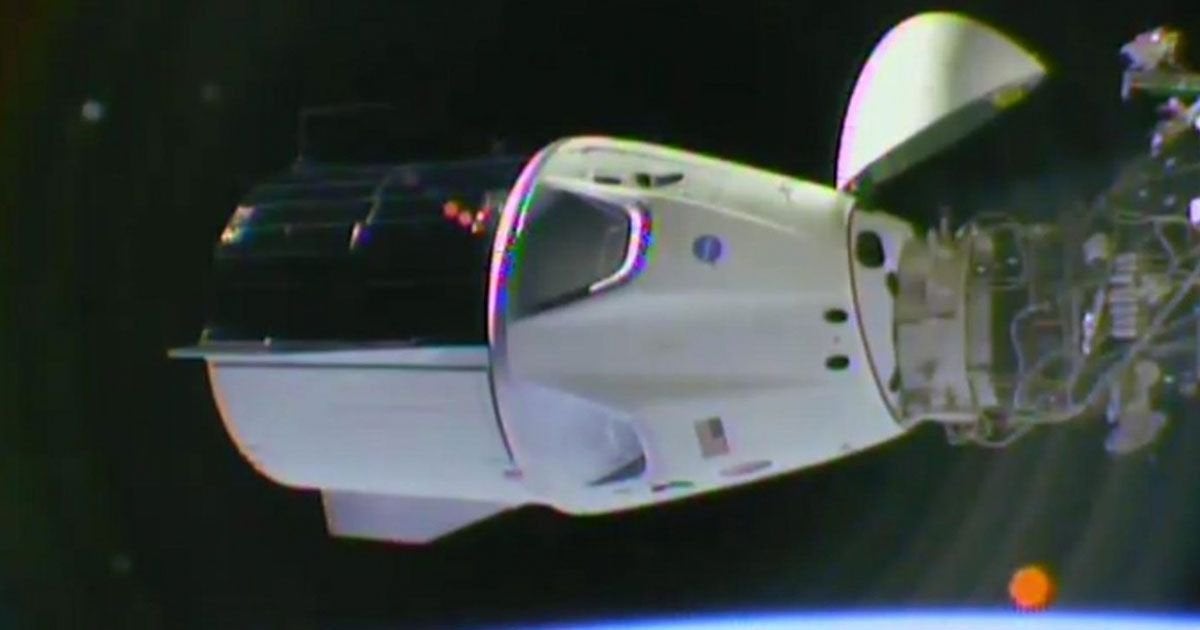
SpaceX celebrated the successful launch of its Crew Dragon capsule followed by the successful autonomous docking of the spacecraft at the International Space Station on the weekend as a prelude to the resumption of manned U.S. space flights, possibly in the next year. The crew capsule was unmanned but carried a life-sized mannequin named Ripley wired with a suite of sensors to measure the effects of the launch on future human passengers. Shortly after the docking, Ripley was joined by the three astronauts currently living on the ISS who donned precautionary oxygen masks to check the atmosphere aboard. After some checks, the masks were discarded and work began on evaluating the Crew Dragon’s overall suitability for the mission.
The Saturday morning launch went off without a hitch, much to SpaceX CEO Elon Musk’s relief. “I’m a little emotionally exhausted because that was super stressful, but it worked,” he told a news conference after the rocket lifted off at 2:49 a.m. Both SpaceX and Boeing are vying for manned space missions from NASA and Boeing will test its Starliner system as early as April. Both companies hope to do manned missions before the end of the year.
After the launch, the rocket booster descended and recovered on the drone ship “Of Course I Still Love You” stationed more than 300 miles off the east coast of the U.S. The capsule will spend five days connected to the ISS, during which astronauts David St. Jacques and Anne McClain will run tests and inspect it. It will return to Earth with a conventional re-entry and parachute recovery in the Atlantic Friday morning.