
















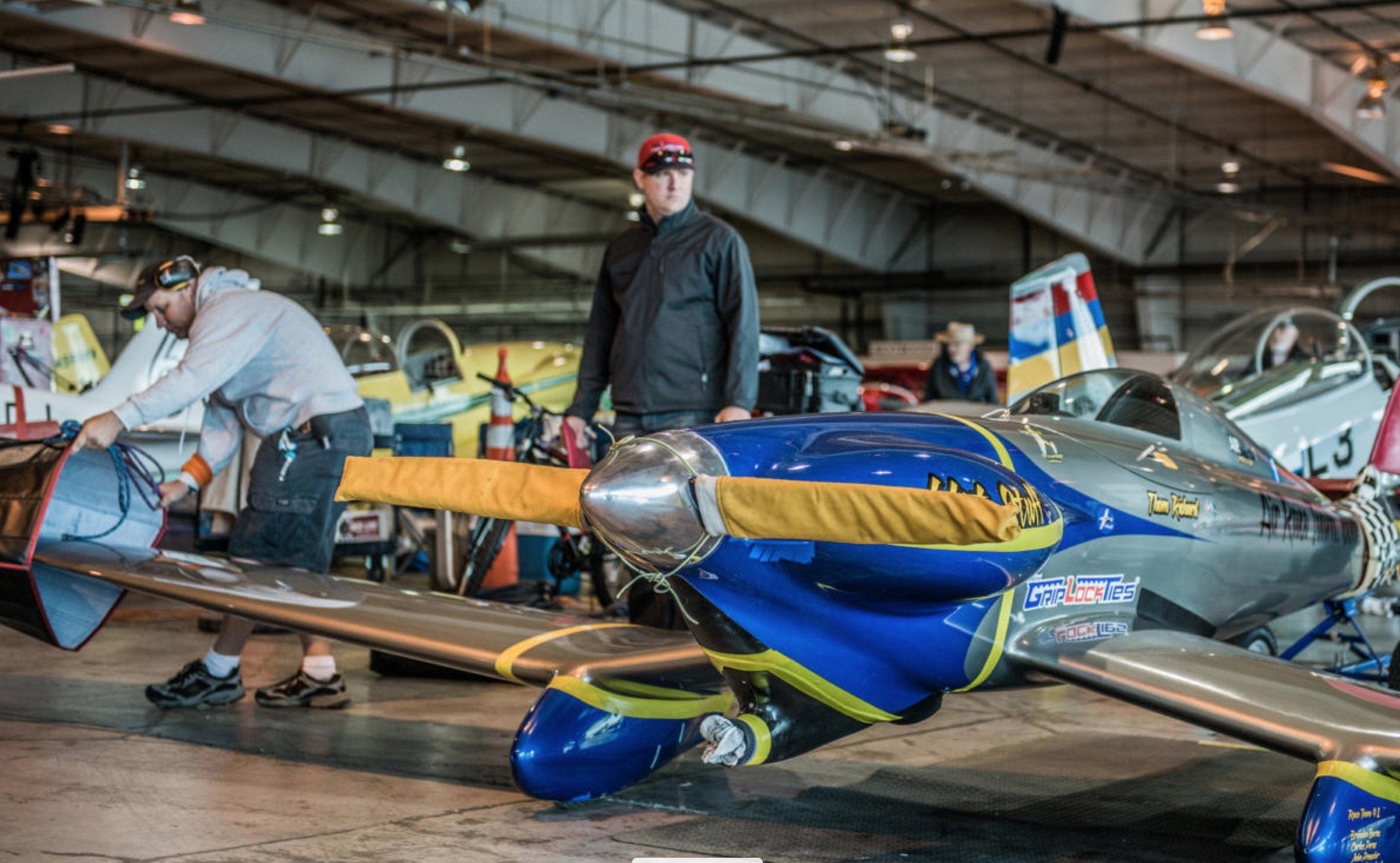
Formula 1 racing is a popular event at the Reno Air Races, among other sites, and beginning late next year, it will evolve into something new: electric airplane racing. As AVweb covers Aero this year, Jeff Zaltman, CEO of AirRaceE, says airplanes are being designed and constructed for the first scheduled air race late next year. No venue has been selected yet, but Zaltman says discussions are underway with several countries—all warm-weather climes—to host the first race.
In this podcast recorded at Aero this week, Zaltman told us electric airplanes will be constructed along similar lines as Formula 1 aircraft, meaning a 66-square foot wing area, 500-pound minimum weight and fixed gear. But while piston Formula 1 aircraft are restricted to the Continental O-200 engine, e-racers will be opened up to all manufacturers. “It’s very much geared toward accelerating innovation and accelerating the technology that will eventually find its way into the airplanes we fly as passengers 30 years from now,” Zaltman said.
Power will be supplied by a 150-KW motor which, as electric airplanes go, is quite powerful, about the equivalent of 230 to 240 HP race ready, but with neck-snapping torque delivery. While batteries still limit electric aircraft endurance. Zaltman said the races will last about five minutes, compared to eight minutes for piston F1 races. “Right now in Formula 1, they get about 250 MPH. We expect it to go above that, but I’m hesitant to give a number,” Zaltman said.
But is it going to be any fun watching airplanes quietly whir around a closed course? Zaltman says much of the noise airplanes make is from props and electric airplanes will have those. “The noise is going to be there in terms of the spectator understanding the racing, but it will be quieter,” he said. For more, see AirRaceE site here.

