
















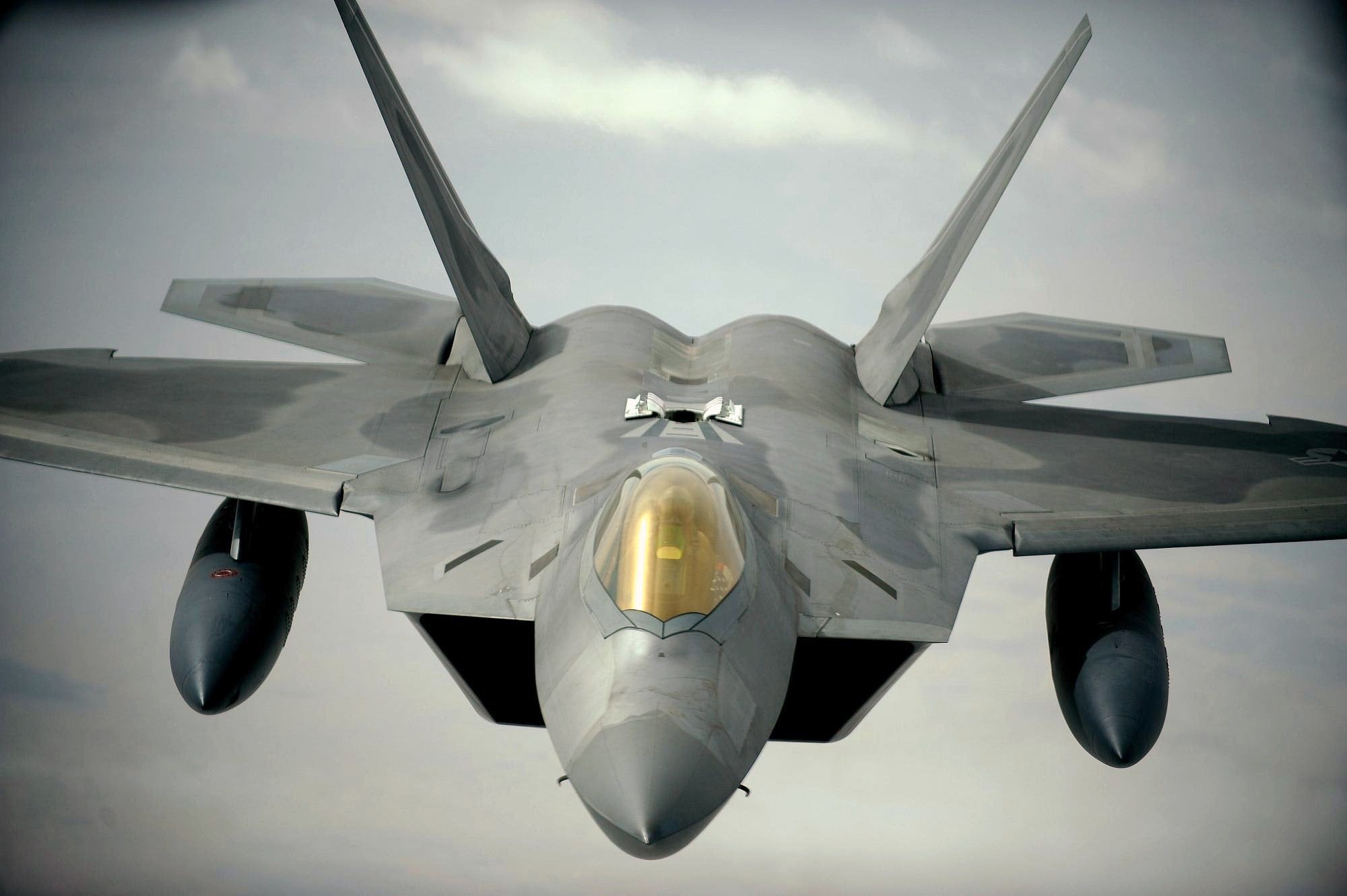
The oft-maligned but remarkably capable Lockheed Martin F-22A Raptor entered combat for the first time this week when an undisclosed number were used in airstrikes against Islamic State strongholds and facilities in Syria. According to a report in the Los Angeles Times, the aircraft dropped GPS-guided bombs on an array of targets, including a building used as a headquarters by the militants, training camps, barracks and combat vehicles. An Islamic State command and control building in Raqqah had its rooftop communications system destroyed, while the remaining portions of the building were largely untouched-all due to a GPS-guided bomb reportedly delivered by one of the Raptors involved in the attack. Although conceived as an air superiority fighter, the highly stealthy fighter is being used in a ground attack role.
The F-22A was given production go ahead in 1991 after intense lobbying of Congress by Lockheed and its nearly 1100 subcontractors in 44 states. The original price-when the plan was a production run of 648-was $139 million per unit. As developmental problems increased, along with cost overruns, and the number of units to be built dropped, the price soared to $412 million per airplane. A total of 188 were built; one has been lost in an accident. It entered service in 2005, but a combination of continuing problems and high cost that made them too expensive to risk in combat kept them out of the wars in Iraq and Afghanistan. All F-22As were grounded for five months in 2011 to sort out oxygen system problems.

