
















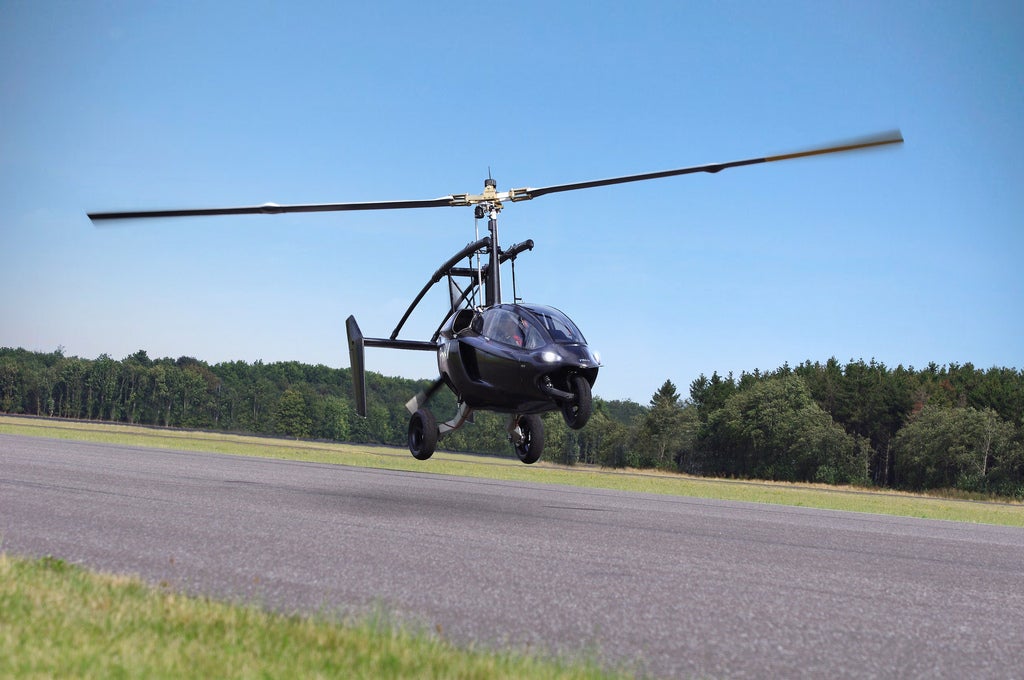
The PAL-V ONE, a roadable gyrocopter or flying motorcycle-take your pick-has announced that it will make its first deliveries in 2016. Made by PAL-V Europe NV, based in Raamsdonksveer in the Netherlands, the two-place PAL-V ONE (PAL-V stands for Personal Air and Land Vehicle) uses a 230-HP engine to turn a pusher prop-the main rotor autorotates to provide lift. Top speed on land or in the air is 112 MPH. Flight range is claimed to be 315 miles with a fuel consumption of 9.5 GPH-ground range is said to be 750 miles at 28 MPG. Conversion between modes is reported to take 10 minutes and takeoff distance is claimed to be 540 feet. Orders are currently being taken only in the Netherlands; however, the company said it intends to expand internationally this fall at a price of $395,000.
A three-wheel design gives the PAL-V ONE the upper hand against proposed flying cars because it needs only to meet motorcycle regulations for highway use rather than the extensive crash testing requirements for automobiles. Composite materials allow the vehicle to be light enough to fly and strong enough for road use-a mechanical-hydraulic articulated rear suspension enables the PAL-V ONE to lean into turns like a motorcycle, giving adequate stability in road use despite a high center of gravity. Transformation from gyrocopter to motorcycle involves shutting the engine down, at which point the propeller folds itself into the driving position. A button push causes the rotor mast to lower to a horizontal position and the tail to lower. The outer rotor blades are folded over the inner blades via hinges. The pilot/driver then pushes the tail into driving position and secures the rotor blades. According to the manufacturer, flying the PAL-V ONE in the U.S. requires at least a sport pilot certificate.

