
















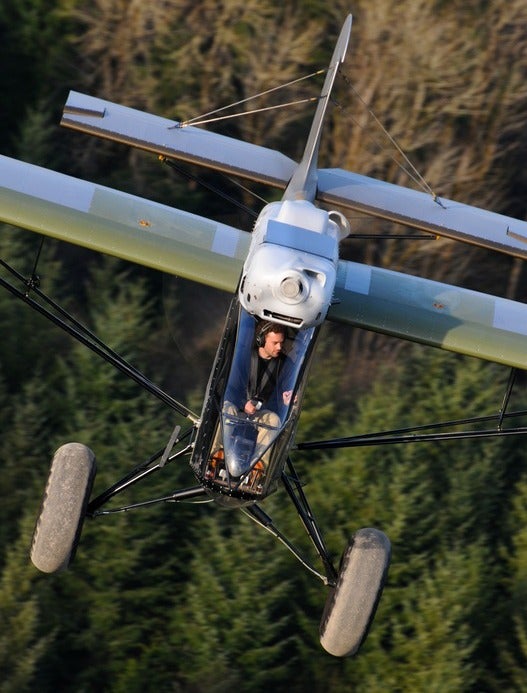
The video posted online recently of an unusual bushplane diving off the edge of a cliff is an attention-getter — the tiny, two-seat, two-engine, bubble-canopied, tundra-tired airplane shows off some extreme flying capabilities. But those capabilities are not just for show, Alec Wild told AVweb this week. Wild, a wildlife conservationist living in Kenya, says the DoubleEnder evolved from “years of experience bush-flying and dreaming about what could be improved upon.” The goal behind the project “was to make a better airplane, not necessarily the most marketable airplane,” he said. When the design is finalized, he said, the aircraft may be offered for sale as a kit.
Wild said the airplane may be on display at the next trade show hosted by the Alaska Airmen’s Association, in Anchorage next May, and also may compete in the STOL competition in Valdez, also in May. Wild added that he has been flying the DoubleEnder since its first test flight, in 2010. Safety was the single most important factor in designing the airplane, according to the developers’ website. “It was designed to counter the most common causes of accidents for this type of flying. It was then given the greatest amount of visibility one can imagine, something more along the lines of what is commonly found in helicopters, rather than fixed-wing airplanes.”
The instrument panel is minimalist, and the performance has been maximized for maneuverability and slow flight. “With 260 horsepower available to the pilot, the power-to-weight ratio exceeds what is normally found in this category of airplane, giving it extreme performance in regular conditions, while retaining enough power to keep you going in the event of an engine failure,” says the website.

