
















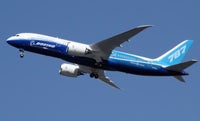
Boeing’s February delivery date for the first 787 will likely be pushed back at least to May and possibly to August or later, according to recent news reports citing opinions from industry analysts and company employees. Boeing is expected to announce the delay by the end of this month. Problems with the 787’s Rolls Royce engines, as well as the electrical fire that grounded the test fleet last month, have raised questions about the airplane’s readiness. A high-ranking FAA official warned Boeing that the company must prove the airplane is reliable before it will be certified to fly across oceans or over the northern polar route, the Seattle Times said. “This program is not like anything we’ve seen,” one veteran 787 employee told The Times. “It’s a screwed-up mess.” Boeing officials told the Times that although the program has been challenging, they expect to overcome the airplane’s problems and deliver a product that meets expectations.
Although a company official told the Times the concerns over long-haul certification would be dealt with, an aviation consultant told the Puget Sound Business Journal it’s a “serious” issue. “Without extended ETOPS rating, the 787 doesn’t make any sense for its customers,” said Hans Weber, president of Tecop International, a San Diego aviation consultancy. “It’s intended to be a long-haul aircraft, and this goes to the very heart of the 787’s utility.” ETOPS, the Extended-range Twin-engine Operational Performance Standard, allows twin-engine passenger aircraft to fly far from airports based on single-engine performance. Boeing says the 787 can fly up to 8,500 nautical miles nonstop. The aircraft already is nearly three years behind schedule.

