
















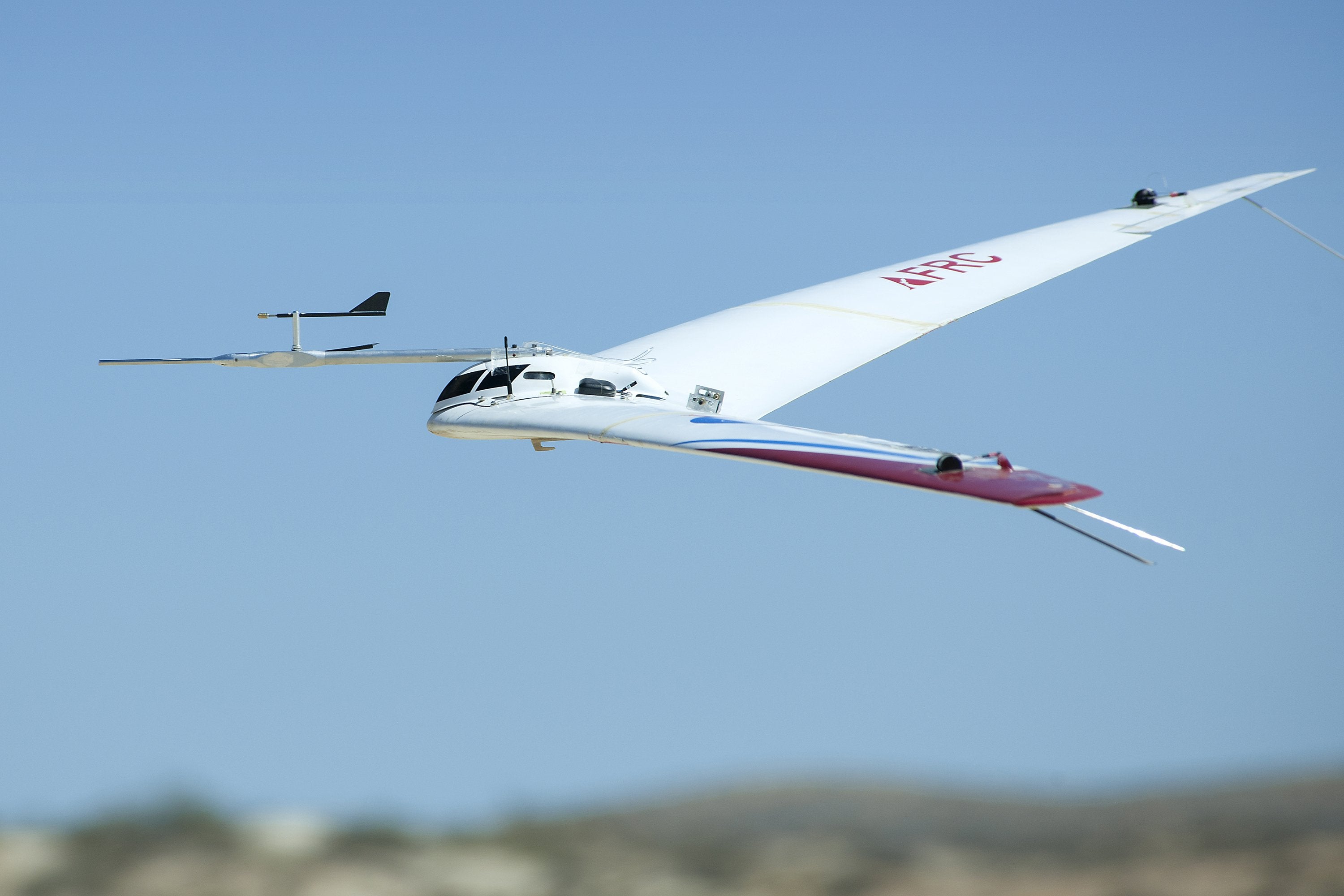
A small boomerang-shaped aircraft that will go for a test launch later this year could be the first unmanned aerial system to glide over the surface of Mars, if NASA’s project comes to fruition. The Prandtl-m prototype’s test, one of three in the planning stages, will include a launch from a high-altitude balloon at about 100,000 feet to simulate the Martian atmosphere. It’s hoped that the aircraft will ride along on a rover mission slated for 2022-2024 to help survey the Martian landscape. “It would be able to deploy and fly in the Martian atmosphere and glide down and land,” Al Bowers,Prandtl-m program manager,said on NASA’s website. “The Prandtl-m could overfly some of the proposed landing sites for a future astronaut mission and send back to Earth very detailed high resolution photographic map images that could tell scientists about the suitability of those landing sites.”
The composite-built aircraft will be designed to fly for about 10 minutes with a range of 20 miles, gliding from 2,000 feet to the Martian surface. Prandtl-m, short for Preliminary Research Aerodynamic Design to Land on Mars, would measure 24 inches across and weigh a pound on that planet, down from 2.6 pounds on Earth. It’s not clear exactly when the first test would take place, but NASA said it’s planning a second test from a similar altitude in 2016 to try deploying the aircraft from a container before it glides back to Earth. If that’s successful, a third test would be higher yet. “If the Prandtl-m completes a 450,000-foot drop, then I think the project stands a very good chance of being able to go to NASA Headquarters and say we would like permission to ride to Mars with one of the rovers,” Bowers said.

