
















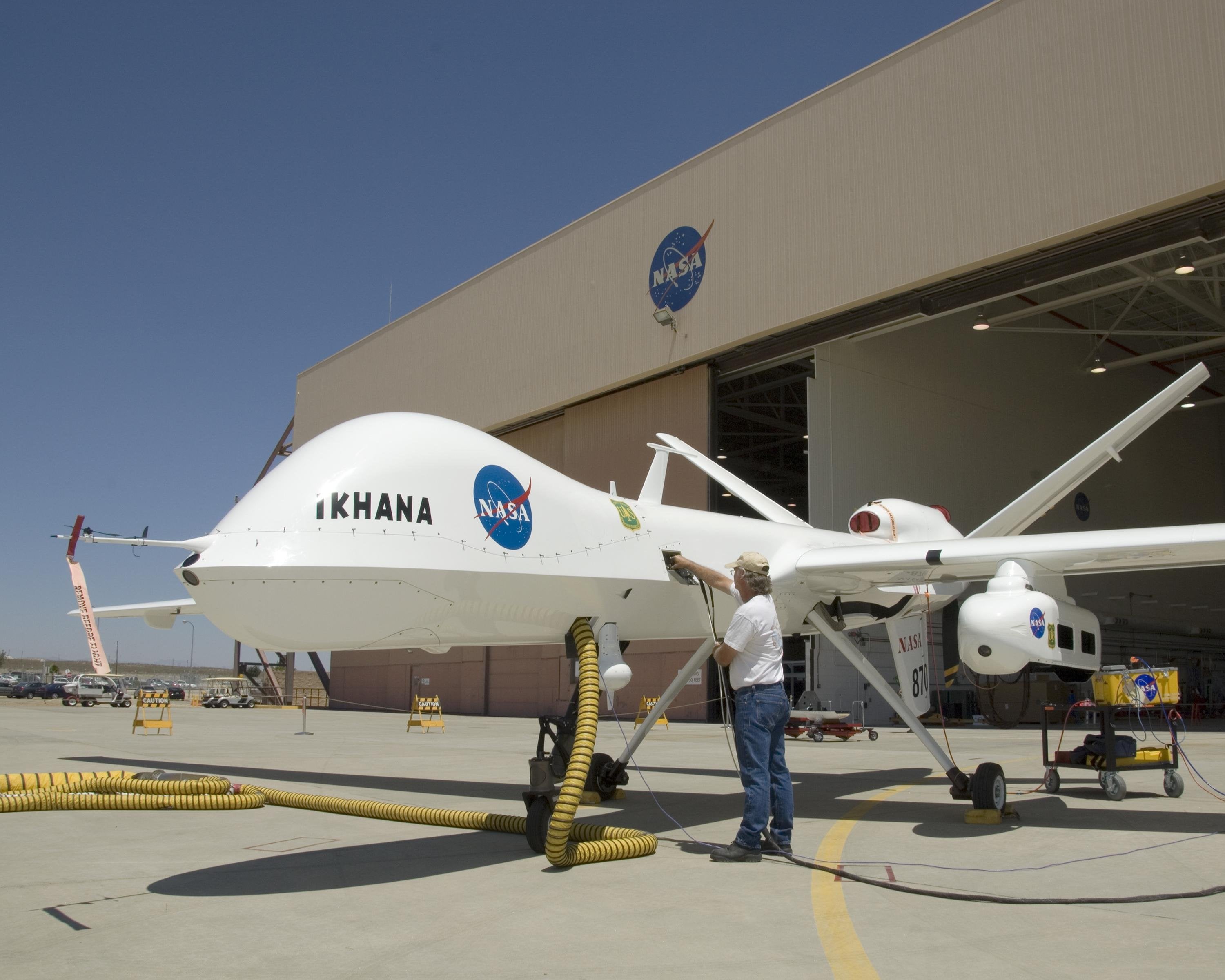
In a test it says moves drones closer to being integrated into the National Airspace System, NASA on Tuesday flew its Ikhana remotely piloted aircraft without a chase plane for the first time. The flight took place at the agency’s Armstrong Flight Research Center at Edwards Air Force Base.
‘This is a huge milestone for our Unmanned Aircraft Systems Integration in the National Airspace System project team,” said NASA’s Ed Waggoner, who directs the agency’s Integrated Aviation Systems Program. Integrating unmanned aircraft into the NAS has been an overarching goal of both the FAA and NASA, with detect-and-avoid capability for the drone a difficult technical challenge to overcome.
The FAA granted NASA special permission to fly Tuesday’s test without a chase aircraft, allowing the remote pilot to rely on the latest detect-and avoid technology, enabling the ground-based pilot to see and avoid other aircraft during the flight. The Ikhana was equipped with an airborne radar developed by General Atomics Aeronautical Systems Inc., a Honeywell TCAS System, a detect-and-avoid Fusion Tracker and ADS-B.

