
















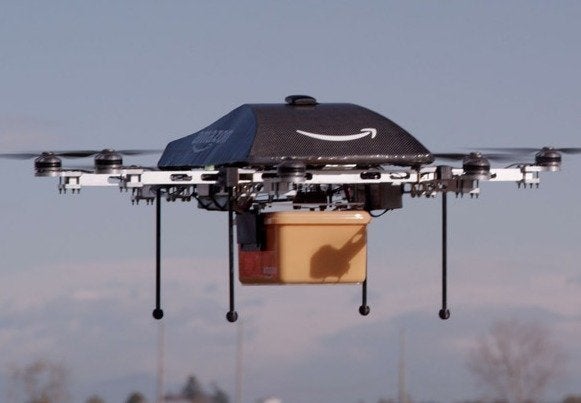
An airspace system for unmanned aerial vehicles – perhaps with flight plans and air traffic control – is the topic at a symposium this week hosted by NASA. The agency and the Silicon Valley chapter of the Association of Unmanned Vehicle Systems International metwith interested businesses at NASA’s Ames Research Center in Moffett Field, California. NASA is studying potential ways to manage UAS traffic as it gathers input from the private sector. For example, it’s working with Verizon to see if cellular communications can track low-altitude flights. “NASA wants to create a system that would keep track of and deliver important information to operators of UAS, such as which areas they should avoid, whether any other vehicles are trying to operate in the same airspace, and what the weather will be like in a given area,” NASA’s Parimal Kopardekar stated in the agency’s update on the project.
Amazon, which has been at the forefront of pushing the FAA to make UAS regulations viable for business, is already looking at how to manage fleets of unmanned aircraft flying around delivering packages. “It’s completely doable,” Gur Kimchi of Amazon told Bloomberg News. The company envisions Internet-connected systems that allow any UAS operator, from hobbyists to companies, to have tracking and communication abilities. “We think it’s something feasible that everyone can rally around,” Kimchi said. “We can only be safe and efficient if everybody else is safe and efficient.”
We recently spoke with Lockheed Martin’s Mike Glasgow about the company’s plans to accommodate UASs in the airplace. Click here for that podcast.

