
















In its annual list of “most wanted safety improvements,” the NTSB on Wednesday said general aviation pilots and their passengers too often are “dying due to human error and inadequate training.” The safety board investigates about 1,500 GA accidents per year, with about 400 fatalities, and sees “similar accident circumstances time after time.” Improved education and training, and screening for risky behavior, are critical to improving GA safety, the board said. GA maintenance workers also should be required to undergo recurrent training, the board said, to keep them current with the best practices for inspecting and maintaining electrical systems, circuit breakers, and aged wiring.
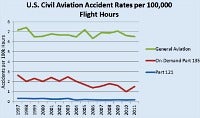
The NTSB noted that GA has the highest accident rate within civil aviation — six times higher than for Part 135 operators and about 40 times higher than for transport-category operators. Moreover, while the overall GA accident rate has remained about the same over the last 10 years, the fatal accident rate has increased by 25 percent. Pilots should be trained to use all available sources for weather information, the NTSB said, including the internet and satellites. Also, they should train on flight simulators that are specific to the avionics they will be flying. Also, the NTSB said FAA tests should cover the use of weather, use of instruments, and use of glass cockpits.
Earl Weener, a member of the safety board with extensive experience in the aviation industry, spoke with AVweb‘s Mary Grady after Wednesday’s news conference to provide a deeper look into the NTSB’s process and their suggestions for improving GA safety. Click here to listen to that podcast.

