
















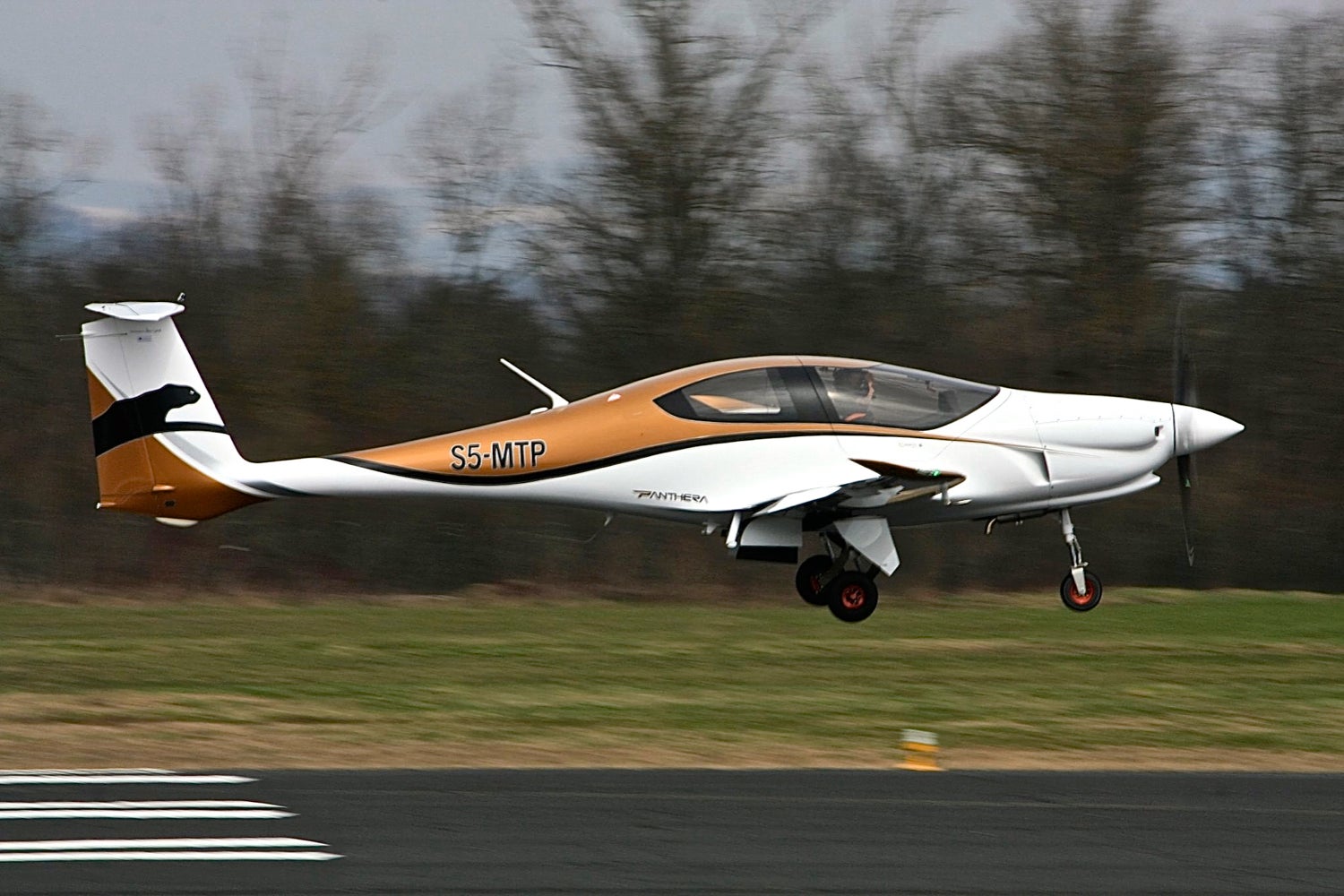
Pipistrels sleek Panthera retractable, announced two years ago, will soon have a six-cylinder Lycoming IO-540 rather than the IO-390 originally planned. The engine switch was forced because Lycoming wont be approving the IO-390 for mogas, according to Pipistrel. The IO-540 replacement, which Pipistrel says will improve short-field and high density altitude takeoff performance, will be approved for mogas use. The 540 is about 90 pounds heavier than the IO-390, according to Pipistrels Tine Tomazic, but because flight testing has confirmed a lower stall speed than originally envisioned, the Pantheras allowable gross weight will increase by 210 pounds, increasing useful load.
Fuel capacity remains the same, 220 liters [58 gallons] because for the given mission, the airplane will not consume more fuel. We are targeting the same cruise speed of 200 knots true and the same 10.5 gallons per hour, Tomazic said.
The Panthera has been in flight testing for more than a year with the IO-390 and although Pipistrel says the engine switch will cause some delays, the second airframe is already being fitted with the larger engine. The Pantheras original design brief, Tomazic said, envisioned other powerplants, including an electric-hybrid version.
The engine will go under the exact same cowl. When we designed the airplane from the start, it was to feature the hybrid electric and other engines as well; the six-cylinder was included in the original design of the engine cover. So the exterior of the airplane does not change at all, said Tomazic.
Lycoming declined comment when asked why it decided not to certify the IO-390 for mogas, but Pipistrel speculates that it has to do with the high compression ratio of the IO-390. The 390 series produces up to 210 hp with a compression ratio of 8.7 to 1. According to Lycomings SI 1070 service instruction, eight engines in the IO-540 family are approved for mogas (93 AKI) use at compression ratios of between 7.3 and 8.5 to 1. These engines are rated between 235 and 270 hp.
A lot of this decision was made because customers want good hot and high performance. We have lots of people coming from South Africa, from Argentina, from Mexico, from Colorado, places that would otherwise demand a turbocharger solution. But instead of going to a turbocharged four-cylinder, we decided to go for a normally aspirated six for maintenance and operational simplicity, Tomazic said.
Also, this engine supports multitude of fuels available worldwide, so we are now entering markets impossible to tackle before. The delay is assessed to be a couple of months worth, Tomazic added.

