
















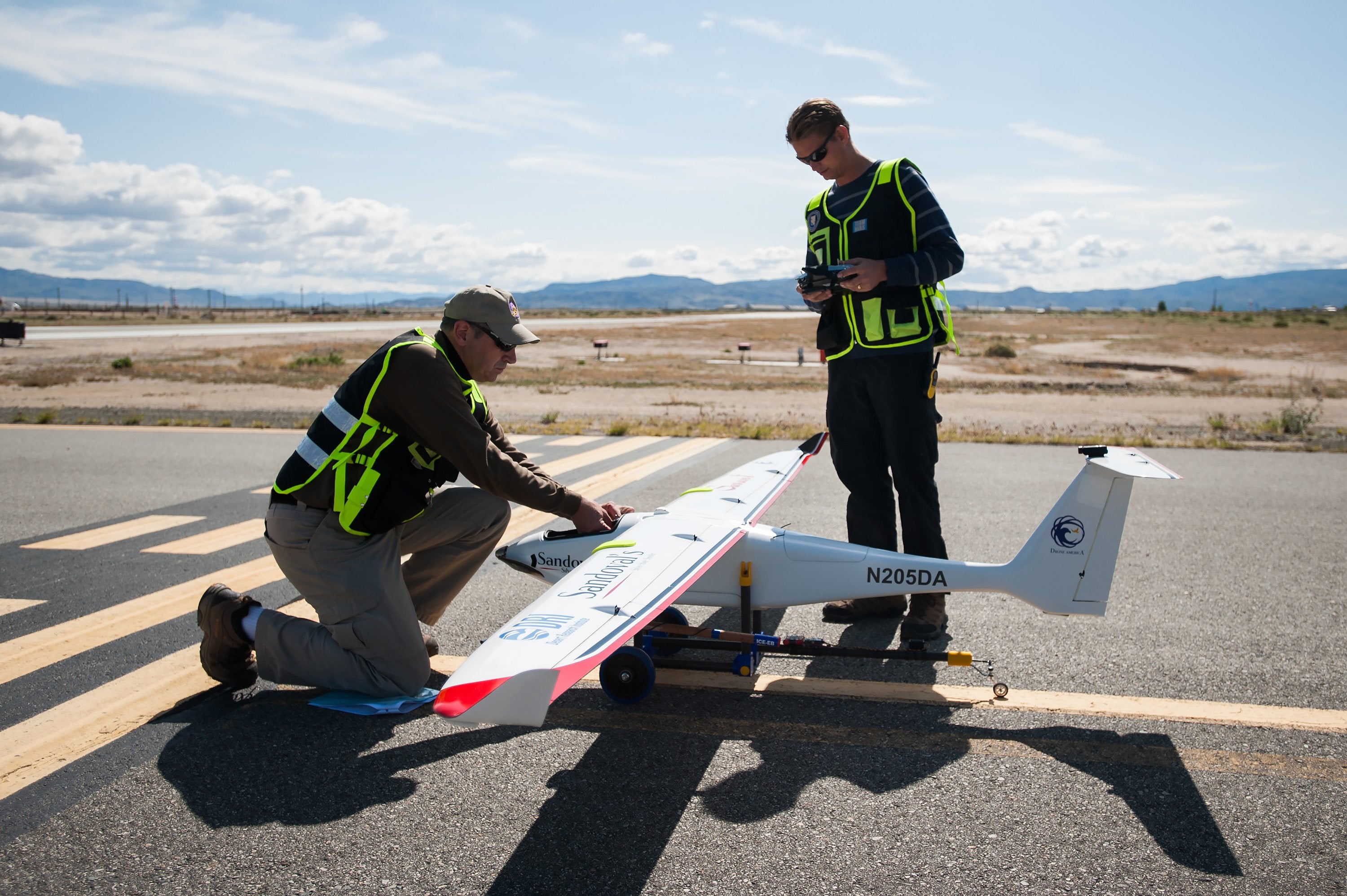
An unmanned airplane made a successful first test of cloud-seeding operations in Nevada, adding a new kind of industrial-use experiment to one of the nation’s FAA-designated UAS test sites. The UAS, which weighs less than 55 pounds and has a wingspan under 12 feet, flew for about 18 minutes last week and reached 400 feet, according to an announcementthis week from the state’s Desert Research Institute. During the flight at Hawthorne Industrial Airport, the Savant UAS released two silver-iodide flares, which are typically deployed by manned aircraft in cloud-seeding operations over Nevada and other areas to increase precipitation.
Nevada-based Drone America performed the test as part of the state’s UAS research. “We have reached another major milestone in our effort to reduce both the risks and the costs in the cloud seeding industry and help mitigate natural disasters caused by drought, hail and extreme fog,” said Mike Richards, president and CEO of Drone America. The small, lightweight Savant “is the perfect vehicle to conduct this type of operation due to its superior flight profile, long flight times and its resistance to wind and adverse weather conditions.” Nevada’s burgeoning drone research industry has gained the state other firsts, including an FAA-sanctioned urban drone delivery test by Flirtey in March that took place in Hawthorne.

