


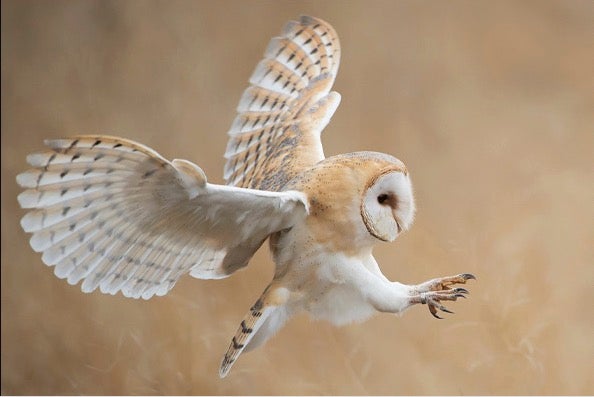

Every pilot admires the way birds fly (most birds, anyway). But researchers at the University of Central Florida (UCF) Department of Mechanical and Aerospace Engineering have launched a study on how birds execute their best “perching” maneuver—landing on tree branches, wires or other tight spots.
The group found that some birds pitch their wings upward to a high angle of attack just before touchdown, while others fold their wings, instead, in a sweeping motion that helps them decelerate with great precision. Doctoral aerospace engineering candidate Dibya Raj Adhikari observed that the sweeping motion enables enhanced control of aerodynamic forces by changing the shape of the bird’s wings, just as extending flaps and slats do on an airplane, but with much more minute adjustments.
“A complete understanding of this perching maneuver,” Adhikari said, “would help to quantify the performance of the natural flyers and aid in the design of safer aircraft.” “This perching maneuver also allows the birds to land smoothly within a short distance,” he added, suggesting that somehow mimicking the swept-wing characteristics of these birds could enable shorter landings for aircraft.
The university’s research has found that the swept-wing motion stabilized the leading-edge vortex, one of the main aerodynamic elements that enhance lift. “This stabilization ultimately leads to a better landing in birds—and potentially in aircraft,” according to UCF. You can read the group’s findings here in the engineering online outlet Physical Review Fluids.

