
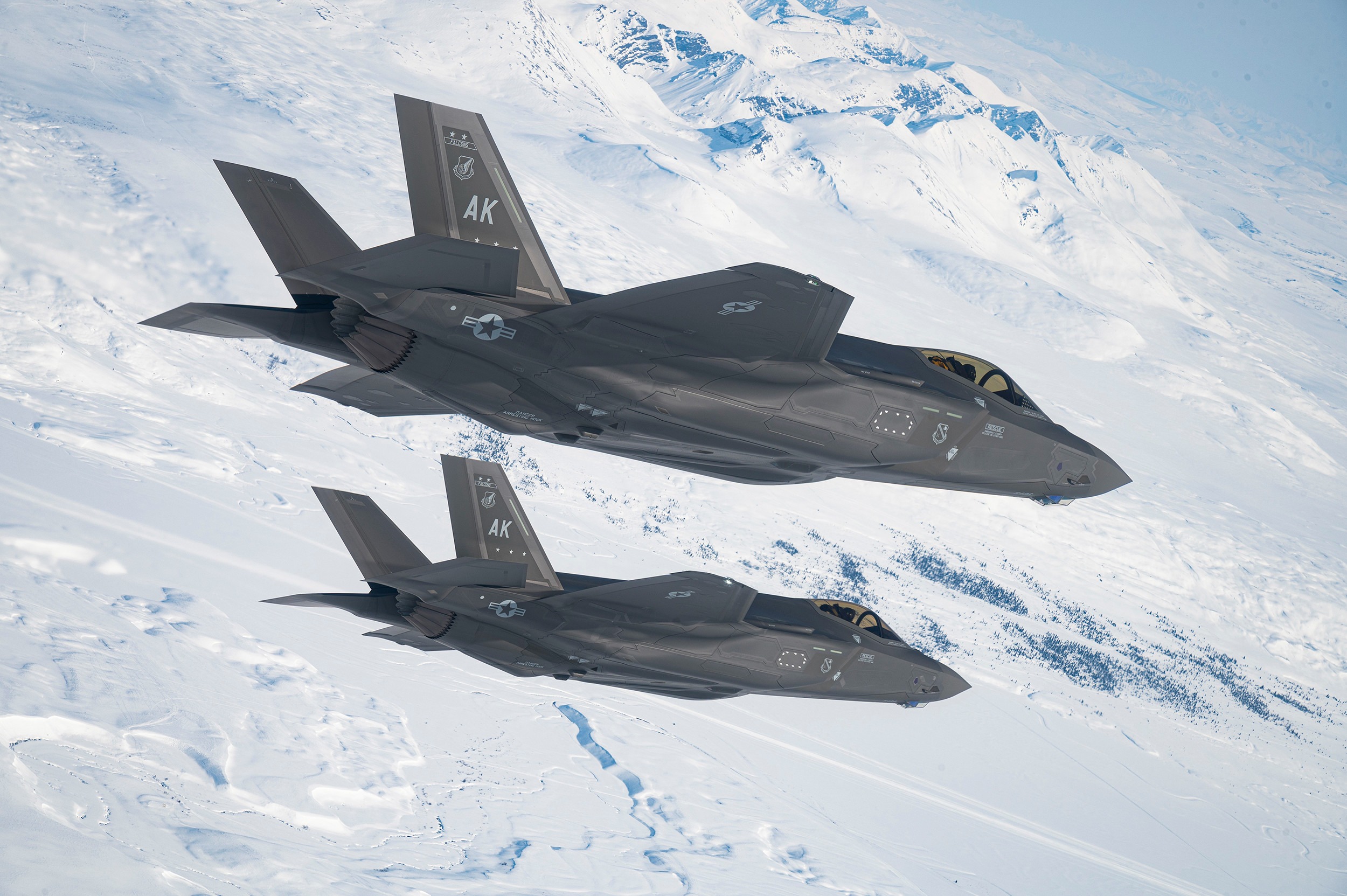

The Department of the Air Force has begun the public scoping phase for an Environmental Impact Statement evaluating proposed changes to the Joint Pacific Alaska Range Complex, a military training area spanning large portions of Alaska airspace.
According to the Department of the Air Force, the Alaska military airspace proposal would modify existing special activity airspace in the northern part of the complex, establish new airspace over the Gulf of Alaska, and replace several smaller western training areas with two larger complexes. The Notice of Intent was published in the Federal Register on Jan. 8, initiating a 30-day comment period as part of the National Environmental Policy Act process.
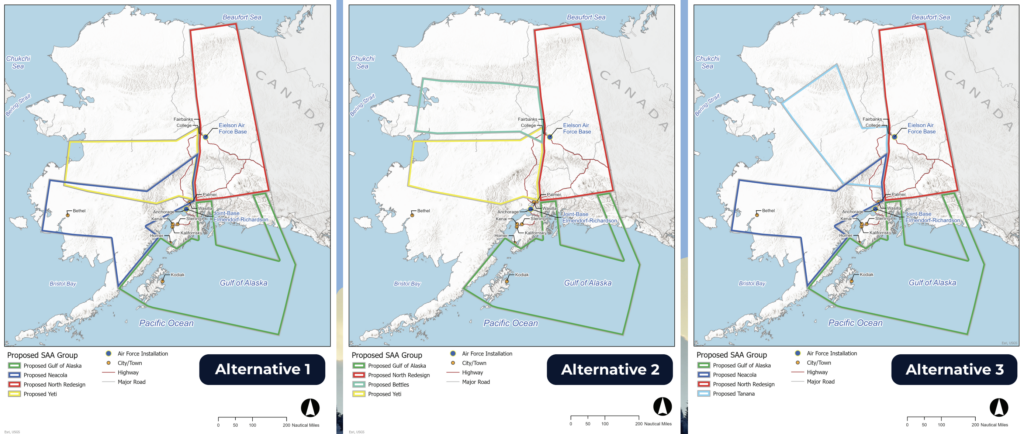
Under the proposal, the Air Force would consider three action alternatives that vary the location of the two western Alaska airspace complexes, as well as a no-action alternative that would leave the current structure unchanged. The agency said the changes are intended to address training requirements for modern aircraft that operate across a wider range of altitudes and distances, including extended low-level operations.
The EIS will analyze potential impacts on factors such as airspace management, noise, environmental resources and socioeconomic conditions, with cooperating agencies including the Federal Aviation Administration, Department of the Army and Department of the Navy.
The new Alaska military airspace proposal has drawn attention from civil aviation groups, including the National Business Aviation Association, which encouraged operators to participate in the process.
“Given the proposed expansion in size, altitude and number of activation days, this airspace change has the potential to have a serious impact on the business aviation companies who provide essential services and support to rural communities across Alaska,” said Janice Planten, NBAA’s director of air traffic services.
Comments may be submitted electronically or by mail and must be postmarked by Feb. 9 to be considered during preparation of the draft EIS.