
















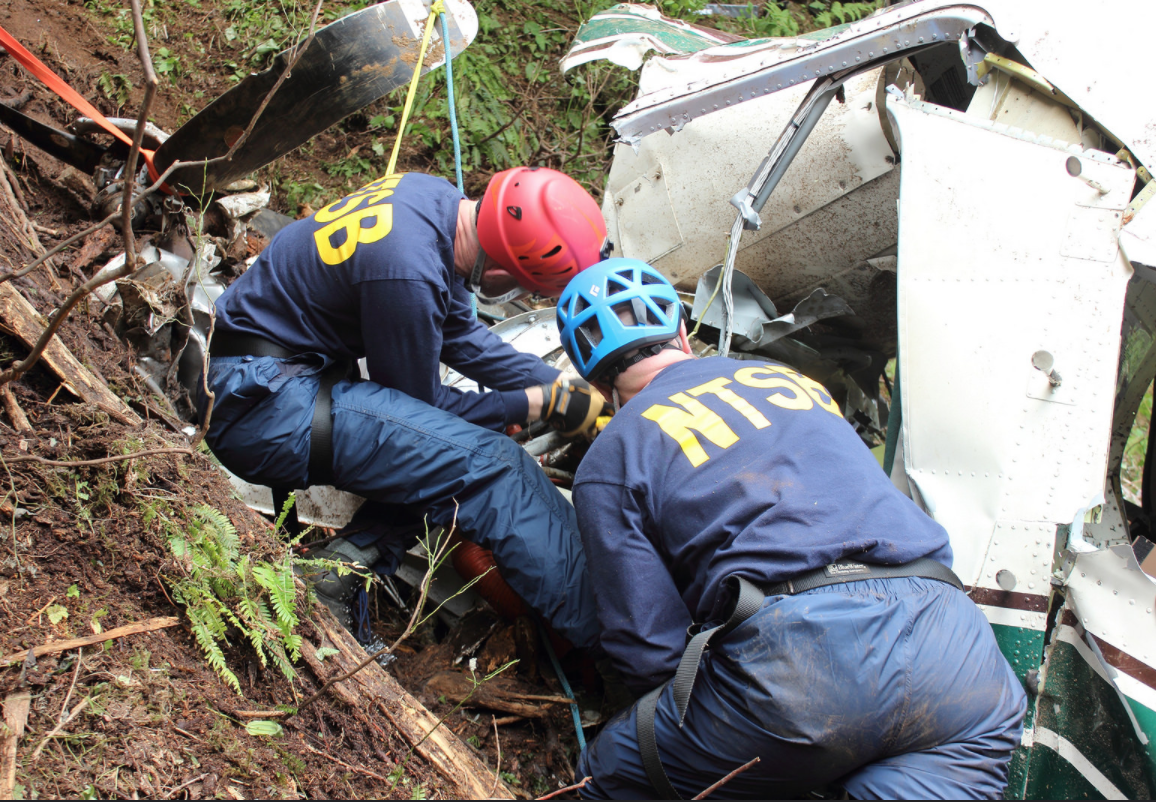
Nine people were killed when a de Havilland DHC-3 Otter hit a mountain in Alaska in June 2015, and on Tuesday the NTSB said the pilot had a history of making bad decisions. “Lives depended on the pilot’s decision making,” said NTSB Acting Chairman Robert Sumwalt. “Pilot decisions are informed, for better or worse, by their company’s culture. This company allowed competitive pressure to overwhelm the common-sense needs of passenger safety in its operations. That’s the climate in which the accident pilot worked.” The pilot, who had been flying air tours for Promech Air in Southeast Alaska for less than two months, chose to continue flying VFR despite IFR weather conditions, the NTSB said.
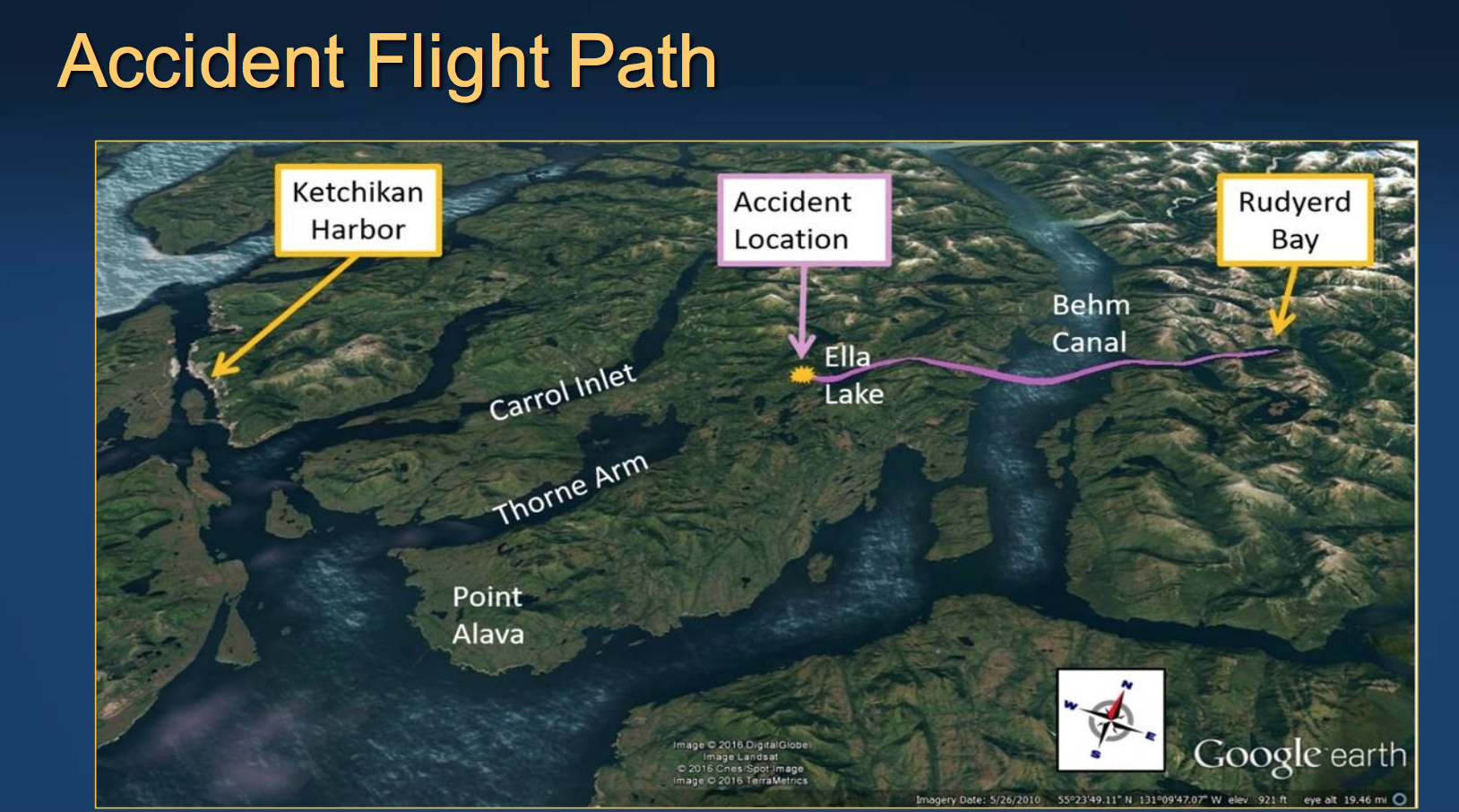
The pilot had picked up his passengers, who were on a cruise, from a floating dock, and had two choices for a route — a longer route that followed mostly seawater channels, or a shorter route across mountainous terrain. The short route was considered more scenic, but also presented more hazards in the low visibility conditions that prevailed. The accident pilot and two other Promech pilots chose the short route. Two other more conservative operators cancelled flights that day. In closing the board meeting, Acting Chairman Robert Sumwalt noted that “Safety must be a core value in any aviation operation … not just a priority but a core value … When this board sees an operation in which safety competed with performance and revenue, the reason we see it here at the NTSB is unfortunately because safety lost.” The NTSB synopsis and recommendations are posted online.
images: NTSB

