















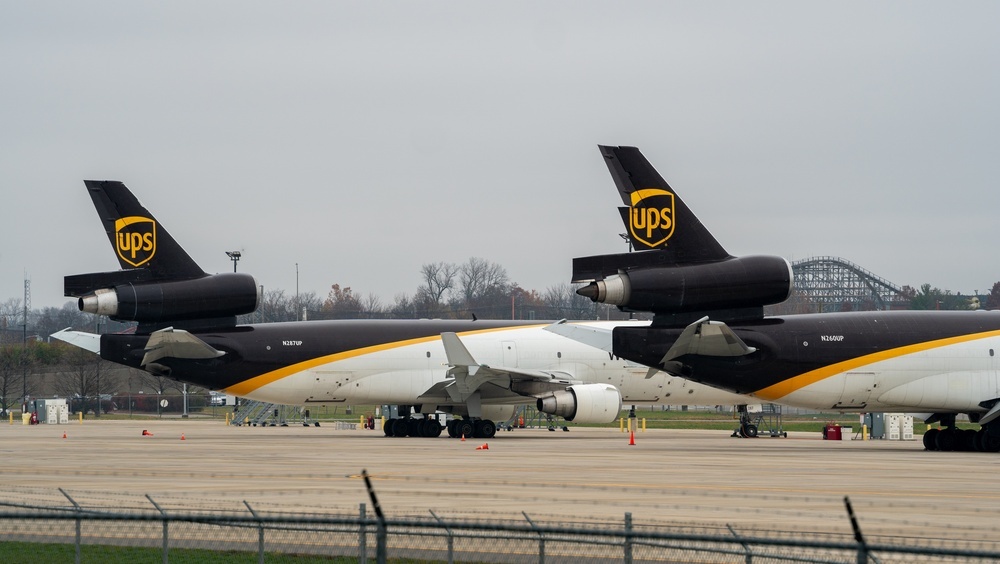

The National Transportation Safety Board’s second day of testimony on UPS Flight 2976 focused on the MD-11’s pylon design, certification requirements and systems routed near the area where the No. 1 engine separated during the fatal Nov. 4 accident in Louisville, Kentucky.
Bearing Classification Discussed
Much of Wednesday’s hearing centered on the aft bulkhead spherical bearing, the related pylon lugs and whether the bearing should have been treated as a principal structural element, or PSE. Boeing testimony indicated the aft bulkhead lugs were considered PSEs during certification, while the spherical bearing was not. FAA testimony described damage tolerance requirements under Part 25 and said inspections or life limits are used to address cracking before it becomes critical.
“Failure of the spherical bearing does not directly result in failure of the aft lugs, which are PSEs,” an FAA witness said during the hearing. “However, it appears that failure of the bearing could adversely affect the fatigue capability of the aft lugs, and therefore it should be considered a PSE.”
Inspection Thresholds Reviewed
The board also questioned witnesses about inspection thresholds for the pylon structure of the MD-11. According to testimony that was provided, the aft bulkhead lug inspection threshold was initially set at 19,900 cycles and later increased to about 29,200 cycles, based on certification data.
NTSB Chair Jennifer Homendy questioned whether prior in-service reports involving fractured bearing races had been fully considered before the change. An FAA witness said the agency relies on the applicant for data supporting such requests and said the FAA is now reviewing the MD-11 with new bearings, inspections and life limits under consideration before affected aircraft return to service.
Systems Routed Near Pylon
The hearing then moved on to systems near the wing-mounted engine pylon. These included fuel, hydraulic, electrical, fire detection and slat-related components. FAA testimony indicated current design requirements assume pylon separation in specified emergency landing conditions and focus primarily on fuel spillage.
According to witnesses from Boeing, the MD-11’s fire shutoff valve wiring was routed to avoid an uncontained engine rotor burst trajectory, and also discussed hydraulic system redundancy and slat protections in the event of hydraulic loss.
The two-day hearing is part of the NTSB’s investigation into the UPS MD-11F accident, which killed the three crewmembers aboard the aircraft and 11 people on the ground. The agency has not issued a probable cause, and the final report remains pending.


0 replies