














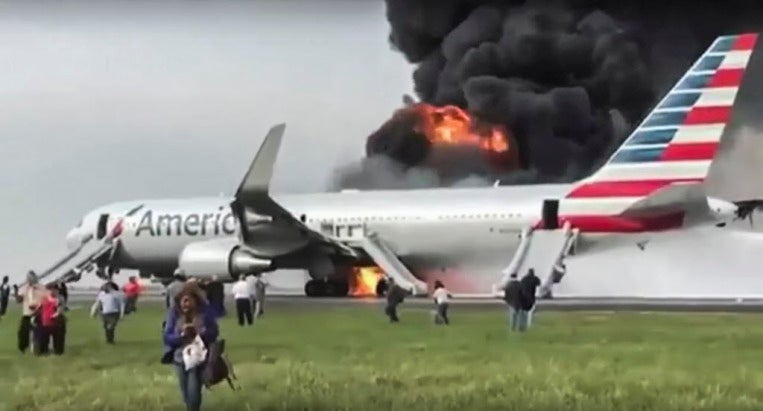

The U.S. Transportation Department’s Inspector General says the FAA has to update its standards for emergency airliner evacuations to reflect the new realities inside the aluminum tube. After the less than ideal evacuation of an American Airlines Boeing 767 that had an uncontained engine failure on takeoff in Chicago in 2016, the House Transportation Committee ordered the OIG to investigate and the report went to Congress last week. It found the FAA hadn’t amended the regulations or researched the issue for almost 30 years and in the meantime the seats have gotten smaller, passengers have gotten bigger and there are more carry-on bags, electronic devices and support animals onboard. It said the agency doesn’t track the changing circumstances inside airliners. “This lack of data inhibits FAA’s ability to determine how to improve evacuation regulations and protect passenger safety in emergencies,” the report said.
In its response, the FAA agreed it could do better with the research and accepted the OIG recommendations on that. But it also noted it hasn’t been sitting on its hands for 30 years and has initiated many measures that improve the overall survivability of aircraft incidents that involve evacuations, including better cabin lighting, egress routes, flammability, seat testing and escape systems. It said the report relies too heavily on benchmark certification standards that might or might not apply in the widely varying circumstances of an aircraft incident. It didn’t mention it in its response but the agency also did a series of evacuation tests last year to measure the impact of more crowded cabins on evacuations.
