














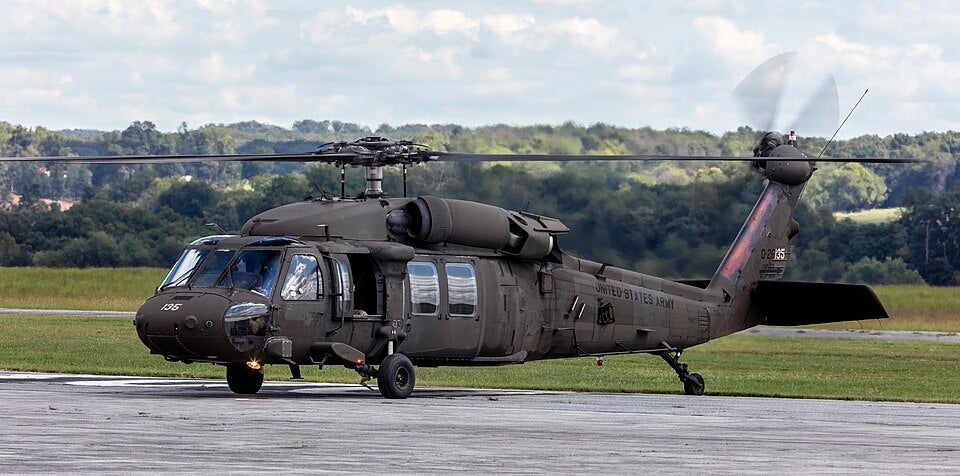

The Army Black Hawk helicopter crew involved in the midair collision with an American Eagle CRJ700 last January at Reagan National Airport had turned off ADS-B because they were practicing a classified flight profile, according to a New York Times investigation. The Times story released Sunday said the crew was rehearsing the extraction of high-level government officials because of an attack on Washington when it collided with the CRJ. All 67 people on both aircraft died and the aircraft crashed into the Potomac. It was also a qualification flight for Capt. Rebecca Lobach, who was flying with instructor CWO2 Andrew Eves.
The lack of an ADS-B signal and the potential warning it might have provided controllers over the altitude of the helicopter have become prominent investigative paths for the various authorities involved. The reason the ADS-B Out transponder was not emitting a signal that night had not been disclosed by investigators.
The Times story is an investigative dive into the events leading up to the catastrophe, which was the first major airliner crash in the U.S. in 16 years. The story, based on tower tapes and radar track information, chronicles a series of procedural, airmanship and communications factors that culminated with the collision on the evening of Jan. 29. The disaster has already resulted in a number of changes at DCA and some other airports, including the requirement that ADS-B be activated on all aircraft except for some classified flights. The FAA has also banned helicopter traffic in the immediate areas of the runways, again, except for some classified circumstances. The NTSB’s final report won’t be ready for about a year.
