
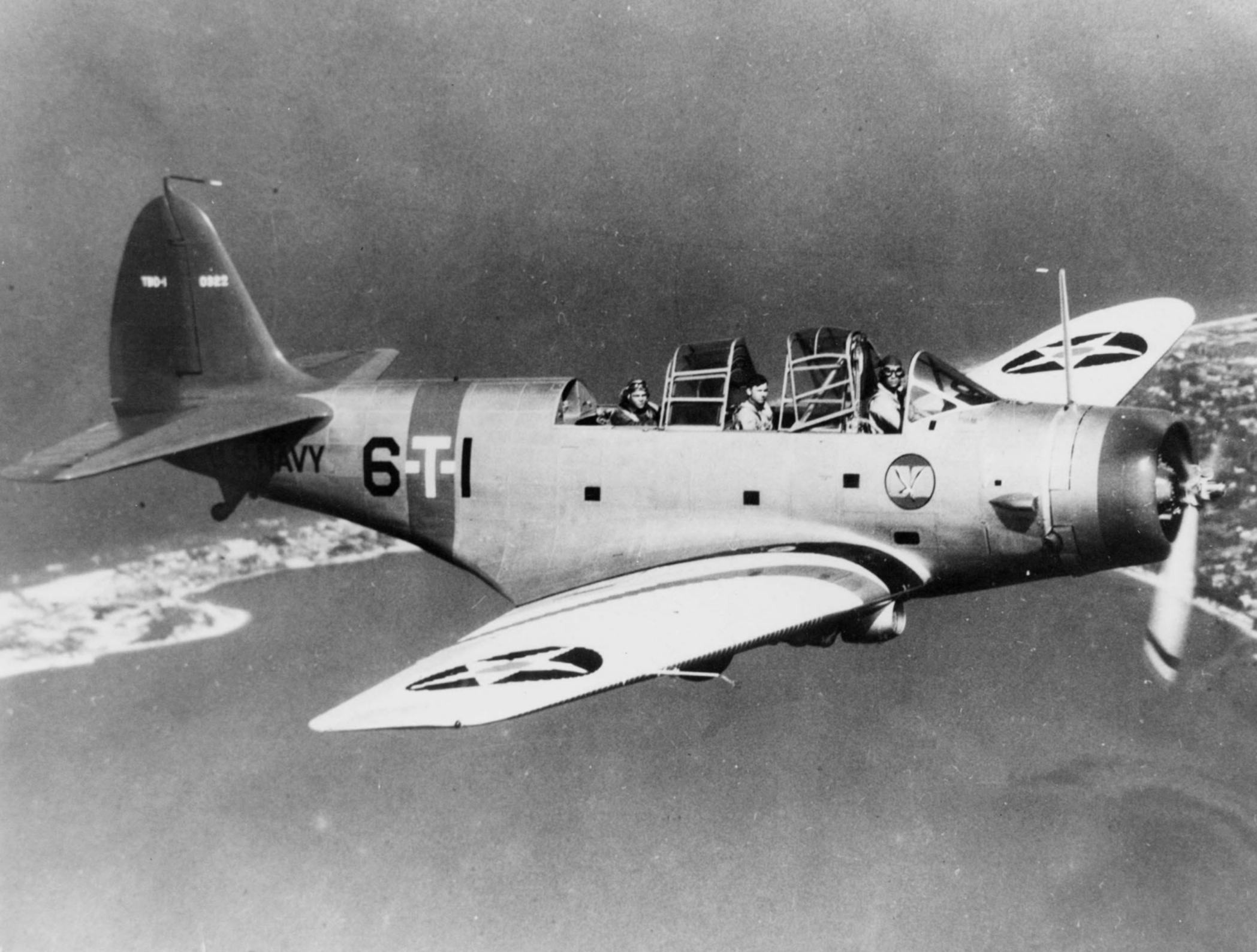

A coalition of maritime archaeology, aviation preservation and naval history organizations has announced the launch of the Devastator Project, an effort to recover and conserve a Douglas TBD-1 Devastator torpedo bomber lost during World War II. The aircraft, Bureau Number 1515, has remained submerged in the lagoon at Jaluit Atoll in the Republic of the Marshall Islands since February 1942.
The TBD-1 Devastator was the U.S. Navy’s first all-metal, low-wing carrier-based torpedo bomber and was used during the opening months of the Pacific campaign, including operations in the Marshall Islands and major carrier battles in 1942. Although 129 aircraft were produced, and there has been at least one other past recovery project, there are currently no known complete examples on land.
BuNo 1515 took off from USS Yorktown during early Pacific operations and was ditched after a mission to Jaluit Atoll. All three crew members survived the landing and spent the remainder of the war as prisoners.
Project officials said long-term documentation of the wreck has identified the aircraft as a viable candidate for recovery following more than two decades of archaeological study and monitoring.
The project brings together the Air/Sea Heritage Foundation, Texas A&M University’s Center for Maritime Archaeology and Conservation, the Republic of the Marshall Islands Cultural and Historic Preservation Office, Jaluit Atoll local officials and the Naval History and Heritage Command.
Project partners plan to conduct recovery operations in coordination with the Republic of the Marshall Islands and in compliance with applicable cultural heritage, environmental and historic preservation regulations. After the aircraft is recovered, Texas A&M University will carry out stabilization and conservation treatments before sending the remains for public exhibition at the National Museum of the United States Navy, currently under development in Washington, D.C. Organizers have said the aircraft will be displayed in its recovered condition after cleaning and conservation to stabilize remaining materials.