















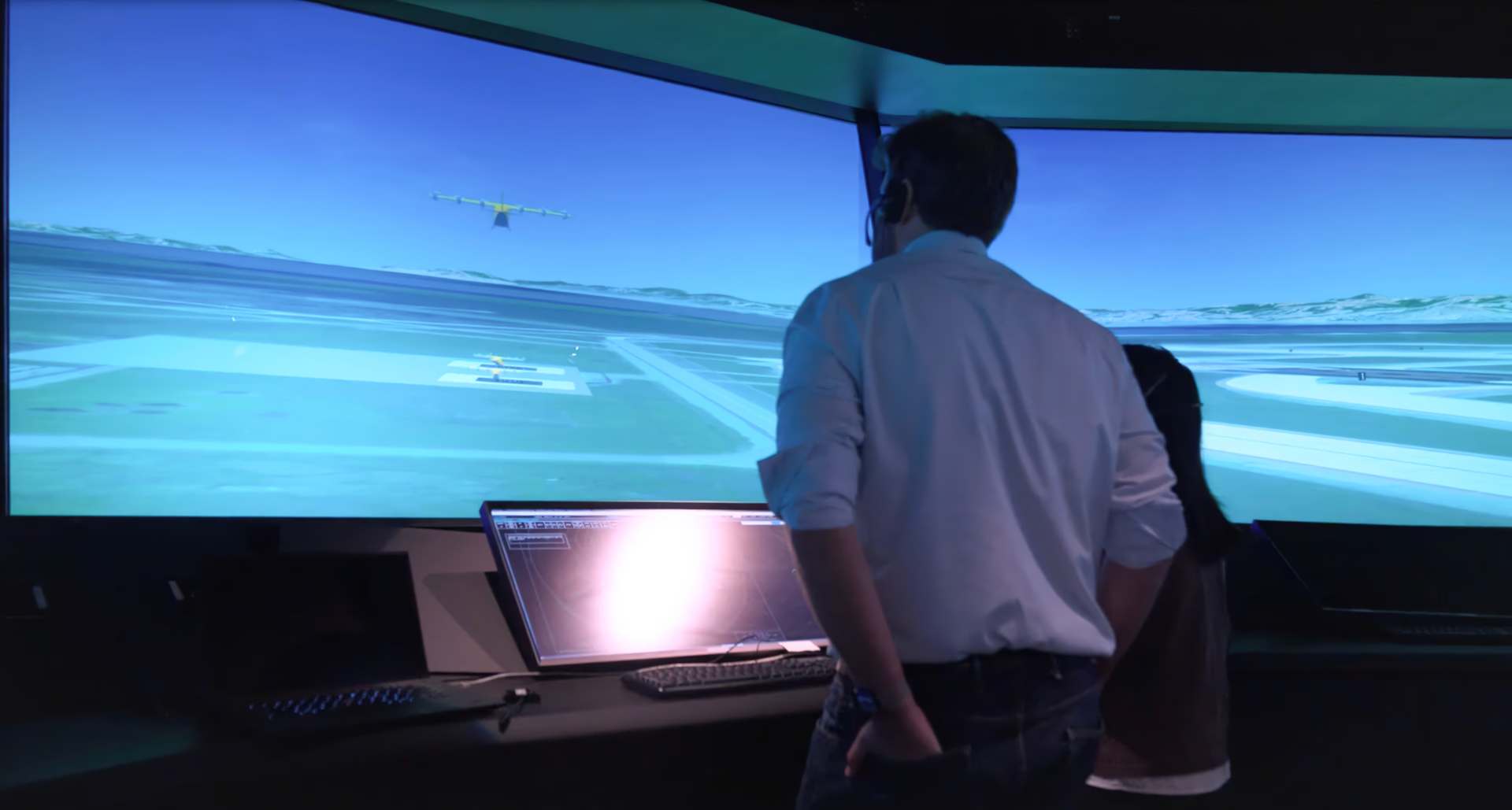

Wisk Aero and NASA have completed a simulation that evaluated whether one ground-based supervisor could oversee three autonomous aircraft at the same time. The supervisor coordinated with air traffic controllers, who handled the simulated flights through existing ATC procedures as the simulated aircraft operated alongside conventional traffic.
Bay Area IFR Routes
The exercise connected Wisk’s Autonomy Lab in Mountain View, California, to NASA’s Future Flight Central simulation facility at Ames Research Center. The aircraft followed predetermined IFR routes between Moffett Federal Airfield and San Martin Airport in the San Francisco Bay Area.
Wisk supervisors communicated directly with air traffic controllers during routine operations and contingency scenarios developed by the two organizations. Researchers measured communication response times, task delays, situational awareness and cognitive workload through NASA’s Task Load Index and Bedford Workload Scale.
One Supervisor, Three Aircraft
“In the future, one pilot could potentially manage multiple aircraft remotely,” NASA said in an overview of its Pathfinding for Airspace with Autonomous Vehicles research. The agency is studying remote supervision as one possible response to increasing cargo demand, operating costs and pilot workforce constraints.
The simulation was conducted under a five-year research agreement focused on autonomous IFR operations in the National Airspace System. Wisk and NASA said the results will support continued work on communications, operating procedures and human oversight of multiple autonomous aircraft.
“Wisk is doing more than building an autonomous aircraft,” Erick Corona, Wisk’s head of system and operations integration, said. “We are working closely with organizations like NASA to mature and modernize the broader aviation ecosystem.”


0 replies