















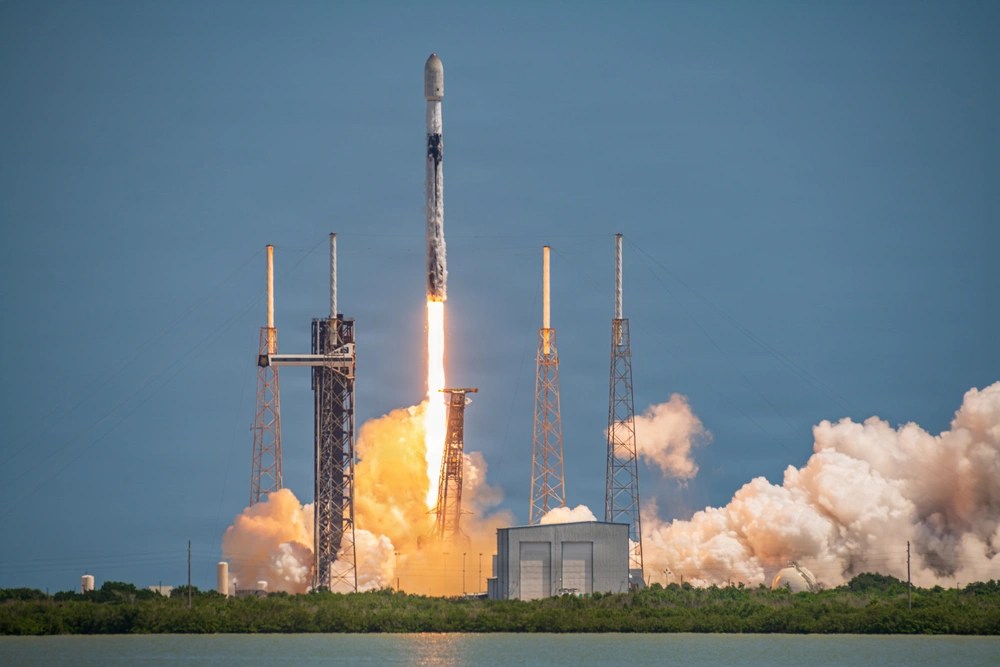

The FAA on Tuesday opened a 60-day request for public and industry input on how “priority airspace” for critical space launch corridors should work. The concept was directed under the 2026 National Space Transportation Policy, but the agency has not established an operational definition for the corridors or determined what types of launches would qualify for priority treatment.
Defining the Corridors
Launch operators currently work with the FAA to establish Aircraft Hazard Areas, or AHAs, to protect aircraft from launch vehicles and falling debris. Because much of the country’s launch activity originates from the same spaceports, similar AHAs are used repeatedly. The FAA specifically noted that it does not currently use the term “space launch corridor,” and said the request for information is intended to explore how the new corridor concept would relate to existing AHAs.
“From an aviation perspective, advance notification of time, size, and duration of AHAs are integral to maintaining both aviation safety and airspace efficiency,” the FAA said in the request.
The agency is seeking input on how launch corridors could limit effects on airspace efficiency, what changes could be made to operational and coordination timelines and what activities should qualify to activate a corridor.
Launch Activity Expected to Increase
According to the FAA, the U.S. accounted for 217 of 329 launches worldwide in 2025. More than half of U.S. launches originated from Cape Canaveral Space Force Station and Kennedy Space Center in Florida, while those facilities and Vandenberg Space Force Base in California accounted for 83% of U.S. launches. The agency projects FAA-licensed launches and reentries could reach 10,000 annually by 2035, as risks for other aircraft also increase.
The FAA is also asking whether commercial, civil or national security payloads should receive different consideration and whether priority corridors should apply to all spaceports or only high-use or federal facilities.
Other questions cover possible fees, operational restrictions, emergency procedures and how designating a corridor as “critical” could streamline launch timing.
Written comments are requested within 60 days of the notice’s Aug. 25 publication in the Federal Register.


0 replies