















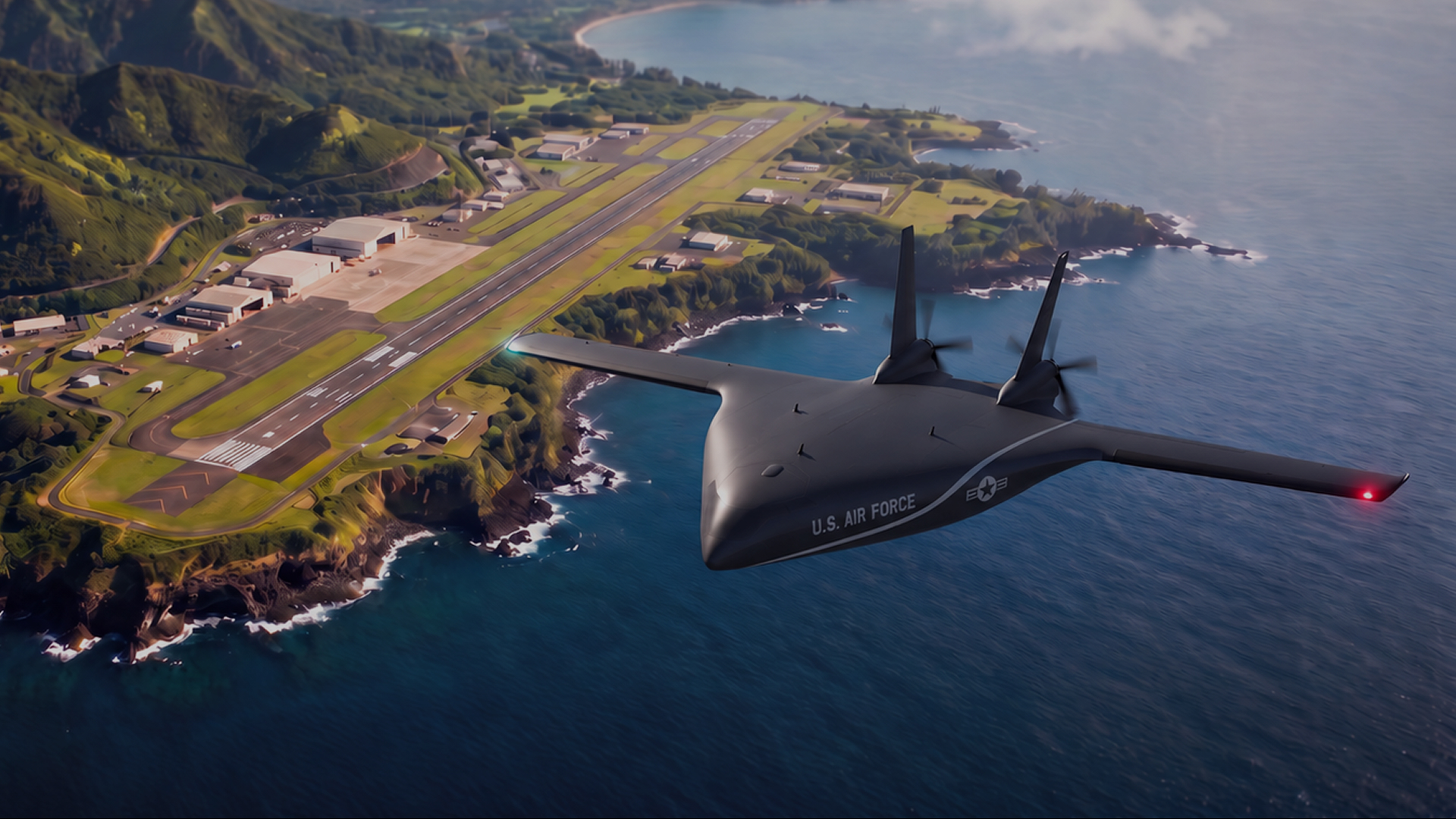

San Diego-based aircraft developer Natilus announced Wednesday that it has received $3.5 million in U.S. Air Force research and development funding to advance its Kona blended-wing-body freighter. According to the company’s announcement, the funding will support development toward full-scale flight testing and a demonstration of the aircraft’s potential military applications.
Kona is designed to carry 3.8 tons of cargo over 800 nautical miles and operate from shorter runways. Natilus says the aircraft’s blended-wing configuration could reduce fuel consumption by approximately 30% compared with conventional aircraft of similar capacity. The company is developing the aircraft for both commercial cargo operations and military transport missions.
Military Applications
“In a fuel-constrained environment like the Pacific, efficiency translates directly into operational flexibility,” said Jim Hartle, associate deputy assistant secretary of the Air Force for operational energy, safety and occupational health. “KONA provides an opportunity to evaluate how a commercially developed aircraft can contribute to distributed logistics while generating the data needed to inform future requirements.”
For military operations, Natilus envisions Kona filling a capacity gap between smaller utility aircraft such as the Cessna 208 Caravan and larger transports such as the C-130 Hercules. The aircraft is being designed for optionally piloted operations, and the company has identified potential additional applications including surveillance, communications relay and specialized payload delivery.
Development and Certification
Natilus is pursuing FAA Part 23 certification for Kona while advancing development of a full-scale test aircraft. The company said private investment and commercial customer commitments are supporting the broader program, while the new Air Force funding will help evaluate its military capabilities. The Air Force is also supporting a separate blended-wing demonstrator being developed by JetZero to assess the configuration’s potential for larger military and commercial aircraft.


0 replies