












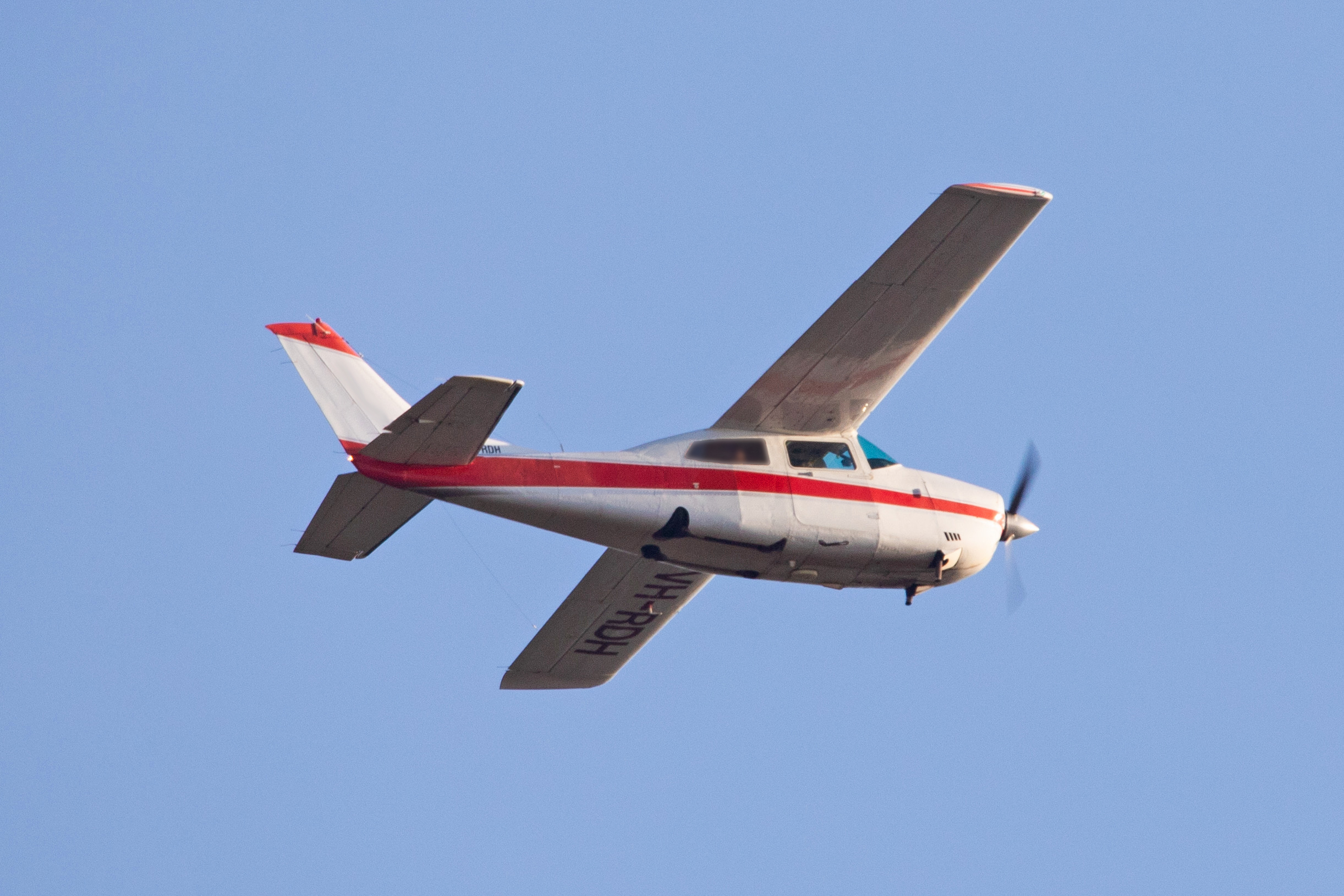

Every time the instructor deliberately spun the Cessna 210, the airplane recovered. The maneuver was repeated on multiple flights, sometimes with other pilots handling the controls. Each recovery ended successfully, reinforcing the instructor’s confidence in a technique the aircraft was never approved to perform.
Then the instructor began starting the spins at lower altitudes.
On Feb. 6, 2026, a Cessna 210N crashed into the water off South Australia during what investigators believe was another intentional spin exercise. The flight instructor, a commercial pilot and a passenger were killed. According to a final report released Wednesday by the Australian Transport Safety Bureau (ATSB), the instructor’s previous successful recoveries likely contributed to a gradual reduction in the altitude available for recovery.
That is, above all else, a tragic outcome. But as is the case with most any tragedy in aviation, the best thing we can do with that outcome is to learn from it. It offers us a broader lesson about the relationship between experience and risk. A pilot can repeatedly perform an unsafe maneuver without incident, gradually becoming more comfortable with the practice. The successful outcomes can then become justification for accepting even greater risks, despite the underlying limitations remaining unchanged.
A Shrinking Margin
Investigators said they found that the instructor had conducted prohibited spins on at least seven previous flights involving several aircraft. In the months leading up to the accident, the instructor repeatedly demonstrated spin recovery in the Cessna 210, often as part of flights intended to familiarize pilots with the aircraft.
The instructor had considerable experience, reporting more than 8,600 flight hours on their most recent aviation medical application. They also held endorsements for spin and aerobatic instruction and had been teaching spins since 2009.
The instructor started demonstrating spins in the Cessna 210 in December 2025 at an entry altitude of about 4,500 feet. By January, the instructor started the same maneuver at roughly 3,500 feet. A week before the accident, the instructor did a one at 3,000 feet.
Each previous recovery occurred before the aircraft entered a fully developed spin. The maneuvers typically consumed between 800 and 1,300 feet of altitude.
“This likely gave the instructor the confidence to begin spins at progressively lower heights,” ATSB Chief Commissioner Angus Mitchell said in an agency statement.
The problem (among others) was that the Cessna 210 was not certified for intentional spins. While the aircraft had been tested for recovery from an incipient spin, its behavior in a fully developed spin was unknown. A delay in recovery or an incorrect control input could therefore require substantially more altitude than the instructor previously needed.
During the accident flight, investigators believe the commercial pilot who was with the instructor mishandled the initial recovery. The instructor failed to intervene quickly enough, though video captured of the accident showed the aircraft’s rotation slowing just before impact. Recovery inputs were likely beginning to take effect, but it was too late.
The ATSB concluded in its report on Wednesday that the aircraft probably could have recovered if the instructor had retained the higher entry altitudes used during earlier flights.
When Experience Becomes False Reassurance
The progression investigators described leading up to this accident appears to illustrate quite well a safety phenomenon known as normalization of deviance. It occurs when a pilot gradually starts to accept practices that depart from established standards because they are repeatedly performed without serious consequences.
The process can be difficult to recognize without firm safety margins and clear documentation, especially for the person engaged in it. Experience ordinarily improves proficiency and judgment, and a successful flight provides useful feedback. The problems come when that success is treated as evidence that a previously established safety margin was unnecessary.
A pilot who successfully lands in dangerously strong crosswinds may become more comfortable with accepting similar conditions in the future. A flight completed with less fuel than planned might encourage a slightly smaller reserve next time. A shortcut in the preflight inspection that causes no immediate problem can gradually become standard practice.
In each case, the pilot’s confidence may increase even though the aircraft’s capabilities, environmental hazards and consequences of a mistake have not changed.
The Cessna 210 investigation gives us an excellent case-study of what appears to be that very process played out to its conclusion. The instructor had successfully recovered from spins many times, but those recoveries offered no assurance that the airplane would remain controllable if a maneuver developed differently. When the recovery did take longer than expected, the reduced altitude left insufficient room to correct the situation.
The Role of Others
Pehraps you are reading this as someone who flies by the book and paints by numbers, so to speak. You live and fly by your established safety margin. Good on you. That’s the group I strive to always find myself in as well.
So perhaps you read this story and agree that having clear, explicitly defined margins matters. But you do that anyway, and wouldn’t dream of conducting unauthorized maneuvers in the first place. So, this story’s lessons are ultimately for someone else, right?
Well, the investigation also identified another factor that allowed the behavior to continue. Other pilots knew about the unauthorized maneuvers, but none formally reported them to the aircraft operator or Australia’s Civil Aviation Safety Authority.
Some less-experienced pilots assumed the instructor’s qualifications meant the exercises were permitted. Others were reluctant to challenge someone with considerably more experience. More senior pilots who learned about the incidents might have believed it was someone else’s responsibility to intervene.
The aircraft operator maintained a safety reporting system, but investigators found that the instructor’s spin activities were never brought to the attention of management through that process.
The ATSB concluded that a formal report could have prompted intervention before the fatal flight.
Yes, this particular situation was pretty bold. But even so, who among us has never seen or heard of some “bold” behaviors in our larger aviation communities?
Familiarity with an unsafe practice can extend well beyond the individual conducting it. When other pilots repeatedly witness a maneuver without consequences, the absence of an accident can reinforce their willingness to accept it, too.
Please don’t take this as a calling to spam the FAA (or your relevant authority) with petty reports. But be willing to call out unsafe behaviors. Be willing, also, to graciously receive such call-outs if they ever come your way.
And yes, as warranted, be willing to escalate dangerous actions and incidents to relevant operators or authorities.
Recognizing the Drift
It is reasonable for us to adjust certain safety margins as our experience and growth as pilots allow. There is a reason why I no longer need to limit myself to crosswind landings below 10 kts, as I did in my first 100 hours.
But I have established new, thoughtful, aircraft-and-context-specific margins that have taken their place over the years. And even those I regularly evaluate; at times I still revert back to move conservative numbers during seasons when circumstances have led to reduced currency or proficiency.
The practical challenge, of course, is identifying when accumulated experience is improving safety and when it is simply making increasingly narrow margins feel comfortable.
Pilot proficiency and aircraft limitations are separate considerations. Greater skill can improve a pilot’s ability to manage difficult conditions, but it does not eliminate mechanical limitations, reduce the altitude needed to recover from an upset or guarantee that the next flight will unfold like the last one.
Established procedures, aircraft operating limitations and personal minimums provide reference points against which pilots can evaluate their decisions. These sound so simple and fundamental, and are oft discussed during training, but can easily fall to the backs of our minds if we let them, especially years later.
So, is a particular decision safe because the risks have been properly assessed, or has it simply become acceptable because nothing went wrong the last time? Ask yourself this question before your next flight. And again before every flight after that.


0 replies