












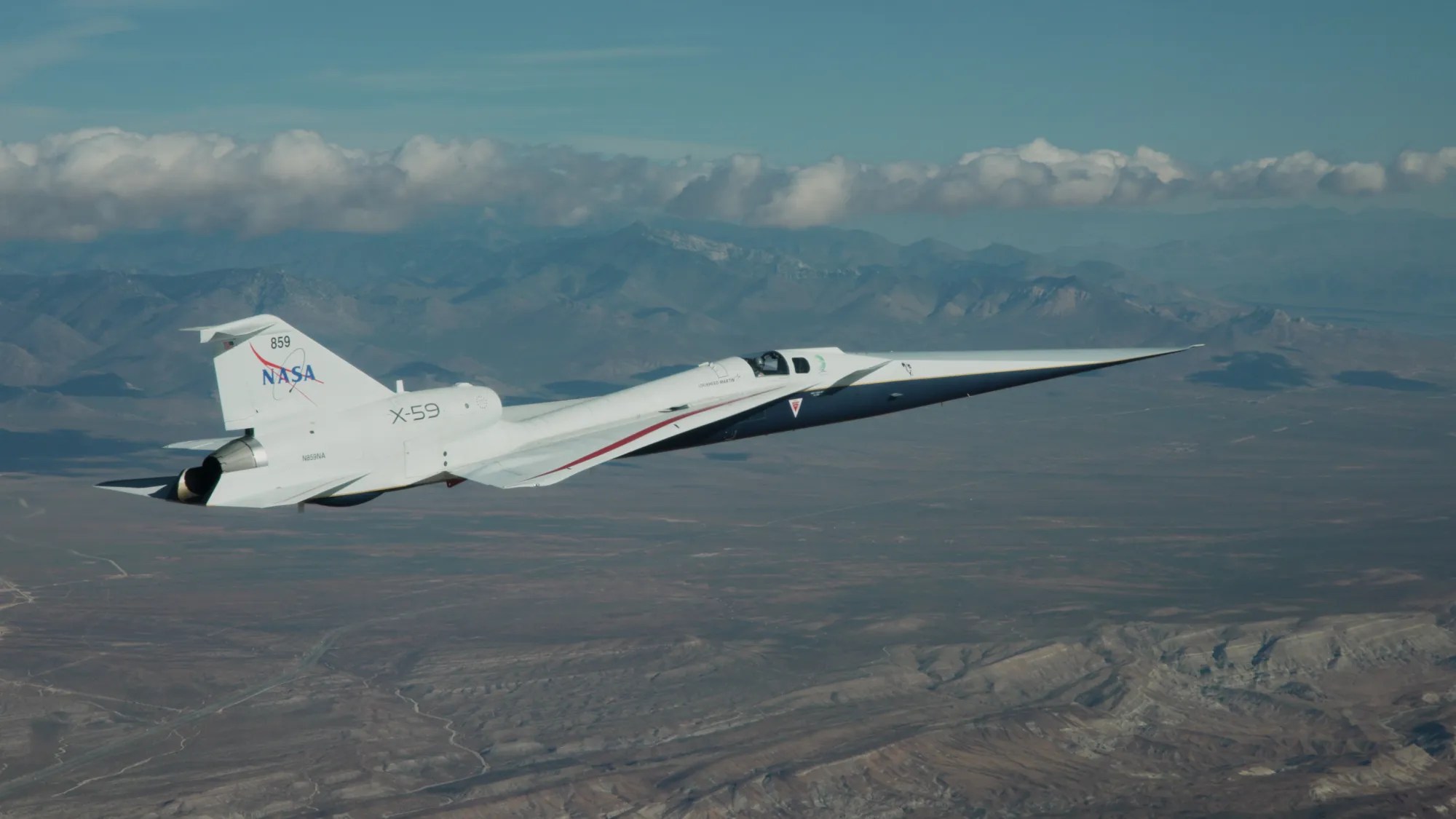

NASA’s X-59 quiet supersonic research aircraft arrived in Birmingham, Alabama, on Thursday as it continued a cross-country flight from California to Kennedy Space Center in Florida. According to flight records, the aircraft departed Naval Air Station Joint Reserve Base Fort Worth at 9:48 a.m. CDT and landed at Birmingham-Shuttlesworth International Airport at 11:03 a.m. The 539-nautical-mile flight followed Wednesday’s departure from Edwards Air Force Base in California, which included stops in El Paso and Fort Worth. Birmingham was the aircraft’s latest confirmed stop as of Thursday afternoon.
The trip comes ahead of NASA’s MAX POWER aerospace exhibition and air show at Kennedy Space Center on Nov. 7-8. The cross-country journey also coincides with the first anniversary of the Lockheed Martin-built X-59’s maiden flight on Oct. 28, 2025. The aircraft has spent the past year undergoing testing in California as part of NASA’s Quesst mission, which aims to demonstrate quieter supersonic flight.
One Year of Flight Testing
In a Wednesday update, NASA said the aircraft had completed 40 additional flights since its maiden flight, reaching speeds of Mach 1.53 and altitudes exceeding 56,000 feet. The X-59 completed its first supersonic flight in June and subsequently demonstrated its intended operating conditions of Mach 1.4 at 55,000 feet. NASA is now preparing to transition from flight envelope expansion to acoustic validation testing.
“This is the phase we’ve been working toward,” Larry Cliatt, acoustic validation technical lead for NASA’s Quesst mission, said in a September update. “Building and flying a brand-new aircraft is an extraordinary accomplishment, but the next phase is where the real research begins.”
Measuring the Noise
The X-59’s elongated nose and other design features are intended to prevent shock waves from combining into a conventional sonic boom. During upcoming acoustic tests, NASA will use ground-based and airborne equipment to measure the aircraft’s sound signature before conducting flights over selected communities to collect public responses. The agency plans to share those findings with U.S. and international regulators as they consider potential changes to restrictions on civilian supersonic flight over land.


0 replies