















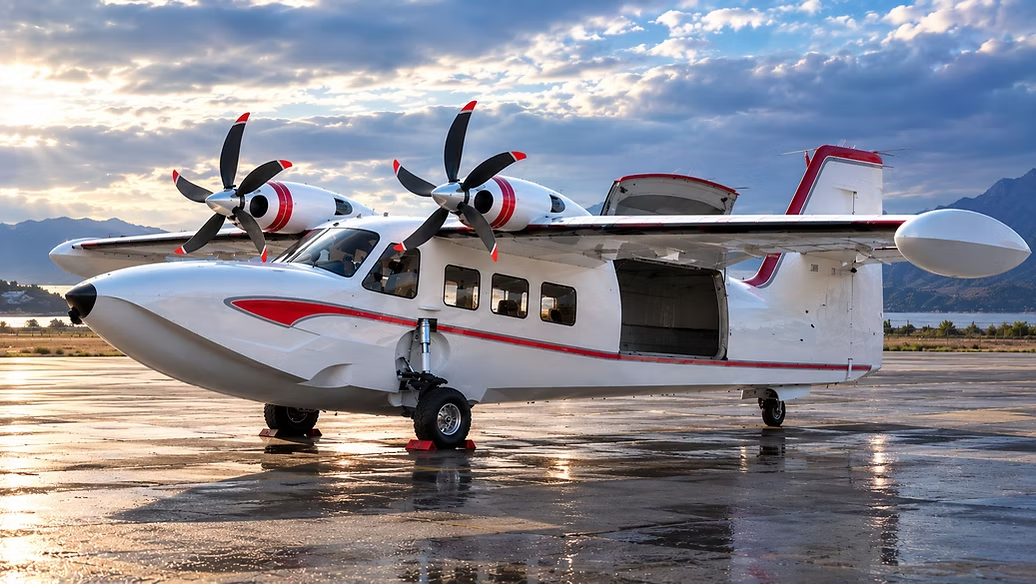

Florida-based Maxwell Aircraft unveiled plans Wednesday for a hybrid-electric amphibious aircraft designed for cargo and passenger transportation. The company says its M1 Hybrid Cargo (M1-HC) variant is being developed to carry a 2,000-pound payload over 1,000 nautical miles, using electric propulsion to supplement Jet A-powered engines during takeoff and climb.
Hybrid Propulsion System
The aircraft’s mechanically coupled hybrid-drive system is expected to produce up to 1,500 horsepower during takeoff and initial climb, compared to approximately 300 horsepower combined during cruise, the company says.
Maxwell plans to use compound-turbocharged, compression-ignition engines burning Jet A for cruise flight. By limiting electric assistance primarily to higher-power phases of flight, the company says it aims to reduce the battery capacity and weight required for extended operations.
“Our goal with the M1 Hybrid Cargo was to rethink what an amphibious aircraft can do,” Maxwell Aircraft CEO David Dillon said in the company’s announcement.
Cargo and Utility Operations
The M1-HC is based on the composite Gweduck seaplane, a modern design drawing on earlier Grumman flying boats. Its airframe uses carbon fiber and Kevlar construction, while the proposed cargo configuration includes a five-foot-wide door for loading freight. Maxwell is targeting operations from waterways and unimproved airstrips, including missions serving remote communities, island transportation, disaster response and government agencies.
According to the company’s website, the first carbon-fiber and Kevlar versions of the Gweduck airframe have been produced and are headed for final assembly. Maxwell said it is targeting initial flight testing in 2027.
The project joins other efforts to develop electric and hybrid amphibious aircraft, including NOEMI Aerospace’s plans for cargo and special-mission variants. Maxwell has not announced a certification or delivery schedule for the M1-HC.


0 replies