
















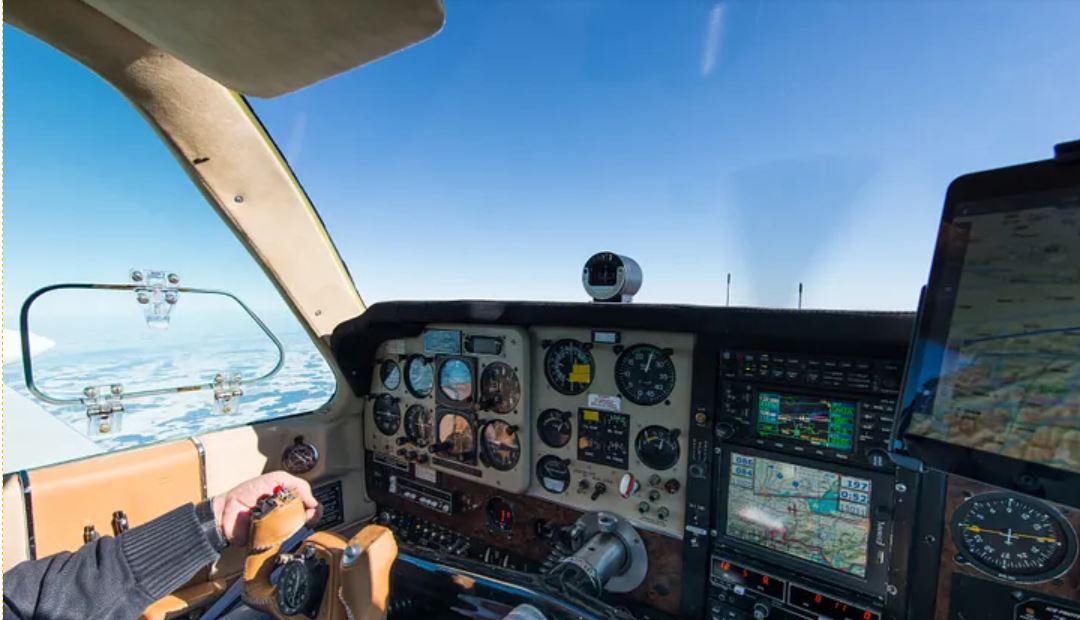

The General Aviation Joint Safety Committee (GAJSC) is warning pilots about the risks of relying too heavily on cockpit automation, noting that autopilot use and declining hand-flying proficiency can contribute to controlled flight into terrain (CFIT) accidents.
In a safety briefing published Nov. 16, the committee said advances in situational awareness technology have helped reduce CFIT accidents in general aviation. However, its review found that automation has also emerged as a contributing factor in accidents involving both visual and instrument meteorological conditions, during day and night operations.
The GAJSC estimates that general aviation experiences about 40 CFIT accidents in a typical year, with roughly half resulting in fatalities.
Contrary to common assumptions, most CFIT accidents do not happen at night or in instrument conditions. More than 75% occur during daylight, and more than half of those happen in visual conditions, according to the committee.
Continued VFR flight into instrument meteorological conditions remains one of the deadliest precursors. In a GAJSC study of 41 CFIT accidents, 11 involved pilots who continued VFR into IMC. All 11 accidents were fatal. Six of the pilots held instrument ratings.
Wire strikes are another significant concern. More than half of wire-strike accidents do not involve agricultural operations, and accident data shows many occur below 200 feet above ground level. The committee noted that an additional 500 feet of altitude can keep pilots above more than 90% of wires.
Other contributing factors include instrument flight rule procedural errors, such as descending below minimum altitudes, and unrealistic aircraft performance expectations involving high density altitude or tailwinds during approach.
The GAJSC also cautioned that autopilots can mask developing problems. Ice accumulation, fuel imbalances and faulty sensor inputs may go unnoticed while automation maintains heading or altitude. Some general aviation autopilots also lack the ability to integrate aircraft position with terrain information.
The committee recommends that pilots understand their automation systems and their limitations, know how to disconnect them quickly and practice hand flying regularly. It also encourages pilots to pursue recurrent proficiency training, including the FAA’s WINGS program.
“Automation is by no means a bad thing,” the committee noted, but pilots must remain prepared to take control when systems fail or provide unreliable information.


0 replies