
















image: NASA
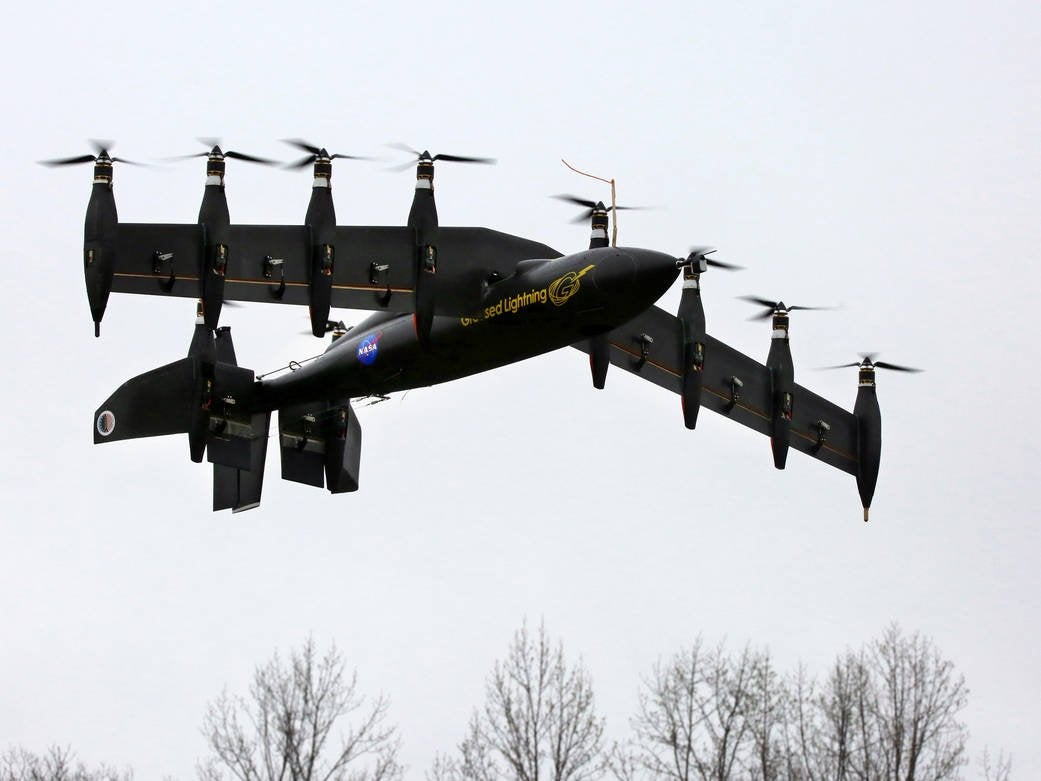
NASA has successfully flown a remotely piloted aircraft powered by 10 electric motors that can take off vertically, then rotate its wing and tail surfaces and fly like an airplane. The aircraft, which weighs about 62 pounds, has a 10-foot wingspan, with eight motors on the wings and two on the tail. “During the flight tests we successfully transitioned from hover to wing-borne flight like a conventional airplane then back to hover again,” said Bill Fredericks, aerospace engineer. “Now we’re working on our second goal — to demonstrate that this concept is four times more aerodynamically efficient in cruise than a helicopter.” The tests took place recently at a military base about two hours away from NASA’s Langley Research Center in Hampton, Virginia, according to NASA’s news release.
The drone could be used for small-package delivery or for long-endurance surveillance for agriculture, mapping and other applications, Fredericks said. Also, he added, “A scaled-up version — much larger than what we are testing now — would also make a great one- to four-person size personal air vehicle.” The drone, called Greased Lightning, or GL-10, is on display this week in NASA’s exhibit at the Association for Unmanned Vehicles Systems International 2015 conference in Atlanta. After that, NASA said, drone test flights will continue, with the next goal to confirm the design’s aerodynamic efficiency.

